Forex Trading App Development with Crypto Wallet: Features, Cost & Benefits
Key takeaways: The UAE is a serious market for fintech and digital-asset products. DIFC alone hosted 1,677 A [...]
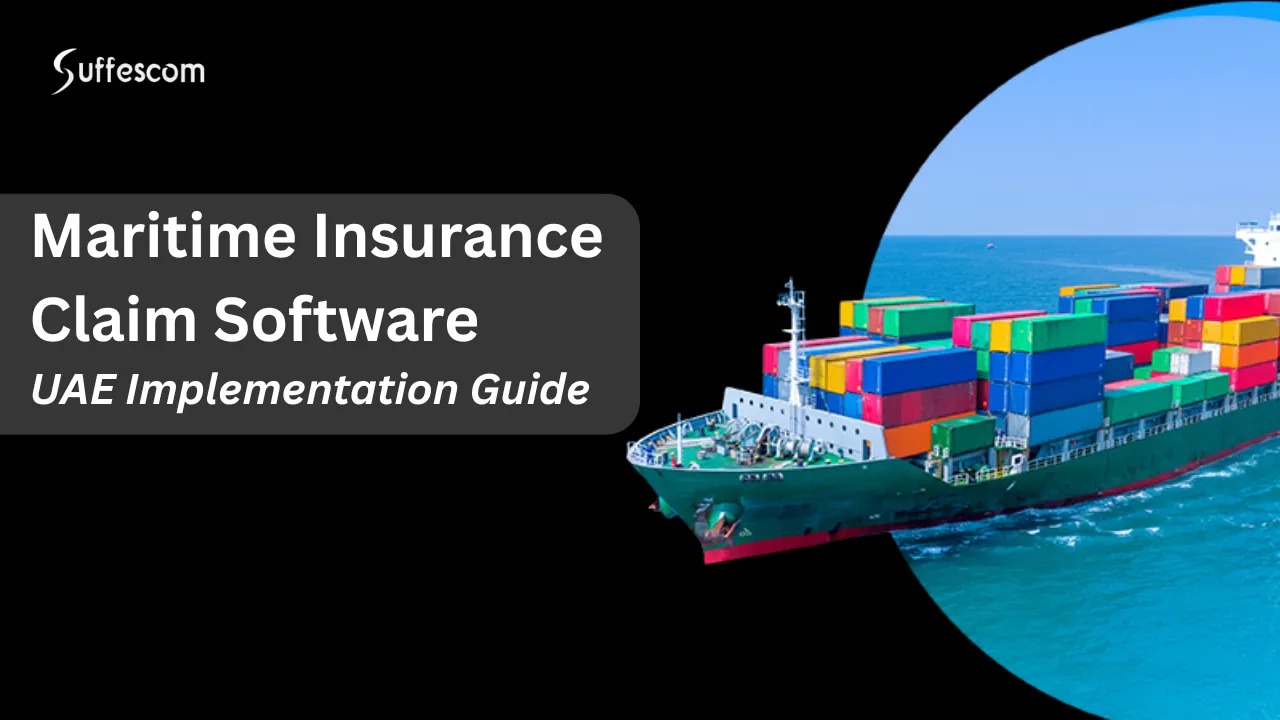
Maritime insurance has a massive and growing scope in the UAE due to its central role as a global hub and booming port activity. Due to this, maritime insurance is among the most profitable business opportunities in the UAE. However, while there is an upsurge in the demand for insurance against risk in the maritime industry, policyholders and insurers constantly complain about the delays and inefficiencies that come with traditional manual claims processing, reflecting the dire need for adopting better solutions in the form of maritime insurance claim software.
It is a digital solution that cuts down processing time and human errors, providing faster and more accurate claims management.
In this comprehensive guide, we will cover:
Start building your solution today!
Before you start the software development, it is important to understand maritime insurance claims. These claims are not simple. They involve many steps and careful checks.
There are many documents to handle. There are rules that must be followed. And, there are different people who take part in the process. These include insurers, ship owners, surveyors, and legal teams.
Many claims are also time-sensitive. So, delays in them can lead to losses or disputes. Due to this, managing claims manually can be slow and confusing.
Cargo Claims
Formal financial demands made by shippers against the carriers for loss, damage, or delays to goods during transport. They require immediate, documented action, including filing a Notice of Intent to Claim and providing evidence like bills, inspections, and photographs of lading to prove the damage has occured while in the carrier's care.
Hull and Machinery Claims
These claims cover damage to the ship. This includes the outer body and the machines inside. Experts inspect the damage. They also estimate repair costs. Surveyors generally take part in this process.
Protection and Indemnity Claims
These claims involve third parties. For example, injury to crew members or passengers. Ship collisions can also lead to these claims. These cases are often complex. They may involve legal work and strict rules.
Freight Claims
These claims happen when expected income from shipping is lost. This may be due to delays or cancelled trips. Cargo problems can also cause this. These claims need contract details and financial records.
Marine Liability Claims
These claims involve damage to the environment or harm to others. For example, oil spills or major accidents at sea. These cases may involve government authorities. They can lead to high costs and serious issues for the company.
Each type of claim needs many steps. Documents must be checked. Inspections must be done. Many people are involved at each stage.
Maritime insurance claim software is a digital tool. It helps shipping companies manage insurance claims. It makes the process faster and more organized.
This software replaces paperwork and long emails. It keeps all claim information in one place. Users can easily check, update, and manage claims.
It can help with tasks like:
The software also reduces mistakes and saves time. It makes work more accurate and smooth.
In a nutshell, it helps companies handle claims quickly, clearly, and with less effort.
Businesses involved in maritime insurance have to face the following common challenges:
In the UAE, the ports handle a huge amount of cargo every day. Due to this, the number of claims would naturally be high. And there is no standard way of dealing with all kinds of claims. Because they are all very different, manual handling can slow down the process and lead to mistakes.
In this type of claim, various kinds of parties are involved in each claim. There will be international insurers and shipping companies. Port authorities, and sometimes lawyers, might be there as well. And, coordinating all of them can be difficult and time-consuming.
Maritime claims are controlled by strict rules. Companies must follow local rules, international rules, and insurance regulations. Doing this manually is not easy. Manual systems often cause mistakes and delays. It is hard to keep everything updated all the time.
Manual claims systems are more open to fraud. Companies can lose a lot of money because of fake or exaggerated claims. Software can help by checking data and catching mistakes. It can also notice anything that seems suspicious.
Many claims need fast action. Delays can cause financial loss. They can also create disputes between insurers, shipping companies, and customers.
Maritime claim software solves these problems. It automates many steps, so the work is faster and easier. It keeps all information in one place, making it clear for everyone. Companies can see real-time updates. This improves transparency. It reduces mistakes and helps follow all rules. It also lowers the risk of fraud.
Using software saves time, reduces stress, and makes claims easier to manage. Companies in the UAE can handle more claims quickly and accurately.
Maritime insurance claim software makes handling claims way faster, easier, and more accurate through the following features:
First of all, users can submit claims online instead of using paper forms. The software works on both phones and tablets (we support both mobile app development and web app development). Each claim is assigned an automatic, unique number for easy tracking. This prevents confusion and lost claims.
Users can safely upload all documents. The software can automatically read data from files. This saves time and reduces errors. All documents are stored in one place, making them easy to find.
Claims go through the process on their own. Approvals continue to happen at the right level without delay. Alerts and reminders are there to keep everyone on schedule. This makes the workflow super smooth and organized.
Surveyors can be assigned directly in the software. They get their tasks quickly without waiting for manual instructions. Inspection results are updated in real time. The whole team always has access to the latest information. Surveyors can record their findings on mobile devices while they are on site.
This makes inspections much faster. It also keeps all information accurate and reliable. When everything updates instantly, managers can make decisions faster, and the team can avoid mistakes.
Using AI, the system can easily spot suspicious claims. It can detect duplicate claims. It can also identify unusual patterns. Risk scores show which claims are high risk. This helps reduce losses from fraud.
The software helps companies follow rules and laws. It makes sure that every step of the claim is tracked in an audit trail. It also helps in keeping the data safe and accurate. This makes audits easier and lowers legal risks.
Claims can be valued accurately. The software can handle multiple currencies. Payments can be processed automatically. This reduces delays and keeps finances clear.
The software can analyze claim trends and patterns. Loss ratios show where money is being spent. Moreover, the custom dashboards give a clear view of all claims. This helps managers make better decisions.
The software can connect with other systems. For example, it can work with ERP platforms. It is also compatible with the insurance core systems and port management tools. Apart from this, integration keeps data connected and reduces manual work.
The software can be used from anywhere. It grows alongside your business. Data is backed up and safe in case of problems. Cloud access makes it easy for teams to work remotely.
Maritime claim software helps companies manage claims more quickly, stay organized, reduce errors, prevent fraud, and save time and money.
Apart from the standard features, you can enable the following advanced features on your app.
AI can predict how a claim will turn out. This can greatly help in the complex cases. It shows which claims need more attention. At the same time, it can automatically approve simple claims, speeding up the process. There will be less need for manual work. Eventually, the companies can focus on claims that are more important or difficult.
To integrate AI features into your maritime insurance, you don't need to hire a separate AI development company in Dubai, as we provide end-to-end AI solutions tailored to the maritime insurance sector.
Another advanced feature is blockchain. It can help you keep all documents safe and secure. With its implementation, the information is recorded, and it cannot be changed or lost. This also makes records highly trustworthy. Plus, the smart contracts can easily automate approvals and payments. This means you can support automation without risking security. Now, because everything is transparent, companies can be sure that claims are handled fairly.
IoT devices are also very useful in maritime insurance. They can track cargo in real time during transit. If cargo is damaged or in an unusual condition, the system will send an immediate alert. This allows companies to act fast. As a result, there will be fewer accidents. IoT development also enables monitoring of cargo conditions at all times. This is very important to prevent bigger problems.
Modern software often includes chatbots and customer portals. Chatbots provide help 24 hours a day. They can answer questions and guide users through the claim process. Customer portals allow insured parties to check their claims anytime. This improves communication. It also makes the claim process more transparent. Customers feel informed and confident because they can see what is happening at every step.
Another useful feature is real-time monitoring. This means the software shows updates on shipments and claims as they happen. Users can see exactly where the cargo is at any moment. They can also find out quickly if there are any problems. For example, if a delay occurs or a claim is flagged, the system immediately sends an alert. Teams can quickly solve issues and keep shipments on track. In addition, it helps managers plan more effectively and stay informed. Overall, this feature makes operations smoother and gives everyone peace of mind.
Modern software primarily employs smart analytics. It can study past claims to find patterns and trends. Managers can see which areas have more problems. This helps them make better decisions. They can plan ahead to reduce risks and losses. Analytics also helps companies improve overall efficiency over time.
These advanced features make maritime insurance software very powerful. They help companies handle claims more quickly and accurately. They prevent mistakes and reduce fraud. They also improve service for customers. With these tools, companies can manage claims more confidently.
When planning the budget for building maritime insurance software, you need to consider the size of your business. The larger the business, the higher its claim volume is likely to be, and the more features will be required.
Apart from this, the level of customization you need and the number of required integrations will also affect the price. Additionally, the deployment type, such as on-premises, cloud-based, or hybrid, can influence overall cost. Here is a basic overview of software development costs in the Middle East.
When you are planning a basic solution for your small business that only needs to handle a few claims, your needs can usually be met with these features:
You can build this kind of system by investing AED 45,000 – AED 6505,000.
The basic version usually requires only a few integrations, so it naturally costs less. Still, it helps replace manual paperwork with digital tracking and makes day-to-day operations much easier.
For medium-sized businesses or shipping companies that handle more claims, a mid-level solution is usually the right choice. These companies need more automation and better reporting. They also need to support smoother cross-team collaboration. So, based on that, a mid-level system typically should include:
The cost for building or implementing a mid-level solution usually falls between AED 65,000 and AED 100,000.
This level of software provides a good balance between cost and functionality. It reduces delays, lowers the risk of errors, and makes managing claims much easier. At the same time, it allows multiple team members to work on claims simultaneously, improving transparency and efficiency.
Compared to a basic solution, a mid-level system often requires more integrations. These might include connections with internal accounting systems, ERP platforms, or other operational tools. While this adds to the cost, it ensures that all parts of the business can share data and make decisions faster.
Large shipping companies, insurers, and port operators with high claim volumes usually need an enterprise-level solution. These systems are designed to handle thousands of claims quickly and accurately, while providing full visibility and control.
An enterprise system typically includes:
The cost for enterprise solutions ranges from AED 100,000 to AED 2,00,000+, depending on the number of features, integrations, and customizations.
Enterprise-level software is built for efficiency. It reduces errors, speeds up claim processing, and ensures regulatory compliance. Teams can track claims in real time, see trends, and make faster decisions.
This level of software also allows large organizations to connect multiple departments and systems. Data flows smoothly between teams, improving collaboration and reducing manual work.
Even after choosing a software plan, additional costs can arise later on. These costs are not always obvious at first. Knowing about them early helps avoid surprises later. Here are the main ones:
Customization: If you want special features or unique tools, it can add 20 to 50 percent more to the price. The more custom you want it, the higher the cost.
Integration: Connecting the software to other systems, such as accounting or port management tools, can incur additional costs. Integration makes everything work together, but it takes time and effort.
Data Migration: Moving old claims and records into the new software is not automatic. It takes work and sometimes outside help. This can add to the overall cost.
Training: Staff need time to learn how to use the software. Training sessions, guides, and practice take resources. Skipping training can slow work and lead to mistakes.
Annual Maintenance: Most software has yearly maintenance fees. This is usually 10 to 20 percent of the original software cost. Maintenance keeps the system running smoothly and safely.
Pro Tip: Think about these extra costs from the start. They can change the total investment a lot. Planning ahead saves money and headaches later.
| Solution Type | Price Range |
| Basic | AED 45,000 - AED 65,000 |
| Mid-level | AED 65,000 - AED 1,00,000. |
| Enterprise | AED 100,000- AED 2,00,000+ |
When going for software development, it's not just the upfront cost that you should plan for, but additional factors as well. These include:
Customization: Regardless of how you approach your software development, you are likely to need around 20–30% customization to ensure the software fully aligns with your requirements. For this, you should be prepared to pay a little extra.
Integrations: Integrations are another important factor that can increase the overall cost. You would want your maritime insurance claim software to work seamlessly with third-party systems such as ERP platforms, CRM tools, accounting software, and external databases.
Data Migration: If there are data migration requirements, you should also be prepared for additional costs related to transferring, cleaning, and validating existing data into the new system.
Training and Onboarding: Some software requires proper training and onboarding sessions for your team, which can add to the overall expense.
Maintenance: Maintenance is essential for keeping your system running smoothly, so this will also incur ongoing additional costs.
Maritime insurance claim software makes claim work easier. It saves time and removes a lot of back and forth. Teams can handle more claims without feeling stuck. Here's how it helps:
The system handles repeat tasks on its own. It collects data, checks files, and moves the claim to the next step. This means fewer delays and quicker payouts.
Small errors in forms or numbers can slow everything down. The software picks up data the right way from the start. It also checks for missing details so teams don’t have to fix things later.
Every step of the claim is visible. Teams, surveyors, and clients can all see updates without sending emails again and again. This keeps everyone on the same page.
Less manual work means less time spent on routine tasks. Teams can work faster without adding more people. This lowers day-to-day costs in a real way.
People want quick answers when they file a claim. Fast updates and clear steps make the process feel simple. When claims close faster, customers trust the insurer more.
The system tracks patterns across claims. If something looks off, like repeated claims with similar details, it gets flagged early. This helps teams check the case before money is paid out.
This software helps more than just insurance teams. Everyone involved in a claim can use it, and each group gets tools that make their work easier.
They deal with many claims at once. It is easy to lose track when the work is manual. The software keeps every claim in order. Teams can see updates, check documents, and close cases faster.
When cargo gets damaged, they need to act fast. The software lets them file a claim right away. They can upload photos from the port and add reports without delay. This helps them get paid sooner.
They handle cargo across ships, trucks, and routes. If something goes wrong, they need quick answers. The system shows claim status without long email chains. This helps them update clients on time.
Damage often happens during loading or unloading. Port teams may need to share inspection reports or proof. With the software, they can upload and send records quickly when a claim is raised.
Brokers guide clients through the claim process. They often get calls asking for updates. With real-time status, they can give clear answers without checking with multiple teams.
Putting maritime insurance claim software in place is easier if you follow a clear plan. Each step helps your team avoid mistakes and get the most out of the system.
Start by looking at your current claim process. Notice where things get slow or messy. Write down the exact problems you want the software to fix.
Pick a provider with extensive experience in building reliable maritime insurance softwares. Check their track record. Ask how they support teams after installation.
Set up the software to match how your team works. Make forms, approvals, and alerts fit your daily routine.
Connect the software to your policy, finance, and document systems. This keeps all data in one place and stops double entry.
Run sample claims or past cases. Check that notifications, approvals, and reports work correctly. Get the problems fixed before using the software for real claims.
Go live with the software. Watch the first few weeks closely. Make sure claims move smoothly, and no steps are missed.
Train employees on how to use the software. Show common workflows and shortcuts. Well-trained teams adopt the system faster and make fewer mistakes.
Even the best software can face problems during implementation. That's why it's ideal to know these challenges, as they help teams avoid mistakes.
1. Problems moving old data
The most common problem companies face is putting old claims and files into the new system. Some files might be missing or in the wrong format. Teams need to check everything carefully.
2. Teams are finding it hard to adapt
Some employees prefer the old way of working. They may feel nervous about new software. Clear training and showing how it helps can make them more open.
3. Connecting With Other Systems
Linking the software to tools like policy or accounting systems can be complicated. If it is not done right, data may get lost or duplicated. Planning the connections carefully fixes this.
4. Following Rules
Insurance claims must follow strict laws. The software must meet all rules. Teams need to check that every step and report is legal and correct.
An experienced developer agency can make implementing new software much easier and more efficient. They know the usual headaches teams face and are able to handle them proactively.
Before moving any files, they study your old data. They identify missing or messy files and fix them first. This way, important information never gets lost.
They build the software with employees in mind. Interfaces are simple, workflows match real tasks, and common mistakes are prevented. This helps staff adopt it easily without fear or confusion.
The agency plans how the software will connect with your existing systems. They test all links in advance to make sure data flows correctly. This avoids duplication or lost files.
Regulations are considered from the start. Reports, forms, and processes are designed to meet all rules. This prevents legal or regulatory issues later.
Before the final launch, they test the software in a live environment and check every step of the process. Problems are caught early, so the system works smoothly from day one.
The following technologies are widely employed in the maritime insurance claim software as they help improve efficiency and effectiveness:
AI automation
AI can check papers, calculate payments, and verify policies automatically. This means claims are faster, and fewer mistakes happen.
Blockchain for enhanced security
Every claim and payment is recorded in a way that cannot be changed. Shipping companies and insurers can trust the information.
Predictive Analytics
Companies use past data to see which shipments might have issues. They can act early to prevent damage or losses.
Real-time tracking
Sensors on containers track location, temperature, and condition. Insurers can see what is happening at every step. Fewer arguments happen, and claims get resolved faster.
One Centralized System
Ports, shipping companies, and insurers share data in one system. Communication is quicker, claims are smoother, and work runs more efficiently.
If you want to build maritime insurance claim software for your business or create a solution in this space, choosing the right software development company is very important. Pick a team that has real experience working with shipping companies, insurers, and port authorities.
We are a veteran agency and have helped over 50 businesses and founders in the UAE build maritime insurance solutions. We know the challenges, the rules, and the risks. We make sure the software works smoothly from the start and fits your workflow.
If you have any questions or want advice, feel free to reach out. We can guide you through every step and help turn your idea into a working solution.
It is a digital tool that helps insurance companies and shipping businesses handle marine claims. It manages everything from reporting damage to paying claims. It makes the process faster and reduces mistakes.
The UAE has busy ports and high cargo traffic. There are many rules and different companies involved. Claim software speeds up approvals, keeps records clear, and ensures compliance with regulations.
It automates the whole claim process:
It depends on features and customization:
Yes. It uses encryption, secure cloud servers, controlled access, and audit logs to protect sensitive information.
Yes. Most systems connect with ERP, accounting software, and other insurance platforms. This makes data flow seamless.
Usually 3 to 6 months. Bigger companies or heavily customized setups may take longer. Implementation includes installation, workflow setup, integrations, and staff training.
Yes. Cloud-based SaaS systems are affordable, scalable, and ideal for small and medium businesses.
Marine insurance covers shipping and cargo risks.
Maritime insurance software helps process and manage those claims digitally.
Yes. Most UAE solutions handle AED, USD, and EUR. They also support English and Arabic. This is useful for international shipping and clients.
It uses AI and analytics to spot unusual claims, duplicate claims, or inconsistent data. This helps prevent losses and protects both insurers and clients.
SaaS is cloud-based software paid monthly. Companies don’t need to buy servers or install heavy software. It’s cheaper, flexible, and grows with the business.
Yes. Customers get faster approvals, real-time tracking, and clear updates on their claims. This makes clients happier and more confident.

Senior Content Strategist
Jonathan Raabe is a content marketing professional, focusing on mobile apps, software engineering, artificial intelligence, SaaS, cloud computing, and digital transformation. Jonathan works with visionary brands to translate complicated concepts into content that can be easily understood by their audiences. As an expert in his field, Jonathan strives to create content that is thought-provoking and backed by facts, while at the same time building brand authority and trust.



Related Blogs
Hear directly from clients who partnered with Suffescom to turn their digital ideas into secure, scalable, and high-performing products.

“Suffescom delivered a HIPAA-compliant telemedicine app exceeding expectations, with strong data security and thoughtful development strategies from start to finish.”

“Suffescom helped us build a smart property management and virtual tour platform. Their expertise in AI helped us attract more qualified leads.”

“Suffescom delivered a modern hotel booking app perfectly aligned with customer expectations, which helped us boost sales by 40%.”

“We needed real-time fleet tracking and route optimization. Suffescom developed a platform that reduced our operational expenses in the first quarter.”

“We needed a smart itinerary planner with AI features for tourists. Suffescom delivered beyond our expectations and helped us increase bookings.”