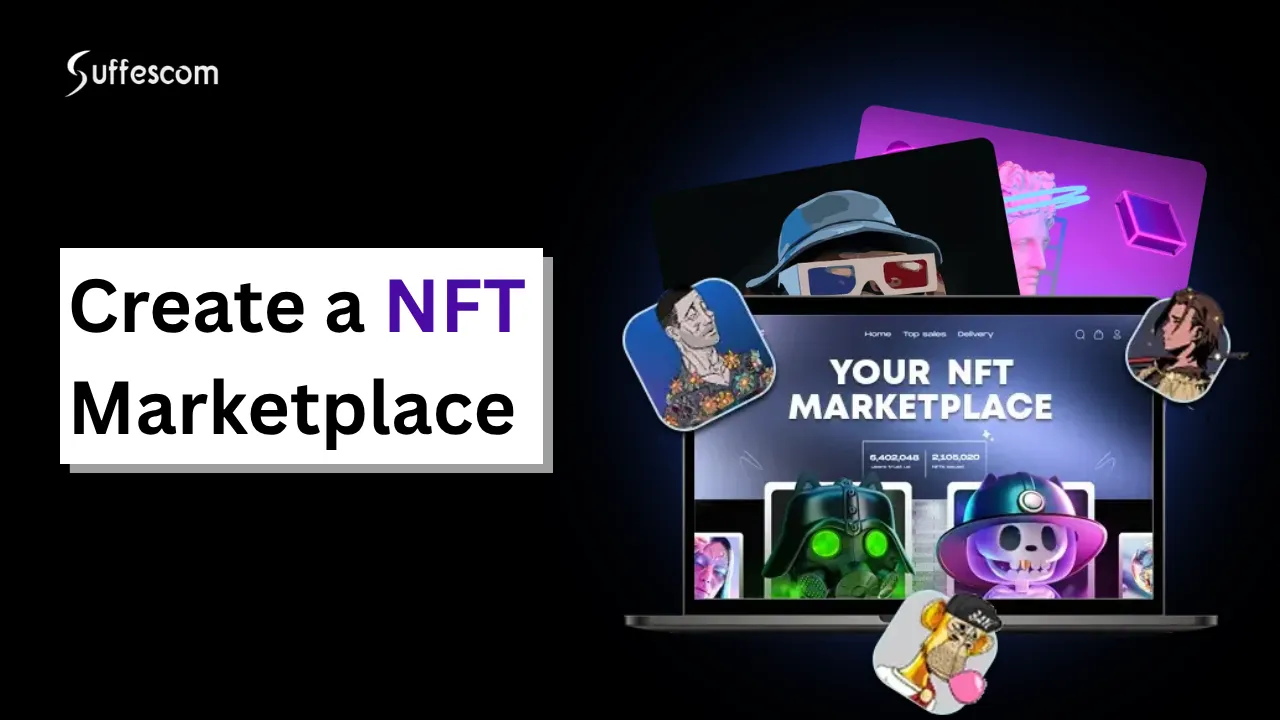
The NFT market is experiencing rapid growth, with Statista projecting an impressive annual growth rate of 27.26% from 2022 to 2027. Additionally, the UAE is establishing itself as a leading hub for blockchain technology and digital assets. Dubai alone is attracting many crypto startups and investors. This creates a big chance for any startup that wants to build an NFT marketplace in UAE.
If you plan to build a platform where users can buy and sell NFTs in UAE, now is the right time. The market is still new. Competition is rising, but there is space for new business opportunities. A lot of businesses and startups are looking to enter this space with a very clear and precise plan.
This guide will explain everything in a simple way. You will learn the NFT platform meaning and the complete process of how to create a NFT marketplace. We will also cover legal rules, cost, and key features.
An NFT marketplace is a digital platform where users can create, buy and sell NFTs. NFT stands for non-fungible token. It is a unique digital asset that is stored on a blockchain. It can be art, music, video game items or even real estate.
In simple words, an NFT marketplace UAE is like an online store for digital assets. Users can list their NFTs and buyers can purchase them using crypto.
Different business goals need different types of NFT marketplace solutions in UAE. The common types include:
Open or Non-curated NFT Marketplace
Anyone can join and list NFTs on the platform. There is no strict approval process. It is simple to scale and attract more users. But quality control might be low.
Curated NFT Marketplace
Only selected creators can list NFTs in this type of NFT marketplace. The platform reviews content before approval. This helps maintain quality and trust but limits the number of users.
Niche NFT Platforms
These niche NFT platforms are created for one category, such as art or gaming. They target a particular audience and offer a greater user experience to the selected audience segment.
Decentralized DAO-based Marketplaces
These platforms are controlled by community members. Decisions are made through voting using tokens. It offers transparency and user control.
White Label NFT Marketplace
This is a ready-made solution. Startups can launch fast with basic features and customize later. It reduces development time and cost.
| Type of NFT Marketplace | Access | Control | Best For |
| Open | Anyone can join | Low control | Fast growth platforms |
| Curated | Limited users | High control | Premium marketplaces |
| Niche | Targeted users | Medium control | Specific industries |
| DAO | Community driven | Shared control | Decentralized projects |
| White label | Ready to use | Customizable | Quick startup launch |
UAE is becoming a center for blockchain and digital assets. For startups, this creates real NFT marketplace UAE benefits. The region offers growth support and high user interest. It also opens many business opportunities in UAE.
Blockchain UAE growth is moving fast. UAE aims to move around 50% of government transactions to blockchain. Dubai is building a digital economy, and many sectors now use blockchain in daily operations. This creates a strong base for NFT platforms.
UAE crypto regulations are clearly defined. Dubai set up VARA to control virtual assets and ADGM and DIFC provide rules for crypto businesses starting or working in the UAE.
Dubai NFT market is expanding as more users explore digital ownership. NFT sales in the Middle East are rising, with interest in art, gaming and virtual assets. Businesses are also entering this space to create new revenue models.
Knowing the legal requirements in the UAE is important before NFT marketplace development.
The Dubai NFT laws are governed by the VARA, which regulates all activities of virtual assets. Abu Dhabi follows ADGM crypto regulations, which provide a legal framework for digital assets. These regions aim to promote growth.
To run an NFT marketplace in UAE you must get approval from the different authorities. ADGM and DIFC also offer licensing options based on your business model and setup.
NFT compliance in UAE requires platforms to follow strict verification and monitoring systems. You should track user activity and guarantee safe transactions in the NFT marketplace. This decreases fraud and builds long-term trust.
To make an NFT marketplace, you need the best features. A good digital solution is not only about design. It must deliver smooth NFT marketplace functionality and secure transactions.
Integrate a feature in your NFT marketplace by which users can sign up with ease. The platform should support secure login and profile setup. NFT wallet integration in the UAE is a key part of this process.
An NFTs minting platform should allow users to create NFTs without any complexity. Users upload digital files and convert them into tokens. After minting, they should be able to list NFTs for sale with pricing options.
This feature allows users to sell NFTs through auctions. Buyers can place bids within a set time. The NFT marketplace should handle instant updates and guarantee fair bidding.
Crypto payment integration is important for smooth transactions in an NFT buy & sell marketplace. The platform should support cryptocurrencies like ETH and USDT.
Add a feature during NFT marketplace app development through which users can find NFTs easily. Search and filter options help users explore based on category, price or popularity.
Add a user dashboard that shows owned NFTs transaction history and activity. This improves overall user experience in your niche NFT marketplace.
Smart contract development and integration manage all core actions like minting and ownership transfer. Secure and tested smart contracts are critical in NFT marketplace development.
Adding an admin panel helps manage users' transactions and listings. It allows control over platform activity and content moderation.
Various blockchains are favourable depending on costs and speed. Your platform should support many chains, including Ethereum, Polygon, and BNB Chain, to attract more users.
Creators expect earnings from future resales. Your NFT marketplace platform should support automatic royalty distribution through smart contracts.
Users should get updates for bid sales and offers as instant notifications improve engagement in your platform in the UAE.
Integrate a feature of live chat support to help solve users' problems quickly. It improves trust and keeps users active on the platform.
Users should be able to view prices in different currencies. Along with crypto, your platform should show values in AED, USD or other currencies. This makes buying and selling NFTs in UAE more convenient.
To create an NFT marketplace, you need a structured approach. Each stage depends on the previous one, and clear planning from step one reduces delays and avoids rework.
First, define what problem your marketplace platform will solve and who will use it. A clear niche helps you design better features and pricing before the complete NFT marketplace development.
Next, choose the base network for your NFT marketplace. This impacts gas fees, speed and user adoption. Blockchain selection in NFT marketplace development should match your business goal. If you're looking for exclusive NFT distribution and trading, consider having your own private blockchain built from scratch.
After that, design the user flow and interface of the platform. Focus on aspects like minting and buying. Users in UAE prefer simple navigation and fast loading screens, so keep the design in that way.
Now move to smart contract development in UAE. These contracts define how NFTs are created, sold and transferred. You should include logic for royalty auctions and ownership in this phase and make sure contracts are audited and tested because any error can lead to loss of assets or funds.
In this phase of NFT marketplace development, the frontend and backend are developed. Our blockchain developers build a backend that can handle logic while frontend that shows the user interface.
Next, test every function before the launch of the NFT marketplace. This includes smart contracts, wallet connection payments and UI flow. Run both manual and automated tests.
After testing, deploy smart contracts and the platform on the mainnet.
Now launch your NFT marketplace aim for early user acquisition and brand visibility in the Dubai NFT market.
Finally, maintain and improve your marketplace platform after launch. NFT marketplace development does not end at deployment. Continuous updates are required.
You can also collaborate with a blockchain development company. This helps you reduce technical risks and build a more reliable NFT marketplace in the UAE.
The NFT marketplace development cost depends on various aspects like feature design and blockchain choice. It is important to set a clear budget before starting because the cost to build an NFT platform in Dubai can vary based on complexity. In most cases, the NFT app development cost falls between AED 30,000 to AED 150,000+.
| Complexity | Estimated Cost (AED) | Timeline | Features |
| Basic | 30,000 – 60,000 | 3 – 5 weeks | Wallet integration, minting, listing, simple UI |
| Mid Level | 60,000 – 100,000 | 6 – 10 weeks | Auction, bidding, advanced UI, multi chain |
| Advanced | 100,000 – 150,000+ | 10 – 16 weeks | Full features, analytics, high security, multi language |
The total NFT marketplace development cost depends on multiple factors. Number of features and custom integrations
Choosing the best blockchain for NFT marketplace development is an important decision. You can choose depending on your business model and your target users.
The most popular blockchain used for NFTs is Ethereum. It is highly secure and has a huge user base. Majority of the popular NFT platforms are based on Ethereum. But the cost of NFT gas in the UAE is high, which may add transaction costs for users.
Polygon is a common startup choice. It offers both low fees and quick transactions. You can prefer this blockchain as an alternative to ethereum comparison. It can be scaled and integrates Ethereum tools that facilitate development.
Binance Smart Chain has a low cost and good performance. It works best on platforms that require processing speed and reduced charges. It also has rising adoption in NFT development.
Solana is known for very fast transactions and low fees. It supports high volume platforms and gaming NFTs. However, it has a smaller ecosystem compared to Ethereum.
Avalanche provides fast finality and low transaction costs. It is gaining attention for NFT and DeFi projects. It supports applications with better performance.
| Blockchain | Transaction Speed | Fees | Popular Use Case | Scalability |
| Ethereum | Medium | High | Art, premium NFTs | Moderate |
| Polygon | Fast | Low | General NFT platforms | High |
| BNB Chain | Fast | Low | Trading platforms | High |
| Solana | Very Fast | Very Low | Gaming, high volume | High |
| Avalanche | Fast | Low | DeFi, NFTs | High |
To build an NFT platform, you need the right mix of tools and technologies. A reliable tech stack guarantees smooth performance and security for your platform.
| Layer | Technology | Purpose |
| Frontend | React.js, Next.js, Vue.js | Build user interface and user experience |
| Backend | Node.js, Express.js, Django | Handle server logic, APIs, and data processing |
| Blockchain | Ethereum, Polygon, BNB Chain, Solana | Store and manage NFTs on decentralized network |
| Smart Contracts | Solidity, Rust | Create and manage NFT logic like minting and ownership |
| Wallet Integration | MetaMask, WalletConnect, Coinbase Wallet | Enable users to connect and manage crypto assets |
| Storage | IPFS, Filecoin, AWS S3 | Store NFT metadata and digital assets |
| Database | MongoDB, PostgreSQL | Store user data, transactions, and platform data |
| Payment Integration | Stripe, MoonPay, Crypto APIs | Enable crypto and fiat payments |
| Security | SSL, Encryption, Smart Contract Audits | Protect user data and transactions |
| DevOps & Hosting | AWS, Google Cloud, Docker | Deploy, manage, and scale the platform |
To build a sustainable platform, you need a clear NFT marketplace revenue model. The right NFT platform monetization strategy helps you generate income while keeping users active.
This is the most common revenue model. Your platform charges a small percentage on every successful sale and NFT commission fees usually range from 2% to 10% based on platform type and services.
You can charge users a fee to list their NFTs on the platform. This helps control spam and low quality content. It also creates an income source even before sales happen.
You can offer advanced features through paid plans in your NFT marketplace. This can include better visibility or exclusive access. Premium memberships attract serious creators and collectors.
NFT royalties allow creators to earn from future resales. Your platform can also take a small share of these royalties. This creates long term revenue as NFTs are traded multiple times.
Smart contracts control all major actions on your NFT buy and sell marketplace. Any error can lead to loss of funds. A proper smart contract audit helps find bugs and vulnerabilities before launch. It guarantees that minting transfers and payments work as expected without risk.
User data and transaction details should be protected every time and this is where encryption guarantees that sensitive information is not exposed to unauthorized access. Also, secure communication between the user and platform builds trust and reduces the risk of data breaches.
NFT fraud prevention is important to maintain your platform's credibility. The system should be able to =find fake listings and unusual activity. Continuous monitoring helps decrease scams and protects both buyers and sellers.
Wallet integration should be handled with high security standards in your marketplace. Users should connect wallets without sharing private keys. A secure connection ensures safe transactions.
NFT marketplace development is evolving fast. New technologies and user needs are shaping how platforms are built and used.
Platforms are no longer based on a single blockchain. Users seek to have the option of trading on various networks such as Ethereum or Polygon. Cross-chain support assists in the minimization of cost and enhances end-user access.
NFTs are now linked with virtual worlds. Users can buy and use digital assets inside metaverse platforms. This trend is rising in domains like gaming or real estate.
NFTs are not collectibles anymore. Now they provide practical benefits, such as access to membership or rewards. This increases user interaction and usage of the platform.
Artificial Intelligence is being used to improve recommendations and enhance user experience. It helps platforms know user behavior and offer better content.
High-value NFTs can be divided into smaller shares. This gives more people the opportunity to invest in costly assets, and it simplifies the process of NFT trading.
Assets like real estate and luxury goods are being converted into NFTs. This trend is growing in the UAE as businesses explore digital ownership models.
Choosing the right NFT marketplace development company is important in order to build a solution based on your business needs.
We have 13+ years of experience in blockchain development and NFT solutions. Our team of developers understands how to build secure platforms with the right architecture.
Every business has different needs. At Suffescom, we provide custom solutions based on your niche and goals. Whether you need a niche NFT marketplace, we build solutions based on your precise needs.
From planning to launch, our team of developers handles complete NFT marketplace development with the latest technologies integration. This includes smart contract development, backend, frontend, and testing.
Security is a key part of NFT platform development. Suffescom follows best practices like smart contract audit and secure integrations. The team also understands NFT legal requirements.
We at Suffescom use a modern tech stack and scalable architecture. This helps your NFT marketplace in the UAE support more users over time.
We provide ongoing support and maintenance. This includes updates, performance monitoring, and feature improvements to keep your platform competitive.
An NFT marketplace is a blockchain-based platform where users can mint, buy, sell, and trade digital assets like art, music, and virtual collectibles. It works using smart contracts, crypto wallets, and decentralized networks such as Ethereum or Polygon to ensure secure NFT transactions and ownership verification.
The cost to build an NFT marketplace in UAE is between AED 30,000 to AED 150,000+, depending on features, blockchain integration, UI/UX design, and development complexity. A basic platform may cost less, while advanced NFT platforms with minting, bidding systems, and multi-chain support require higher investment.
Popular blockchains for NFT marketplace development include Ethereum, Binance Smart Chain, Polygon, and Solana. The best choice depends on scalability, gas fees, transaction speed, and security requirements for your NFT trading platform.
Key features include user registration, wallet integration, NFT minting, auction and bidding functionality, smart contract automation, search filters, and secure payment gateways to ensure seamless NFT buying and selling.
The development timeline for an NFT marketplace typically ranges from a few weeks to several months, depending on customization, blockchain selection, and advanced functionalities like multi-chain support and AI-based recommendations.
Yes, NFT marketplace development is legal in the UAE, but businesses must comply with crypto regulations, digital asset laws, and licensing requirements set by authorities like VARA and ADGM for blockchain-based platforms.
NFT marketplaces generate revenue through transaction fees, listing fees, minting charges, premium memberships, and royalties on secondary NFT sales, ensuring long-term profitability.
Smart contracts automate transactions, enforce ownership rights, and manage royalties in NFT marketplaces. They ensure transparency, security, and trust in blockchain-based digital asset trading.
Yes, a white-label NFT marketplace allows businesses to launch a ready-made platform with custom branding, reducing development time and cost while offering scalability and customization options.
Users connect crypto wallets, browse digital assets, and use cryptocurrencies to purchase NFTs. Sellers can mint NFTs, list them for sale, and earn royalties through blockchain-enabled transactions.
NFT platforms require smart contract audits, secure wallet integration, encryption protocols, two-factor authentication, and anti-fraud mechanisms to protect digital assets and user data.
The UAE is a growing hub for blockchain technology, crypto adoption, and digital innovation, making it an ideal market for NFT marketplace development with high growth potential and strong investor interest.

Hear directly from clients who partnered with Suffescom to turn their digital ideas into secure, scalable, and high-performing products.

“Suffescom delivered a HIPAA-compliant telemedicine app exceeding expectations, with strong data security and thoughtful development strategies from start to finish.”

“Suffescom helped us build a smart property management and virtual tour platform. Their expertise in AI helped us attract more qualified leads.”

“Suffescom delivered a modern hotel booking app perfectly aligned with customer expectations, which helped us boost sales by 40%.”

“We needed real-time fleet tracking and route optimization. Suffescom developed a platform that reduced our operational expenses in the first quarter.”

“We needed a smart itinerary planner with AI features for tourists. Suffescom delivered beyond our expectations and helped us increase bookings.”