Forex Trading App Development with Crypto Wallet: Features, Cost & Benefits
Key takeaways: The UAE is a serious market for fintech and digital-asset products. DIFC alone hosted 1,677 A [...]
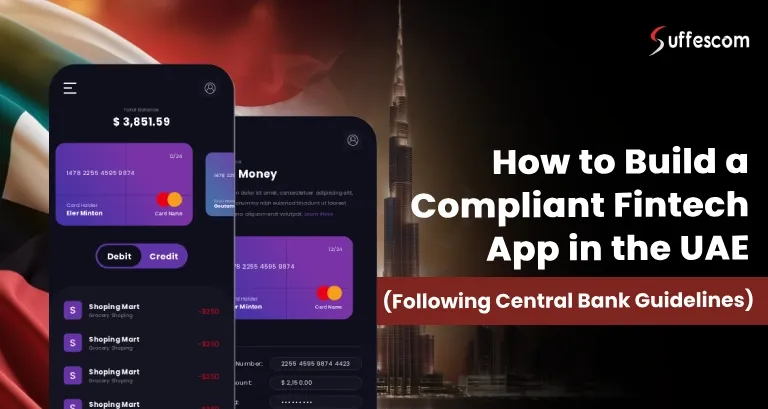
The UAE is becoming a major center for fintech in the Middle East. Many startups and banks are building fintech apps for payments, digital wallets and investment services. The growth is strong. The UAE fintech market is expected to reach about $90.6 billion by 2031 as more people use mobile payments and online banking.
Fintech apps in the UAE cannot launch without following financial rules. Authorities like the Central Bank of the UAE and FSRA in ADGM regulate how financial apps work. These regulators set rules for licensing, customer verification, transaction monitoring and financial data protection. Companies that plan to build a fintech product need to understand these requirements before starting development.
This guide explains how to develop a fintech app that follows all bank guidelines and what those guidelines are, and much more.
Businesses are constantly choosing the UAE as a base for building digital financial products. Payment platforms, investment tools and lending solutions are expanding across the country.
Several factors contribute to the UAE’s strong fintech environment:
National development strategies in UAE are in high focus for digital finance and technology driven services. UAE Vision 2031 shows financial innovation as part of building a diversified digital economy.
Regulatory authorities also created fintech testing environments known as regulatory sandboxes. These allow businesses to test financial products with limited users while regulators observe the system.
Support programs available to fintech startups include:
There are some specialized financial zones in UAE that support fintech app development through independent regulatory frameworks.
It includes:
Digital financial services usage in UAE is increasing every day. People have started to pay for everything from groceries to hotel bookings through mobile wallets and banking apps.
Market developments include:
These trends continue to increase demand for secure compliant fintech applications built for the UAE financial system.
When you develop a fintech app in UAE the first step is identifying which regulator will supervise your product. The authority depends on the financial service your app plans to provide. Payment apps, crypto platforms and investment apps come under different regulators and that’s why selecting the right regulatory authority from the start helps you prepare better for the licensing process and technical architecture.
If you plan to develop a fintech app that handles payments or has in-app payment options, then the Central Bank of the UAE will usually become the main regulator. A lot of payment related fintech applications operate under the Central Bank framework.
Fintech apps developed for the following services fall under CBUAE regulation:
During development your app should include systems for customer verification monitoring and secure payment processing to meet Central Bank compliance standards.
When you are developing a compliant fintech app inside the Dubai International Financial Centre (DIFC), the solution will be regulated by the Dubai Financial Services Authority.
Fintech products commonly developed in DIFC include:
Choosing DIFC means your fintech app will follow the DFSA regulatory framework during licensing development and market launch.
If your fintech app focuses on crypto services or investment platforms the regulatory authority involved will be the Securities and Commodities Authority.
Apps developed under SCA supervision may include:
Fintech app developers building products in these categories should integrate compliance features and obtain regulatory approval before launching the application in the UAE.
The type of financial service your fintech app offers decides which license your business should obtain. Each fintech app solution requires different regulatory approvals.
A payment service provider license is required if you develop a fintech app that processes digital payments. This includes apps that handle online payments or merchant payment systems.
A stored value facility license is required for apps that store user funds digitally. This applies to e-wallet apps and digital stored value systems.
A digital banking license is required when you are building a neobank or a fully digital banking platform that offers banking services without physical branches.
A crypto asset service provider license is required if your fintech app offers crypto exchange services, crypto wallets or other digital asset-related financial services.
After knowing all the regulatory frameworks and licenses, let’s move forward to the next section on how to build a compliant fintech app in UAE.
The UAE is becoming a global fintech base and people are moving towards more digital solutions and which is why when you develop a fintech app, it should comply with all rules and regulations before entering the market.
The process begins by defining the financial service your app will deliver. The product type directly influences licensing requirements, regulatory supervision and compliance obligations.
Common fintech app models include:
Each fintech app solution operates under different regulatory frameworks and approval processes and that’s why partnering with a mobile app development company in Dubai can help you align your fintech app with all the requirements and user expectations.
Before development begins, you should outline the main features that you need to incorporate in the fintech platform. These features support financial operations and the different functionalities the app will provide.
Fintech app features include:
Defining these features early helps structure the platform architecture.
Once the jurisdiction is finalized then you should submit a licensing application to the relevant regulator. Authorities evaluate the company structure and compliance framework before granting approval.
Typical documentation required during licensing includes:
The review process may extend for several months depending on the fintech service and regulator.
Next, the fintech app development company starts working on the user interface, which should support secure financial interactions and clear transaction flows. Fintech interfaces should make payments and financial tracking easy for users.
Important UI/UX components are:
Clear interface design helps users complete financial actions without confusion.
Once the UI/UX phase is completed, the app development stage starts focusing on building the technical infrastructure of the fintech platform. This stage is the main architectural stage where frontend and backend are developed and they must support secure financial transactions and regulatory monitoring.
Core technical components include:
These components are mainly for transparency and secure financial operations in a fintech app.
Before market release, the fintech platform should be tested for security validation and regulatory assessment. Testing guarantees that the application protects financial data and resists unauthorized access.
Types of testing include:
These evaluations confirm that the system meets financial security and compliance standards.
After licensing approval and security validation, the fintech app can be deployed to the market. Also, the fintech app should be maintained constantly for any upgrades or bug fixing.
Ongoing responsibilities include:
All the steps mentioned above, along with collaboration with the best app development company, help you build a compliant fintech app in UAE.
To develop a fintech app for the UAE market, you need to include some essential security features that help protect user accounts and financial activity.
When users create an account in your fintech app, implementing the best access controls is important to prevent unauthorized access.
Common authentication to integrate with is:
These methods add an additional security layer during account login and financial transactions.
Financial regulators require fintech apps to verify customer identity before allowing financial transactions. A feature for KYC verification helps confirm the identity of users during account registration.
Your fintech app should have a feature for constant monitoring of financial transactions as they occur because monitoring transaction patterns helps identify any type of unusual financial activity.
Monitoring features usually include:
A lot of fintech apps in UAE serve international users and businesses that deal with cross-border transactions. A feature for quick language changing and currency support allows users to hold, send, and receive funds in different currencies within the same platform. This feature simplifies international payments and helps businesses handle global transactions directly from the app.
A fintech app working in the UAE should connect with regional payment infrastructure to process digital payments smoothly. Local gateway integrations allow the platform to support payment methods widely used in the UAE.
Common integrations include:
These integrations enable secure payment processing within the UAE financial ecosystem.
Users want complete visibility of their current and past financial activity. A transaction history feature allows users to check past payments and activity in the account within the app. This feature helps users check their spending and maintain financial records.
AI in fintech can help analyze user transaction behavior and generate spending insights. AI-powered financial analysis tools help users know where they are spending more or less, recurring payments, and financial habits through automated data evaluation.
AI systems can evaluate transaction behavior and assign risk scores to financial activity. Machine learning models review different transaction signals to identify potentially risky financial behavior.
AI risk analysis usually evaluates:
All these features are very important when developing a fintech app for the UAE market.
The cost to develop a fintech app in UAE depends on the type of financial solutions you are building, its security infrastructure and features. For example, lending platforms and digital wallets require advanced security features and hence cost more.
Fintech App Development Cost Based on Complexity
| Complexity Level | Estimated Cost (AED) | Timeline to Develop |
| Basic Fintech App | AED 30,000 – AED 55,000 | 2 – 4 months |
| Mid-level Fintech App | AED 55,000 – AED 90,000 | 4 – 6 months |
| Advanced Fintech App | AED 90,000 – AED 130,000+ | 6 – 12 months |
There are different costs of app development for various types; when you decide to build a particular fintech app, it is important to know the estimated cost for better planning.
Development Cost Based on Fintech App Type
| Fintech App Solution | Estimated Development Cost (AED) |
| Digital Wallet App | AED 30,000 – AED 55,000 |
| Payment Gateway Platform | AED 45,000 – AED 75,000 |
| Lending / Loan App | AED 60,000 – AED 95,000 |
| Investment / Trading Platform | AED 80,000 – AED 115,000 |
| Neobank / Digital Banking App | AED 95,000 – AED 130,000 |
The total cost of developing a fintech app can change depending on different factors.
| Layer | Technologies Commonly Used | Purpose |
| Frontend (Mobile & Web) | React, Flutter, Swift, Kotlin | Build mobile and web interfaces for users to access fintech services |
| Backend Development | Node.js, Java, Python, .NET | Manage business logic, APIs, authentication, and financial operations |
| Database | PostgreSQL, MySQL, MongoDB | Store user data, transaction records, and financial information |
| Cloud Infrastructure | AWS, Microsoft Azure, Google Cloud | Provide scalable hosting and infrastructure for fintech platforms |
| Payment Integration | Stripe, PayPal, Network International, Telr | Enable digital payments, card processing, and online transactions |
| Identity & KYC Verification | Jumio, Onfido, Trulioo | Verify user identity and support KYC compliance |
| Security Technologies | SSL Encryption, OAuth 2.0, Multi-Factor Authentication | Protect financial data and secure user accounts |
| Analytics & Monitoring | Google Analytics, Mixpanel, Datadog | Monitor platform performance and user activity |
Many startups skip regulatory sandbox programs offered by financial authorities such as ADGM and DIFC. These programs allow fintech businesses to test financial products in a controlled environment with regulatory supervision.
Benefits of participating in sandbox programs include:
Anti-money laundering monitoring is important for fintech apps handling financial transactions. Weak monitoring systems may fail to find any of the suspicious transactions or unusual account activity.
AML monitoring should include:
These controls help fintech platforms detect and report financial crime risks.
Fintech apps store sensitive financial and personal information. Weak security architecture can expose user data to breaches or unauthorized access.
Security measures usually include:
These protections help maintain trust and protect financial data.
Some startups attempt to release financial apps before obtaining regulatory approval. In the UAE, financial services must operate under the correct license issued by the relevant authority.
Before launching a fintech platform you should:
Fintech apps generate revenue through different monetization models based on the type of financial service.
In the fintech app, you can charge a small fee for every financial transaction processed through the app. This model is usually used by digital wallets and money transfer platforms.
You can integrate a subscription model to provide premium features through monthly or yearly subscription plans. These features may include advanced financial analytics or investment insights.
Lending platforms generate revenue by charging interest on loans issued through the platform. Also, you will get additional service fees that may also apply during loan processing.
Fintech platforms may earn commissions by partnering with banks or investment services. The app receives a commission when users purchase financial products through the platform.
If your fintech app supports international transfers or multi-currency wallets, then you can also charge a fee during currency conversion.
Payment platforms may charge merchants a percentage of each payment processed through their system. This model is widely used in payment gateways and merchant payment solutions.
Fintech platforms are using artificial intelligence to check user transaction behavior and financial activity. AI integration in fintech apps can generate spending analysis and financial recommendations based on real user data.
Open banking allows fintech apps to connect directly with bank accounts through secure APIs. This enables services like balance tracking across multiple banks and direct payment initiation from banking accounts.
Blockchain development is on the rise, aiding the recording of financial transactions through a distributed ledger system. This technology assists fintech platforms in processing digital asset transactions and maintaining transparent financial records.
Financial services are increasingly integrated into non-financial platforms such as ecommerce apps and digital marketplaces. Users can complete payments, access lending services or manage digital wallets directly inside these applications.
Financial platforms are introducing tokenized assets where physical or financial assets are represented digitally on blockchain networks. This allows easier transfer, trading, and management of digital financial assets.
Now, let’s discuss the top 3 fintech app development companies in UAE that you can work with to develop your custom solution.
Suffescom is a top mobile app development company in Dubai, known for building the best fintech platforms like digital wallets, crypto applications and more. The company works with startups and enterprises that want to launch secure financial products with integrated payment infrastructure and advanced transaction management capabilities.
Founded in 2011, Hyperlink Infosystem is one of the best fintech app development companies that aims to create financial mobile apps and web platforms that support online payments and transaction management. The company has developed fintech platforms for ecommerce payments.
Another of the top 3 fintech app development companies on our list is Codiste, which works on financial technology projects involving blockchain networks and decentralized finance systems. Their expertise includes building fintech platforms that require smart contracts, crypto integrations, and secure financial transaction layers.
Fintech platforms in UAE operate under strict financial rules set by authorities like the Central Bank. Any digital wallet or investment app must follow licensing structures, identity verification standards, and transaction monitoring requirements before entering the market.
Working with a reliable fintech app development company helps businesses build platforms that include the required financial integrations, compliance mechanisms, and security architecture expected by regulators in the UAE. With the right development approach and regulatory preparation, companies can introduce fintech solutions that operate smoothly within the country’s financial ecosystem.
Connect with our fintech app development company to build a secure and regulation-ready solution.
To develop a fintech app in UAE, businesses must comply with regulations from authorities like the Central Bank of the UAE, Dubai Financial Services Authority, and Financial Services Regulatory Authority.
Key requirements include:
Fintech app development costs in the UAE typically range between AED 30,000 to AED 130,000+, depending on complexity, feature integration, and more.
The type of license required depends on the fintech service being offered. Companies operating in financial zones such as Dubai International Financial Centre or Abu Dhabi Global Market must follow specific licensing frameworks. Common fintech licenses include:
A compliant fintech application must prioritize security and fraud prevention to protect financial transactions. It includes:
Fintech app development usually takes 2 to 12 months, depending on features and regulatory approvals. Typical app development stages include:
Modern fintech platforms rely on scalable technologies to deliver secure financial services.
Common fintech technologies include:
Know Your Customer (KYC) is a mandatory process used to verify a user’s identity before providing financial services. Key elements of KYC include:
Yes, international businesses can launch fintech apps in the UAE by registering a business entity or operating in financial free zones like Dubai International Financial Centre or Abu Dhabi Global Market.
The UAE fintech ecosystem is growing rapidly due to digital transformation and cashless payment adoption. Popular fintech solutions include:
Fintech apps must follow strict financial compliance standards enforced by regulators such as the Dubai Financial Services Authority and the Central Bank of the UAE.
Key compliance areas include AML regulations, data protection laws, transaction monitoring systems, and financial risk management frameworks. Implementing these standards ensures secure digital transactions and regulatory transparency.
Open banking allows fintech apps to securely connect with bank systems using APIs. This enables services such as account aggregation, automated financial insights, instant payments, and personalized financial management tools.
A fintech development company like Suffescom helps businesses build secure and compliant financial applications while navigating regulatory requirements. Their services typically include:

Senior Content Strategist
Jonathan Raabe is a content marketing professional, focusing on mobile apps, software engineering, artificial intelligence, SaaS, cloud computing, and digital transformation. Jonathan works with visionary brands to translate complicated concepts into content that can be easily understood by their audiences. As an expert in his field, Jonathan strives to create content that is thought-provoking and backed by facts, while at the same time building brand authority and trust.



Related Blogs
Hear directly from clients who partnered with Suffescom to turn their digital ideas into secure, scalable, and high-performing products.

“Suffescom delivered a HIPAA-compliant telemedicine app exceeding expectations, with strong data security and thoughtful development strategies from start to finish.”

“Suffescom helped us build a smart property management and virtual tour platform. Their expertise in AI helped us attract more qualified leads.”

“Suffescom delivered a modern hotel booking app perfectly aligned with customer expectations, which helped us boost sales by 40%.”

“We needed real-time fleet tracking and route optimization. Suffescom developed a platform that reduced our operational expenses in the first quarter.”

“We needed a smart itinerary planner with AI features for tourists. Suffescom delivered beyond our expectations and helped us increase bookings.”