Forex Trading App Development with Crypto Wallet: Features, Cost & Benefits
Key takeaways: The UAE is a serious market for fintech and digital-asset products. DIFC alone hosted 1,677 A [...]
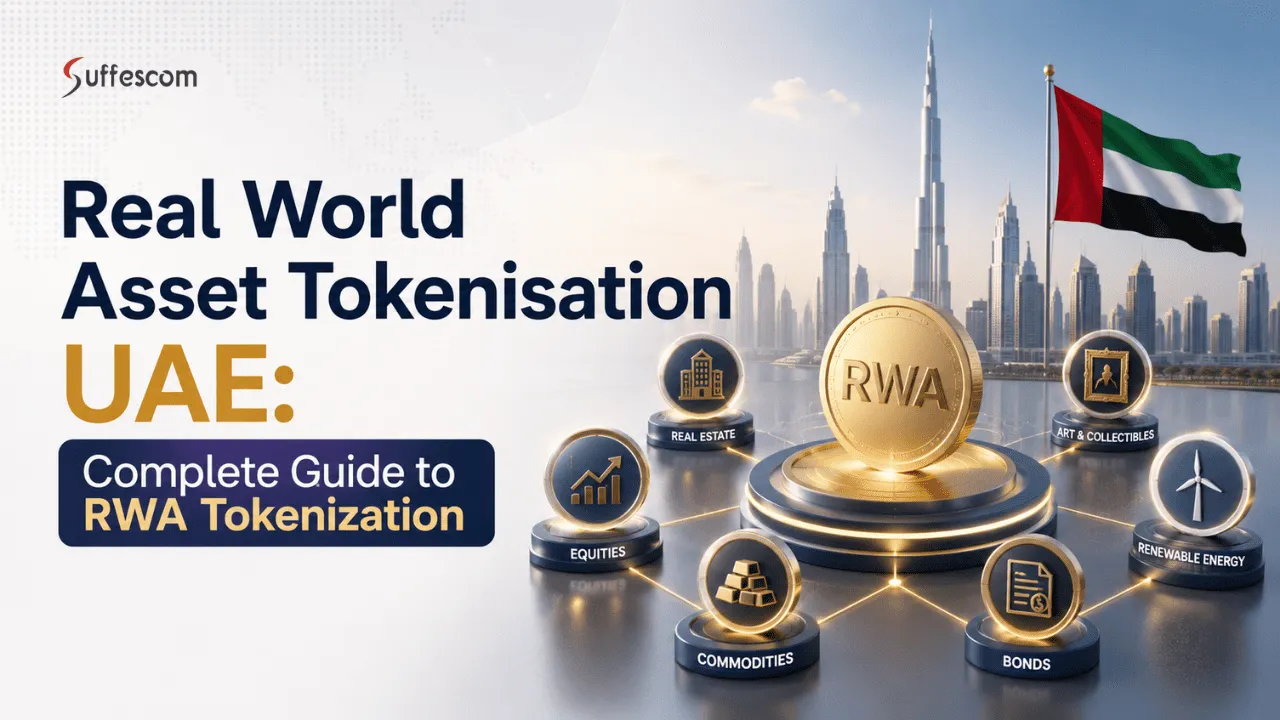
Real World Asset (RWA) tokenization is transforming how physical assets are owned, traded, and financed by converting them into blockchain-based digital tokens. From real estate and precious metals to infrastructure projects and investment funds, tokenization enables fractional ownership, improves liquidity, reduces transaction costs, and expands access to global investors.
The UAE is rapidly emerging as a global hub for real-world asset tokenization, driven by its progressive regulatory framework, digital economy initiatives, and increasing institutional adoption across the real estate, banking, and investment sectors. Supported by regulators such as VARA, ADGM, DIFC, and the UAE Central Bank, businesses can develop compliant tokenization platforms while attracting regional and international capital.
In this guide, you'll learn how RWA tokenization works, the assets that can be tokenized, the UAE regulatory landscape, key business benefits, real-world use cases, development costs, and best practices for launching a secure and scalable tokenization platform in 2026.
A Real World Asset (RWA) is any tangible or off-chain asset that holds measurable economic value and can be legally owned or transferred. Common examples include residential and commercial real estate, precious metals, artwork, infrastructure projects, commodities, private equity, and debt instruments. By bringing these assets on-chain, businesses can unlock new investment opportunities while maintaining a clear link to the underlying asset. As adoption grows, the World Economic Forum recognizes asset tokenization as a key innovation that can improve market efficiency, expand investor access, and enhance liquidity across financial markets.
Tokenization is the process of creating blockchain-based digital tokens that represent ownership, value, or rights associated with a real-world asset. Each token is securely recorded on a distributed ledger and can be transferred, traded, or managed according to predefined rules encoded in smart contracts. This enables faster transactions, improved transparency, and fractional ownership without changing the underlying asset itself.
The tokenization process begins with identifying and valuing a physical asset, followed by establishing its legal ownership structure. Smart contracts are then developed to define ownership rights, transfer conditions, and revenue distribution. Once the asset is verified, digital tokens are issued on a blockchain, allowing investors to buy, sell, or hold tokenized ownership securely while every transaction is recorded on an immutable ledger.
This table highlights the key differences between tokenization and traditional asset ownership:
| Feature | Traditional Asset Ownership | Tokenized Asset Ownership |
| Ownership Structure | Single or limited owners | Fractional ownership through digital tokens |
| Minimum Investment | High capital requirement | Lower investment threshold |
| Liquidity | Limited and often time-consuming | Higher liquidity through token trading |
| Transaction Speed | Days or weeks | Near-instant or significantly faster settlement |
| Transparency | Manual records and intermediaries | Immutable blockchain-based records |
| Accessibility | Restricted by geography and regulations | Broader access for eligible global investors |
| Transfer Process | Extensive paperwork and approvals | Smart contract-driven digital transfers |
| Operational Costs | Higher legal and administrative costs | Reduced processing and intermediary costs |
| Revenue Distribution | Manual payouts | Automated through smart contracts |
| Security | Centralized record management | Cryptographically secured blockchain transactions |
The UAE has established itself as one of the world's leading destinations for Real World Asset (RWA) tokenization by combining progressive regulation, government-led digital transformation, and a rapidly growing blockchain ecosystem. Rather than treating tokenization as an emerging trend, the country has built an environment where enterprises, financial institutions, and investors can develop and adopt blockchain-based asset ownership with greater confidence.
From tokenized real estate and investment funds to commodities and infrastructure projects, businesses are increasingly choosing the UAE to launch compliant digital asset platforms. This growth is supported by government initiatives, dedicated virtual asset regulations, institutional participation, and strong cross-border investment opportunities.
The UAE has made blockchain and digital transformation a core part of its long-term economic strategy. Through national and emirate-level initiatives, the government continues to promote innovation, encourage Web3 adoption, and modernize financial and public-sector services using emerging technologies.
UAE Digital Economy Strategy
The UAE Digital Economy Strategy aims to increase the contribution of the digital economy to the nation's GDP by accelerating the adoption of advanced technologies across industries. By promoting blockchain innovation, digital infrastructure, and fintech development, the strategy creates a favorable environment for businesses building compliant Real World Asset (RWA) tokenization platforms and other digital asset solutions.
Dubai's D33 Agenda is designed to position the emirate among the world's leading economic and financial centers. The initiative promotes investment in digital finance, emerging technologies, and innovation, helping attract enterprises building blockchain-based asset tokenization and digital investment solutions.
Dubai Future Foundation
The Dubai Future Foundation supports emerging technologies through research, pilot programs, and public-private collaboration. Its focus on blockchain, Web3, and digital innovation strengthens the ecosystem required for secure and scalable real-world asset tokenization.
A major reason the UAE has become a preferred destination for real-world asset tokenization is its evolving regulatory framework. Multiple authorities oversee digital assets across different jurisdictions, providing businesses with clearer compliance pathways while protecting investors and maintaining financial stability.
Key regulatory authorities
Institutional participation is accelerating the growth of RWA tokenization across the UAE. Banks, asset managers, real estate developers, family offices, investment firms, and fintech companies are increasingly exploring blockchain to improve asset liquidity, automate investment processes, and expand access to global capital.
Industries driving adoption
Why institutions are adopting tokenization
As institutional adoption continues to grow, tokenization is becoming a key component of the UAE's digital finance ecosystem, supporting new investment models and blockchain-powered capital markets.
| UAE Advantage | Impact on Tokenization |
| Regulatory clarity | Builds investor confidence and reduces compliance uncertainty |
| Tax advantages | Attracts regional and international capital |
| Digital economy initiatives | Accelerates blockchain adoption across industries |
| Global financial hub | Enables cross-border investment opportunities |
| Blockchain innovation ecosystem | Encourages enterprise innovation and technology development |
These strengths position the UAE as an ideal jurisdiction for launching compliant, cross-border tokenization projects that can attract institutional and accredited investors worldwide.
RWA tokenization is a structured process that transforms physical or off-chain assets into blockchain-based digital tokens. While the technology enables fractional ownership and faster transactions, successful tokenization also depends on accurate asset valuation, legal structuring, regulatory compliance, and secure smart contract development.
Whether you're tokenizing real estate, investment funds, commodities, or infrastructure projects, each stage plays a critical role in ensuring the asset is legally compliant, technically secure, and attractive to investors. The following steps outline the typical lifecycle of a real-world asset tokenization project.
The first step in Real World Asset (RWA) tokenization is selecting an asset that is suitable for blockchain-based ownership. The asset should have clear ownership, measurable economic value, and strong investment potential. Choosing the right asset is critical because it influences the project's legal structure, regulatory requirements, token economics, and long-term market demand.
Whether the goal is to tokenize a commercial property, an investment fund, or a renewable energy project, businesses should conduct thorough due diligence before moving forward.
Key Considerations
Real-World Example
A Dubai-based real estate developer planning to tokenize a commercial office tower valued at AED 100 million. Instead of selling the property to a single buyer, the developer creates 100,000 blockchain-based tokens, with each token representing 0.001% ownership of the asset.
Once a suitable asset has been selected, the next step is determining its fair market value. Asset valuation establishes the economic foundation of the tokenization project by defining how many tokens will be issued, their initial price, and the ownership percentage each token represents. A transparent and independently verified valuation also strengthens investor confidence and supports regulatory compliance.
Common Valuation Methods
Real-World Example
A licensed valuation firm assesses the Dubai commercial office tower and values it at AED 100 million based on factors such as location, rental income, occupancy, and market conditions. The developer then issues 100,000 digital tokens, with each token representing 0.001% ownership of the property, ensuring fair pricing and proportional ownership for investors.
Before digital tokens can be issued, the underlying asset must be placed within a legally recognized ownership framework. This step determines who legally owns the asset, what rights token holders receive, and how those rights are protected under applicable laws. A well-defined legal structure reduces regulatory risks, protects investors, and ensures the tokenized asset remains enforceable in the real world.
Key Legal Considerations
Real-World Example
The Dubai commercial office tower is transferred to a Special Purpose Vehicle (SPV), which legally owns the property. Investors purchase blockchain-based tokens representing proportional ownership in the SPV rather than the property itself.
Legal agreements define investor rights, including rental income distribution, capital appreciation, governance, and transfer conditions, creating a transparent and legally compliant investment structure.
Once the legal ownership structure is established, the next step is developing smart contracts that govern the lifecycle of the tokenized asset. Smart contracts are self-executing programs deployed on a blockchain that automatically enforce predefined rules and conditions without relying on manual intervention. They improve transparency, reduce operational costs, and ensure transactions are executed accurately and securely.
What Smart Contracts Can Automate
Real-World Example
Once the legal structure is in place, smart contracts are developed to issue the 100,000 ownership tokens, automate ownership transfers, verify investors, and distribute rental income. Before deployment, the contracts undergo security audits and testing to ensure accurate, secure, and compliant operation.
Once the smart contracts have been developed and audited, the next step is issuing digital tokens that represent ownership of the underlying asset. Token issuance transforms the physical asset into blockchain-based digital units, enabling investors to buy, hold, and transfer fractional ownership securely. The issuance process also establishes the token's supply, ownership structure, and distribution mechanism.
What Token Issuance Includes
Real-World Example
After the smart contracts are deployed, 100,000 digital ownership tokens are issued on the blockchain, with each token representing 0.001% ownership of the Dubai commercial office tower. Once investors complete KYC and AML verification, the tokens are transferred to their digital wallets, enabling secure, transparent, and fractional ownership of the property.
After the initial token offering is completed, eligible investors may have the opportunity to buy or sell their tokens through a secondary market. Unlike traditional real-world assets, which often require lengthy sale processes and multiple intermediaries, tokenized assets can be transferred more efficiently on blockchain-based trading platforms, subject to applicable regulations and platform rules.
Secondary trading plays a crucial role in improving liquidity, enabling investors to enter or exit their positions without requiring the underlying asset to be sold.
Where Can Tokenized Assets Be Traded?
Real-World Example
After the Dubai commercial office tower is tokenized, investors can trade their ownership tokens on a regulated secondary marketplace. When a token holder sells their tokens, the blockchain automatically records the ownership transfer in real time, enabling greater liquidity without affecting the property's ownership structure or ongoing rental income distribution.
For income-generating assets, the final stage of the tokenization lifecycle involves distributing returns to token holders based on their ownership percentage. Revenue distribution connects blockchain-based ownership with real-world financial benefits by allowing investors to receive their share of income generated by the underlying asset.
Smart contracts can automate these payments, reducing manual processing, improving accuracy, and creating a transparent record of all distributions made to investors.
Examples of Distributed Revenue
Real-World Example
Once the Dubai commercial office tower generates rental income, smart contracts automatically distribute payments based on each investor's token holdings. For example, an investor holding 1,000 of the 100,000 tokens owns 1% of the asset and receives 1% of the eligible rental income. Every distribution is recorded on the blockchain, ensuring transparent, accurate, and automated revenue sharing.
The UAE's Real World Asset (RWA) ecosystem supports the tokenization of various physical and financial assets. While real estate remains the most common use case, businesses are increasingly exploring tokenization across commodities, infrastructure, renewable energy, and alternative assets.
The suitability of an asset depends on factors such as ownership clarity, market demand, regulatory requirements, and investment potential.
Real estate is one of the most prominent asset classes for tokenization in the UAE due to its high value and strong investor demand. Residential properties, commercial buildings, and mixed-use developments can be converted into digital tokens representing ownership interests. This enables more flexible investment models while improving transparency and accessibility.
Commercial assets such as office towers, retail spaces, warehouses, and hospitality properties are suitable for tokenization because they often generate predictable income streams. Tokenization can help property owners create new investment opportunities and allow investors to participate in high-value commercial assets through digital ownership models.
Luxury assets including yachts, classic cars, watches, jewelry, and rare collectibles can be represented through blockchain-based tokens. Tokenization helps maintain ownership records, verify authenticity, and create new opportunities for investors to access high-value alternative assets.
Precious metals such as gold and silver are commonly considered suitable assets for tokenization due to their established value and global demand. Digital tokens backed by physical reserves can provide transparent ownership records while making precious metal investments more accessible and easier to transfer.
Artwork, rare collectibles, and other valuable items can be tokenized to create digital representations of ownership. Blockchain technology helps maintain provenance records, track ownership history, and enable broader participation in traditionally less liquid asset markets.
Commodities such as energy resources, agricultural products, and industrial materials can be tokenized to improve transparency across trading processes. Blockchain-based ownership records can enhance traceability, simplify transactions, and support more efficient commodity markets.
Large-scale infrastructure assets such as transportation systems, utilities, logistics facilities, and development projects can benefit from tokenization. By representing ownership interests digitally, these assets can become more accessible to investors and support alternative financing models.
Carbon credits can be tokenized to create transparent digital records of environmental assets. Blockchain-based systems help track ownership, transfers, and retirement of credits, supporting greater trust and efficiency in sustainability-focused markets.
Renewable energy projects such as solar farms and wind power facilities represent another emerging area for RWA tokenization. Tokenized ownership models can help connect investors with sustainable infrastructure projects while improving transparency around asset ownership and revenue flows.
| Asset Type | Tokenization Suitability | Liquidity Potential |
| Real Estate | Excellent | High |
| Gold | Excellent | High |
| Art & Collectibles | High | Medium |
| Commodities | High | High |
| Renewable Energy | Excellent | High |
The UAE's diverse asset landscape and evolving digital asset ecosystem make it suitable for tokenizing multiple asset classes, with real estate, financial assets, and sustainable infrastructure emerging as key opportunities.
Regulatory compliance is one of the most important factors for launching a successful real-world asset tokenization project in the UAE. Since tokenized assets can involve securities, virtual assets, investment products, and financial services, businesses must consider the applicable regulatory framework based on the asset type, token structure, jurisdiction, and services offered.
The UAE follows a multi-regulator approach, where different authorities oversee digital asset activities across Dubai, Abu Dhabi, and financial free zones. This structured regulatory environment helps businesses build compliant tokenization platforms while providing greater confidence to investors and institutions.
The Virtual Assets Regulatory Authority (VARA) is Dubai's dedicated regulator responsible for overseeing virtual asset activities and Virtual Asset Service Providers (VASPs) operating in Dubai, excluding the Dubai International Financial Centre (DIFC). VARA was established under Dubai's Virtual Assets Law No. (4) of 2022 to create a regulated environment that supports innovation while maintaining market integrity, consumer protection, and financial crime prevention standards.
For RWA tokenization projects, VARA becomes relevant when the token structure or business activity falls within Dubai's virtual asset regulatory framework, such as virtual asset issuance, custody, exchange, brokerage, or transfer services. The regulatory requirements depend on the nature of the token, services offered, and how investors interact with the platform.
Virtual Assets and Related Activities Regulations 2023
VARA's primary regulatory framework is the Virtual Assets and Related Activities Regulations 2023, which establishes requirements for businesses conducting virtual asset activities in Dubai. The framework defines regulatory obligations for licensed entities and provides activity-specific rules covering areas such as governance, compliance, technology, and market conduct.
For RWA tokenization businesses, this framework helps determine:
Virtual Asset Issuance Regulations
Token issuance is one of the most important considerations for RWA projects. VARA has a dedicated Virtual Asset Issuance Rulebook that establishes requirements for entities issuing virtual assets in Dubai. The rules define different issuance categories and specify conditions that issuers must meet before launching token offerings.
For RWA tokenization platforms, this impacts areas such as:
| Area | Regulatory Consideration |
| Token Design | Determine whether the token falls under VARA's virtual asset framework |
| Platform Model | Identify required VASP license categories |
| Investor Access | Implement KYC, AML, and eligibility checks |
| Custody | Ensure secure digital asset storage mechanisms |
| Trading | Follow requirements for regulated marketplace activities |
| Operations | Maintain governance, risk, and technology controls |
Abu Dhabi Global Market (ADGM) has established one of the UAE’s most comprehensive regulatory frameworks for digital assets through the Financial Services Regulatory Authority (FSRA). For businesses exploring Real World Asset (RWA) tokenization in the UAE, ADGM provides an institutional-grade environment for issuing, managing, and operating blockchain-based financial products.
Unlike general virtual asset frameworks, ADGM’s approach focuses heavily on regulated financial activities, digital securities, investment products, and institutional asset management, making it particularly relevant for enterprises, investment firms, family offices, and financial institutions looking to tokenize real-world assets.
| RWA Use Case | ADGM Relevance |
| Tokenized investment funds | Digital investment structures |
| Tokenized securities | Regulated financial products |
| Institutional asset tokenization | Enterprise-grade compliance |
| Real estate investment tokens | Fractional investment models |
| Digital asset platforms | Regulated blockchain infrastructure |
The Dubai International Financial Centre (DIFC) has developed a dedicated legal and regulatory framework to support digital asset innovation while maintaining strong financial market standards. For Real World Asset (RWA) tokenization in the UAE, DIFC is particularly relevant for businesses dealing with tokenized securities, investment products, digital asset ownership structures, and institutional financial services.
The DIFC framework is governed by the Dubai International Financial Centre Digital Assets Law (DIFC Law No. 2 of 2024), along with regulations and rules issued by the Dubai Financial Services Authority (DFSA).
Unlike VARA’s broader virtual asset framework in mainland Dubai, DIFC focuses on the legal recognition of digital assets within a financial services environment.
| Activity | Regulatory Consideration |
| Tokenized securities issuance | May require authorization under the DFSA's financial product framework |
| Digital asset custody | May require a DFSA custody authorization |
| Investment platform operation | May require a financial services permission from the DFSA |
| Asset management | May be regulated as an investment management activity |
| Digital asset marketplace | May require DFSA approval depending on the platform's business model and services |
Role of DIFC in Real Estate and Institutional Tokenization
DIFC can support RWA applications involving:
For example, a company creating a blockchain platform for fractional ownership of commercial properties may need to evaluate whether the token represents an investment product requiring DFSA oversight.
Anti-Money Laundering (AML) and Know Your Customer (KYC) compliance are fundamental requirements for any business involved in Real World Asset (RWA) tokenization in the UAE. Since tokenized assets allow digital ownership, investment participation, and blockchain-based transfers, regulators require platforms to establish strong controls to prevent money laundering, terrorism financing, fraud, and misuse of digital assets.
Federal Decree-Law No. (20) of 2018 on Anti-Money Laundering and Combating the Financing of Terrorism
The UAE’s Federal AML Law No. 20 of 2018 provides the primary legal foundation for preventing financial crimes across regulated industries, including businesses involved in virtual assets and digital financial services. It requires organizations to identify customers, evaluate risks, monitor transactions, and report suspicious activities to relevant authorities.
For RWA tokenization platforms, this law becomes important when businesses issue asset-backed tokens, facilitate investment transactions, provide custody services, or operate token marketplaces. Companies must build compliance programs that allow regulators to trace ownership, transaction history, and movement of tokenized assets.
Key requirements include:
AML/KYC Requirements for Different RWA Use Cases
| RWA Use Case | AML/KYC Considerations |
| Tokenized Real Estate | Verify property investors, ownership structures, and sources of funds |
| Tokenized Securities | Conduct investor verification and maintain regulatory records |
| Asset-Backed Tokens | Verify underlying asset ownership and transaction history |
| Secondary Marketplaces | Monitor token trading activity and wallet transfers |
| Digital Asset Custody | Maintain secure ownership records and access controls |
Building AML/KYC Infrastructure for an RWA Platform
A compliant RWA tokenization platform typically integrates multiple compliance layers, including automated identity verification, sanctions screening, transaction monitoring, and blockchain analytics. These systems help businesses manage regulatory obligations while maintaining a smooth investor experience.
Investor protection is a critical component of the UAE’s regulatory approach toward Real World Asset (RWA) tokenization. Since tokenized assets can represent ownership rights, investment opportunities, or financial interests in assets such as real estate, commodities, securities, and infrastructure projects, regulators require businesses to ensure transparency, fair treatment, and adequate risk disclosure for investors.
Unlike traditional asset investments, tokenization introduces new considerations around digital ownership, blockchain transactions, smart contract execution, and asset verification. Therefore, RWA platforms must establish mechanisms that help investors understand what they are purchasing, what rights they receive, and what risks are associated with tokenized assets.
The UAE’s investor protection framework is influenced by requirements from regulators such as VARA, ADGM FSRA, DIFC DFSA, and securities regulators, depending on the structure and classification of the token.
Investor Protection Requirements Across RWA Platforms
| Protection Area | Requirement |
| Asset Disclosure | Provide clear information about underlying assets |
| Ownership Verification | Prove legal connection between token and asset |
| Risk Disclosure | Explain investment and technology risks |
| Investor Verification | Confirm eligible participants |
| Custody Security | Protect digital asset ownership |
| Transparency | Maintain accurate records and reporting |
Investor trust is essential for the adoption of Real World Asset (RWA) tokenization platforms in the UAE. Since tokenization introduces a new way of representing ownership and investment rights through blockchain, businesses must ensure that investors can verify the underlying assets, understand their rights, and trust the platform’s security and compliance framework.
Key practices that help build investor confidence include:
Independent Asset Valuation and Verification
Independent valuation ensures that tokenized assets accurately reflect the value of the underlying real-world asset. Third-party verification helps investors understand the asset’s market value, condition, ownership status, and potential risks.
For example, a tokenized real estate platform should provide verified property valuations, ownership documents, and relevant financial information to demonstrate that issued tokens are backed by genuine assets.
Legal Documentation and Ownership Transparency
Clear legal structures help investors understand what rights their tokens represent. Businesses should establish proper documentation connecting blockchain tokens with the underlying assets.
Important documents may include:
This ensures investors know whether tokens represent direct ownership, investment rights, or a claim linked to asset performance.
Smart Contract Audits and Security Reviews
Smart contracts automate important functions such as token issuance, ownership transfers, and revenue distribution. Security audits help identify vulnerabilities before they impact investors.
Audits should focus on:
Regular reviews are recommended whenever contracts are upgraded or new features are introduced.
Transparent Ownership and Transaction Records
Blockchain enables real-time visibility into token ownership and transaction history. RWA platforms should use this advantage to provide investors with accurate records of:
This improves transparency and reduces disputes regarding ownership.
Regular Asset Performance Reporting
Investors need continuous visibility after purchasing tokenized assets. Platforms should provide regular updates on asset performance, valuation changes, and revenue distribution. Reporting may include:
Secure Custody and Digital Asset Protection
Strong custody infrastructure protects investor holdings and reduces risks related to unauthorized access or asset loss. Businesses should implement:
Institutional investors often evaluate custody security before participating in tokenized asset markets.
Regulatory Compliance and Investor Communication
Compliance with UAE regulatory requirements helps establish trust among investors and institutions. Platforms should maintain proper governance, risk management, and disclosure processes. Businesses should provide clear information about:
Launching a Real World Asset (RWA) tokenization platform in the UAE requires businesses to carefully evaluate the regulatory permissions and licenses applicable to their activities. Licensing requirements depend on factors such as the type of token being issued, the underlying asset, services offered, target investors, and the jurisdiction where the business operates.
A platform that only provides blockchain technology may have different requirements compared with a company that issues investment tokens, manages investor funds, provides custody, or operates a marketplace for trading tokenized assets.
The UAE regulatory approach focuses on ensuring that businesses conducting regulated activities operate with proper governance, compliance controls, risk management systems, and investor protection measures.
VARA Virtual Asset Licensing Framework
The Virtual Assets Regulatory Authority (VARA) regulates virtual asset activities in Dubai through its licensing framework established under Dubai Law No. 4 of 2022 Regulating Virtual Assets.
Businesses involved in RWA tokenization may require a VARA license if they perform regulated virtual asset activities such as issuing, facilitating, transferring, or managing tokenized assets.
ADGM FSRA Licensing Requirements
The Abu Dhabi Global Market (ADGM) Financial Services Regulatory Authority (FSRA) provides a regulatory framework for businesses conducting digital asset and financial activities within ADGM. For RWA tokenization companies, licensing requirements depend on whether the token represents a virtual asset, security, or regulated financial product.
Financial Services Permission (FSP)
Businesses conducting regulated activities in ADGM may require a Financial Services Permission from the FSRA. The authorization process typically evaluates:
Activities Requiring Regulatory Approval
Depending on the platform model, approval may be required for:
For example, a company offering tokenized investment opportunities linked to commercial properties may need regulatory approval if the tokens represent financial interests.
DIFC DFSA Authorization Framework
Businesses operating within the Dubai International Financial Centre (DIFC) must comply with requirements established by the Dubai Financial Services Authority (DFSA). DIFC licensing is particularly relevant for institutional RWA projects involving:
Businesses operating within the Dubai International Financial Centre (DIFC) must comply with requirements established by the Dubai Financial Services Authority (DFSA). DIFC licensing is particularly relevant for institutional RWA projects involving:
UAE Central Bank Licensing Considerations
The Central Bank of the UAE (CBUAE) becomes relevant when RWA platforms involve payment-related activities or financial services connected to banking infrastructure. Licensing considerations may apply to businesses involved in:
For example, an RWA platform integrating tokenized payments or digital currency settlement mechanisms may require additional approval depending on its structure.
Factors Determining RWA Tokenization Licensing Requirements
The required license depends on several factors:
| Factor | Impact on Licensing |
| Token Type | Determines whether token falls under virtual asset or securities regulation |
| Asset Category | Real estate, securities, commodities, and other assets may have different requirements |
| Business Activity | Issuance, custody, exchange, and advisory services require different approvals |
| Target Investors | Retail and institutional investors may have different requirements |
| Jurisdiction | Dubai, ADGM, and DIFC have separate regulatory frameworks |
Real World Asset (RWA) tokenization is transforming how businesses, investors, and financial institutions access, manage, and trade physical and financial assets. By converting real-world assets into blockchain-based tokens, UAE businesses can create new investment models that improve accessibility, transparency, efficiency, and global participation.
The UAE’s strong digital asset ecosystem, progressive regulatory environment, and growing institutional interest make it an attractive market for tokenized assets. From real estate and commodities to investment funds and infrastructure projects, RWA tokenization enables businesses to unlock new value from traditionally illiquid assets.
One of the biggest advantages of RWA tokenization is the ability to divide high-value assets into smaller digital units, allowing multiple investors to own fractional interests in assets that were previously difficult to access.
Traditional investments such as commercial real estate, luxury properties, and infrastructure projects often require significant capital, limiting participation to wealthy individuals and large institutions. Tokenization lowers this barrier by representing ownership through smaller blockchain-based tokens.
For example, instead of purchasing an entire commercial property worth millions of dirhams, investors can purchase smaller tokenized portions representing a share of the asset.
Many traditional assets, such as real estate, private equity, and collectibles, are valuable but difficult to sell quickly. Tokenization improves liquidity by creating digital representations of these assets that can potentially be transferred or traded through regulated marketplaces.
Unlike traditional asset transactions that may involve lengthy negotiations, paperwork, and intermediaries, tokenized assets can enable more efficient ownership transfers.
Improved liquidity can help:
For example, a tokenized real estate investment can allow investors to sell their ownership portion without requiring the transfer of an entire property.
RWA tokenization enables businesses in the UAE to attract investors from international markets by removing geographical barriers associated with traditional asset investments.
Blockchain-based platforms allow verified investors to participate in asset opportunities digitally, subject to applicable regulatory requirements.
For UAE businesses, this creates opportunities to:
This is especially valuable for sectors such as Dubai real estate, where international investors already represent a significant market segment.
Tokenization provides a digital infrastructure that can make UAE assets more accessible to qualified investors worldwide.
Traditional asset transactions often involve multiple intermediaries, including brokers, banks, legal professionals, and settlement providers. These processes can increase costs and create operational delays.
RWA tokenization can reduce transaction costs by using blockchain technology to automate ownership records, verification processes, and asset transfers.
Cost efficiencies can come from:
For enterprises managing multiple assets, tokenization can create more efficient systems for issuing, managing, and transferring ownership interests.
Blockchain technology provides a transparent and traceable record of token ownership and transaction history. This improves confidence among investors, asset managers, and regulators.
Every token transaction can be recorded on a blockchain ledger, creating visibility into:
For RWA platforms, transparency helps address one of the biggest challenges in traditional asset markets: verifying ownership and maintaining accurate records.
For example, investors participating in tokenized real estate projects can track ownership records and transaction activity through blockchain-based systems.
Traditional asset transactions can take days or weeks to complete due to manual verification, banking processes, and legal documentation requirements.
Tokenization enables faster settlement by using blockchain networks to automate ownership transfers and transaction verification.
Benefits include:
Faster settlement is particularly valuable for institutional investors and financial institutions that require efficient transaction processing.
Smart contracts are self-executing blockchain programs that automatically perform predefined actions when specific conditions are met. They are one of the core technologies enabling RWA tokenization.
In tokenized asset ecosystems, smart contracts can automate:
For example, a tokenized property platform can use smart contracts to automatically distribute rental income among token holders based on their ownership percentage.
Automation reduces manual processes, minimizes errors, and improves operational efficiency.
In the UAE, this supports the growth of a broader tokenized investment ecosystem where investors can participate in multiple asset categories through regulated digital platforms.
Real World Asset tokenization is gaining adoption among UAE industries as organizations look for new ways to improve capital access, create digital investment products, and modernize asset management processes.
Unlike traditional asset ownership models, tokenization enables businesses to digitize ownership rights, automate transactions, and connect asset markets with a wider range of investors.
The UAE real estate sector is one of the earliest adopters of RWA tokenization due to high-value assets and strong international investor demand.
Developers and property companies are exploring tokenization to:
For developers, tokenization can become an additional fundraising channel by allowing investors to participate digitally in real estate opportunities.
Banks are exploring RWA tokenization as part of broader digital transformation strategies.
Financial institutions can use tokenization to develop:
Tokenization allows banks to combine traditional financial expertise with blockchain infrastructure while improving transaction efficiency and creating new revenue streams.
Investment firms and family offices are evaluating tokenized assets as a way to modernize portfolio management and access alternative investment opportunities.
Tokenization can help these organizations:
For family offices managing diversified portfolios, tokenization provides another layer of asset accessibility and investment flexibility.
FinTech companies are building RWA platforms that connect traditional assets with blockchain-based financial systems.
Startups are developing solutions such as:
These companies play an important role in creating the technology layer required for businesses to adopt tokenized assets.
Asset managers are using tokenization to improve how investment products are created, distributed, and managed.
Tokenization enables asset managers to:
This can be particularly valuable for alternative investment markets where traditional entry barriers are high.
Government entities in the UAE are exploring blockchain-based solutions to improve transparency, efficiency, and digital infrastructure.
Potential adoption areas include:
Government adoption can further strengthen confidence in blockchain-based asset models and encourage wider market participation.
The UAE’s hospitality industry can benefit from tokenization by creating new investment and ownership models around tourism-related businesses.
Hospitality companies can explore tokenization for:
This aligns with the UAE’s position as a global tourism and investment destination.
Energy companies are exploring blockchain-based solutions to improve investment participation and transparency in sustainability-focused projects.
Tokenization can support businesses by:
Real estate is emerging as one of the strongest use cases for Real World Asset (RWA) tokenization in the UAE, driven by the country’s high-value property market, international investor demand, and growing digital asset ecosystem.
Through blockchain-based tokenization, real estate assets can be digitally represented, enabling new ownership models, improved accessibility, and more efficient investment processes. Instead of relying only on traditional property transactions, developers, investors, and asset managers can use tokenized models to create transparent and flexible investment opportunities.
Dubai, in particular, is becoming a key market investing in real estate tokenization platform development as businesses explore blockchain-powered solutions for property investment, fractional ownership, and digital asset management.
Fractional ownership is one of the biggest advantages of real estate tokenization. Instead of requiring investors to purchase an entire property, blockchain technology allows a high-value asset to be divided into multiple digital tokens, with each token representing a share or financial interest in the property.
This model makes premium real estate assets more accessible by reducing the minimum investment requirement. Investors can participate in properties such as luxury apartments, commercial buildings, and hospitality projects without committing the full purchase amount..
Tokenized real estate can simplify rental income distribution by using blockchain technology and smart contracts to automate revenue sharing among investors.
In a traditional property investment model, rental income distribution often involves manual calculations, intermediaries, and administrative processes. Tokenization enables platforms to automatically calculate investor shares based on token ownership and distribute income according to predefined rules.
The UAE attracts investors from across the world, particularly in markets such as Dubai real estate. However, traditional overseas property investment can involve complex processes, including legal documentation, currency exchange, and lengthy transaction procedures.
Real estate tokenization creates a digital investment model that can help qualified global investors access UAE property opportunities through regulated platforms.
Commercial real estate is particularly suitable for tokenization because these assets often have high valuations, generate recurring income, and require significant capital investment.
Assets that can be tokenized include:
Tokenizing commercial properties allows owners to unlock liquidity without selling the entire asset. Instead of transferring full ownership, businesses can create digital investment opportunities backed by commercial property value.
Residential real estate is another major area where tokenization can create new investment opportunities in the UAE. Developers can use tokenization to represent interests in luxury apartments, villas, residential communities, and upcoming property projects.
Tokenized residential projects can support:
For investors, tokenized residential assets provide access to UAE property markets without the need for complete property ownership. This can be especially valuable for international investors interested in Dubai and Abu Dhabi real estate markets.
| Traditional Investment | Tokenized Investment |
| High capital required to purchase complete properties | Lower entry investment through fractional ownership |
| Slow settlement due to paperwork and intermediaries | Faster blockchain-based settlement and ownership transfer |
| Limited investors due to financial barriers | Global investor participation through digital platforms |
| Manual documentation and administrative processes | Smart contracts automate ownership and transactions |
A successful RWA tokenization platform requires a combination of blockchain infrastructure, smart contracts, token standards, security solutions, and compliance technologies. The technology stack determines how assets are tokenized, managed, transferred, and secured throughout their lifecycle.
| Layer | Technology |
| Blockchain Networks | Ethereum, Polygon, Avalanche, Hyperledger Fabric |
| Smart Contracts | Solidity, Vyper, Rust, Hardhat |
| Token Standards | ERC-20, ERC-721, ERC-1400, ERC-3643 |
| Wallets & Custody | MetaMask, WalletConnect, Fireblocks, BitGo |
| Oracles | Chainlink, Band Protocol, API3 |
| Compliance | Onfido, Sumsub, Chainalysis |
| Backend | Node.js, Python, Java, Go |
| Database | PostgreSQL, MongoDB, IPFS |
| Frontend | React.js, Next.js, Flutter |
| APIs | Web3.js, Ethers.js, GraphQL |
While Real World Asset (RWA) tokenization offers significant opportunities for businesses and investors, implementing a successful tokenization ecosystem requires addressing several regulatory, technical, and operational challenges. Unlike purely digital assets, RWAs connect blockchain technology with real-world ownership, legal frameworks, and financial systems, creating additional complexities.
For UAE businesses exploring tokenized assets, addressing these challenges is essential to building secure, compliant, and scalable platforms that can gain investor and regulatory confidence.
Regulatory compliance is one of the biggest challenges in RWA tokenization because tokenized assets can fall under different regulatory categories depending on their structure, purpose, and investor rights.
Businesses must determine whether their tokens are classified as:
Platforms may need to comply with requirements related to:
In the UAE, businesses must evaluate applicable frameworks from regulators such as VARA, ADGM FSRA, DIFC DFSA, and other relevant authorities before launching tokenized asset services.
Accurately determining the value of underlying assets is critical for maintaining investor trust. Since RWA tokens derive their value from physical or financial assets, inaccurate valuations can create risks for investors and businesses.
Challenges include:
For example, tokenized real estate platforms require regular property valuations to ensure that token prices accurately reflect the underlying asset value.
Connecting blockchain tokens with real-world ownership rights requires a strong legal framework. A token alone does not automatically establish ownership unless it is supported by enforceable legal agreements.
Businesses must define:
Common legal structures may include:
Clear documentation helps avoid ownership disputes and improves investor confidence.
Since RWA platforms manage valuable digital assets and investor information, cybersecurity is a major concern.
Potential risks include:
Businesses need strong security measures such as:
Strong cybersecurity practices are essential for protecting both tokenized assets and investor data.
Smart contracts automate important RWA processes such as token issuance, ownership transfers, and revenue distribution. However, vulnerabilities in smart contract code can lead to financial losses or operational failures.
Common risks include:
To reduce risks, businesses should conduct:
Secure smart contract development is essential for building reliable tokenization platforms.
Although tokenization improves asset accessibility, creating sufficient liquidity remains a challenge. A tokenized asset does not automatically guarantee active buyers and sellers.
Liquidity challenges may include:
Businesses need strategies such as regulated marketplaces, investor networks, and transparent pricing mechanisms to improve liquidity.
Many investors are still unfamiliar with blockchain-based ownership models and tokenized assets. Lack of understanding can slow adoption and create trust barriers.
Investors need clarity about:
Providing educational resources, transparent documentation, and clear communication helps businesses build confidence among new investors.
Launching a Real World Asset (RWA) tokenization platform in the UAE requires a combination of business planning, regulatory alignment, asset verification, blockchain development, and security implementation. A successful platform must ensure that tokenized assets are legally structured, technically secure, and compliant with applicable digital asset regulations.
The development process typically involves the following key stages:
The first step is defining the purpose, asset type, and business model of the tokenization platform.
Businesses need to determine:
A clear business model helps determine the technology architecture, regulatory requirements, and overall development approach.
Before developing the platform, businesses must evaluate the regulatory requirements applicable to their tokenization model.
This stage includes:
Depending on the asset type and business structure, companies may need to consider frameworks from authorities such as VARA, ADGM FSRA, DIFC DFSA, and other relevant UAE regulatory bodies.
Before token creation, the underlying asset must be verified and legally structured.
This involves:
Businesses often use legal structures such as Special Purpose Vehicles (SPVs) to connect physical assets with digital tokens and establish clear ownership relationships.
Once the regulatory and asset structure is defined, businesses can begin developing the technical infrastructure.
The development stage includes:
Key technology components may include:
Smart contracts control critical platform functions, including token issuance, ownership transfers, and revenue distribution.
The process includes:
A properly audited smart contract improves platform reliability and investor confidence.
Before launch, the platform must undergo extensive testing to ensure performance, security, and compliance.
Testing typically covers:
Security measures may include:
After successful testing, the platform can be prepared for investor access.
Launch activities include:
A smooth onboarding experience is important for attracting investors and ensuring compliance requirements are followed.
RWA tokenization does not end after launch. Continuous monitoring and management are required to maintain platform security, regulatory compliance, and investor trust.
Ongoing activities include:
Regular updates help ensure the platform remains compliant as regulations, technology, and market conditions continue to evolve.
| Stage | Key Activities |
| Business Planning | Define assets, users, and business model |
| Regulatory Planning | Identify licensing and compliance requirements |
| Asset Due Diligence | Verify ownership and establish legal structure |
| Blockchain Development | Build tokens, smart contracts, and platform features |
| Security Testing | Audit contracts and test platform performance |
| Launch | Enable investor onboarding and token transactions |
| Maintenance | Manage compliance, security, and platform updates |
The cost of developing an RWA tokenization platform in the UAE depends on factors such as asset type, regulatory requirements, blockchain infrastructure, platform features, security standards, and compliance needs. A basic MVP requires fewer resources, while enterprise-grade platforms for banks, real estate firms, and investment institutions require advanced technology and regulatory capabilities.
Asset Type
The type of asset being tokenized impacts development complexity. Real estate, securities, commodities, and infrastructure assets require different legal structures, valuation processes, and tokenization models.
Regulatory Requirements
Compliance requirements such as licensing, KYC/AML integration, investor verification, and legal documentation significantly influence development costs, especially for regulated financial assets.
Blockchain Selection
The choice of blockchain network affects development and operational expenses. Factors such as scalability, transaction fees, security, and ecosystem support determine the most suitable blockchain architecture.
Smart Contract Complexity
Smart contract functionality directly impacts costs. Advanced features such as automated ownership transfer, revenue distribution, compliance rules, and token restrictions require additional development and auditing.
Platform Features
The number of features, including investor dashboards, asset marketplaces, portfolio management, admin panels, and reporting systems, influences the overall development effort.
KYC/AML Integration
Compliance systems are essential for regulated RWA platforms. Costs depend on identity verification, transaction monitoring, sanctions screening, and investor onboarding requirements.
Wallet and Custody Infrastructure
Secure wallet and custody solutions are required to protect tokenized assets. Institutional platforms may require MPC wallets, custody providers, and advanced key management systems.
Security Audits
Security testing, smart contract audits, penetration testing, and vulnerability assessments add to development costs but are critical for protecting investor assets and maintaining trust.
| Platform Type | Ideal For | Timeline | Estimated Cost |
| Basic MVP | Startups and pilot projects | 2–3 Months | $25,000–$50,000 |
| Standard Platform | SMEs and asset managers | 3–6 Months | $50,000–$150,000 |
| Enterprise Platform | Real estate firms and financial institutions | 6–9 Months | $150,000–$300,000+ |
| Institutional Platform | Banks, governments, and large enterprises | 9–12+ Months | $300,000–$1M+ |
Several factors can increase the overall cost of developing an RWA tokenization platform. Understanding these cost drivers helps businesses estimate budgets more accurately and prioritize features based on their business goals.
Institutional interest in tokenized assets is expected to grow as banks, asset managers, investment firms, and family offices explore blockchain-based investment products. Tokenization can improve liquidity, streamline asset management, and expand access to alternative investments, making it an attractive option for institutional portfolios.
Artificial intelligence will increasingly complement tokenization platforms by automating compliance checks, fraud detection, risk analysis, investor onboarding, and portfolio management. Combining AI with blockchain can help businesses improve operational efficiency while strengthening security and regulatory compliance.
As central banks continue exploring Central Bank Digital Currencies (CBDCs), tokenization platforms may integrate digital currencies for faster settlements and more efficient cross-border transactions. CBDCs could simplify payment flows while enhancing transparency within regulated digital asset ecosystems.
Real estate is expected to remain one of the fastest-growing applications of RWA tokenization in the UAE. Fractional ownership, tokenized property investments, and blockchain-enabled property transactions can make real estate markets more accessible to both local and international investors.
Tokenization is expected to support Environmental, Social, and Governance (ESG) initiatives by enabling digital ownership of carbon credits, renewable energy projects, and sustainability-focused investments. This can improve transparency, traceability, and investor participation in green assets.
Government-led blockchain initiatives and regulatory innovation are likely to encourage wider adoption of tokenized assets across public infrastructure, investment programs, and digital economy projects. These initiatives can help establish standardized frameworks and increase market confidence.
Tokenization has the potential to simplify cross-border investment by reducing intermediaries, improving settlement efficiency, and enabling fractional ownership of global assets. As regulatory frameworks mature, businesses may gain access to a broader international investor base through compliant digital securities.
Building a successful RWA tokenization platform requires more than blockchain technology. Businesses must adopt strong security, governance, and compliance practices to protect digital assets, maintain investor confidence, and meet evolving regulatory requirements. The following best practices help create a secure and reliable tokenization ecosystem.
Smart contracts should undergo independent security audits before deployment to identify vulnerabilities, coding errors, and potential exploits. Regular reviews and updates help ensure contracts continue to operate securely as the platform evolves.
Businesses should align their tokenization platform with applicable UAE regulations by implementing licensing requirements, KYC/AML procedures, investor verification, and ongoing compliance monitoring. A compliance-first approach reduces legal risks and supports long-term platform growth.
Every tokenized asset should be supported by verified ownership records, independent valuations, and proper due diligence. Clear documentation helps ensure the digital token accurately represents the underlying asset and strengthens investor trust.
Well-defined legal agreements should specify ownership rights, revenue distribution, transfer conditions, and investor protections. A robust legal framework helps minimize disputes and provides greater clarity for all stakeholders.
Secure custody infrastructure is essential for protecting tokenized assets and private keys. Businesses should implement institutional-grade custody solutions, multi-signature controls, or Multi-Party Computation (MPC) technology to reduce security risks.
Regular penetration testing helps identify weaknesses in the platform's infrastructure, APIs, and applications before they can be exploited. Combined with continuous security monitoring, it strengthens the overall resilience of the tokenization platform.
Selecting the right RWA tokenization development company is essential for building a secure, scalable, and regulation-ready platform. Beyond blockchain expertise, businesses should evaluate a technology partner's experience with digital assets, smart contracts, enterprise software, and UAE regulatory requirements to ensure successful project delivery.
Choose a company with proven expertise in blockchain development, smart contract engineering, Web3 applications, and enterprise platform architecture. The right partner should be able to design solutions that support tokenized assets across industries such as real estate, finance, commodities, and investment management.
A reliable blockchain development company should understand the UAE's digital asset ecosystem and build platforms that support compliance with applicable regulations. Experience with KYC/AML integration, investor onboarding, digital identity, and regulatory reporting helps businesses accelerate deployment while reducing compliance risks.
Evaluate the company's experience across leading blockchain ecosystems such as Ethereum, Polygon, Avalanche, Hyperledger Fabric, and other enterprise blockchain frameworks. Multi-chain expertise allows businesses to select the most suitable infrastructure based on scalability, security, and business requirements.
Smart contracts govern token issuance, ownership transfers, and revenue distribution. Ensure the development company follows secure coding practices, performs comprehensive testing, and supports independent smart contract audits to protect digital assets and minimize operational risks.
Review the company's portfolio, client success stories, and industry experience. With a proven track record in blockchain, fintech, digital assets, or enterprise software development, we at Suffescom Solutions demonstrate our ability to deliver scalable tokenization platforms for real-world business use cases.
Launching the platform is only the first step. Choose a partner that provides ongoing maintenance, security updates, performance optimization, compliance support, and feature enhancements to ensure the platform remains reliable as business and regulatory requirements evolve.
Real World Asset (RWA) tokenization is transforming how businesses own, manage, and invest in physical and financial assets. With its progressive regulations, strong financial ecosystem, and growing blockchain adoption, the UAE is well-positioned to become a global hub for compliant asset tokenization.
At Suffescom, we help businesses develop enterprise-grade tokenization platforms with blockchain expertise, smart contract development, compliance-focused architecture, and end-to-end implementation support.
Whether you're launching a new tokenization platform or modernizing existing asset management systems, our team delivers tailored solutions aligned with your business goals and the UAE's evolving digital asset ecosystem.
Real World Asset (RWA) tokenization is the process of converting ownership rights in physical or financial assets, such as real estate, gold, commodities, or investment funds, into blockchain-based digital tokens. These tokens can represent full or fractional ownership, making assets easier to manage, trade, and invest in.
Yes. RWA tokenization is permitted within applicable regulatory frameworks in the UAE. Depending on the asset type and business model, companies may need to comply with regulations issued by authorities such as VARA, ADGM FSRA, DIFC DFSA, the Securities and Commodities Authority (SCA), and the Central Bank of the UAE.
Businesses can tokenize a wide range of assets, including:
Asset tokenization is the broader process of creating digital tokens that represent ownership or rights in real-world assets. Security tokens are a specific type of tokenized asset that represents regulated financial securities and must comply with applicable securities laws.
Real estate tokenization divides a property's ownership into digital tokens recorded on a blockchain. Investors can purchase these tokens to gain fractional ownership, while smart contracts help automate transactions, ownership transfers, and income distribution.
The choice depends on your business requirements. Ethereum, Polygon, Avalanche, and Hyperledger Fabric are among the most commonly used blockchain networks due to their security, scalability, and enterprise capabilities.
Tokenized real estate offers several advantages, including lower investment barriers, improved liquidity, faster transactions, fractional ownership, enhanced transparency, and access to international investors.
Development costs vary based on platform complexity, compliance requirements, blockchain selection, and feature set. A basic MVP may cost between $25,000 and $50,000, while enterprise-grade platforms can exceed $300,000, with highly regulated institutional solutions reaching $1 million or more.
Yes. Foreign investors may participate in tokenized asset offerings, subject to applicable regulations, investor eligibility requirements, and platform-specific compliance procedures.
RWA platforms use blockchain technology, encryption, smart contracts, digital wallets, and institutional custody solutions to secure digital assets. Regular security audits and compliance controls further enhance platform security.
Smart contracts automate key processes such as token issuance, ownership transfers, compliance checks, revenue distribution, and transaction execution, reducing manual intervention and improving operational efficiency.
Development timelines vary depending on project complexity. A basic platform may take 2–3 months, while enterprise or institutional platforms typically require 6–12 months or longer.
Industries benefiting from RWA tokenization include:
Look for a company with expertise in blockchain with experience in tokenized smart contract development for enterprises following regulatory compliance, security, and digital asset regulations. Reviewing previous enterprise projects, technical capabilities, and long-term support services can help you choose an experienced asset tokenization development partner for your RWA tokenization initiative.

Senior Content Strategist
Jonathan Raabe is a content marketing professional, focusing on mobile apps, software engineering, artificial intelligence, SaaS, cloud computing, and digital transformation. Jonathan works with visionary brands to translate complicated concepts into content that can be easily understood by their audiences. As an expert in his field, Jonathan strives to create content that is thought-provoking and backed by facts, while at the same time building brand authority and trust.

Related Blogs
Hear directly from clients who partnered with Suffescom to turn their digital ideas into secure, scalable, and high-performing products.
“Suffescom delivered a HIPAA-compliant telemedicine app exceeding expectations, with strong data security and thoughtful development strategies from start to finish.”
“Suffescom helped us build a smart property management and virtual tour platform. Their expertise in AI helped us attract more qualified leads.”

“Suffescom delivered a modern hotel booking app perfectly aligned with customer expectations, which helped us boost sales by 40%.”
“We needed real-time fleet tracking and route optimization. Suffescom developed a platform that reduced our operational expenses in the first quarter.”

“We needed a smart itinerary planner with AI features for tourists. Suffescom delivered beyond our expectations and helped us increase bookings.”