
Forex Trading App Development with Crypto Wallet: Features, Cost & Benefits
Key takeaways: The UAE is a serious market for fintech and digital-asset products. DIFC alone hosted 1,677 A [...]
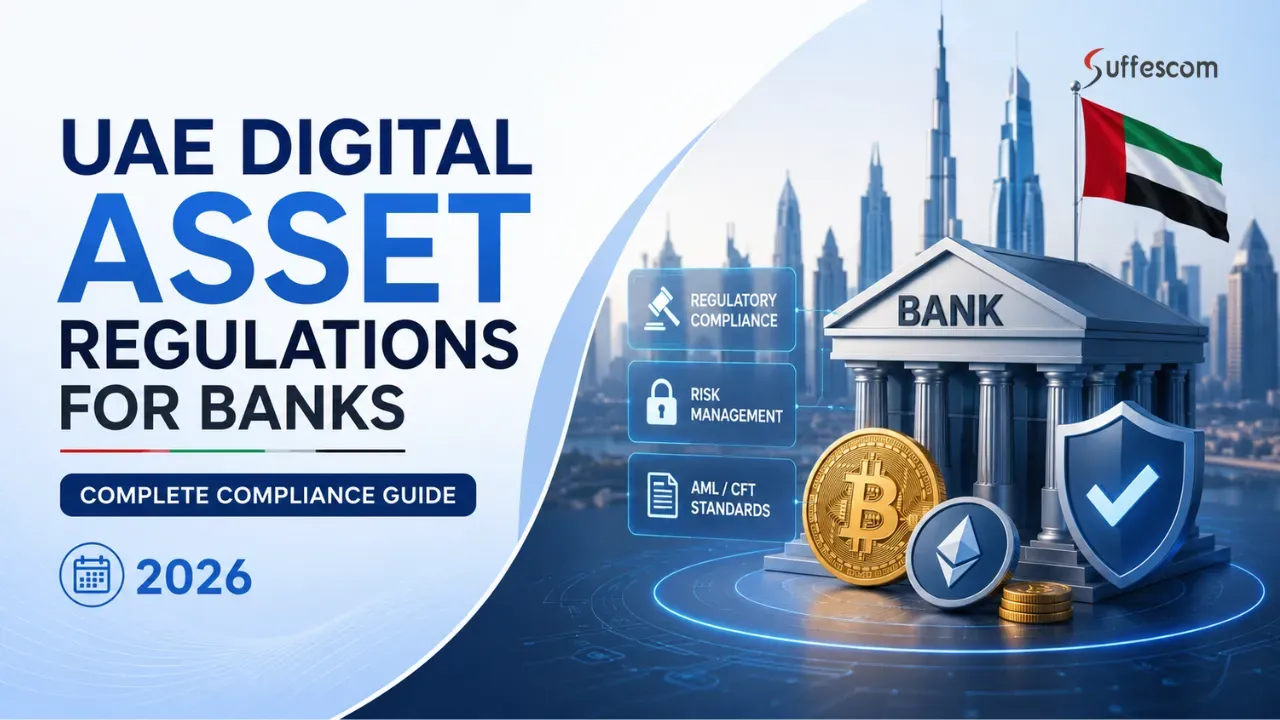
The UAE has developed one of the most sophisticated regulatory ecosystems for digital assets, which provides a chance for banks to provide their clients with a wide array of services related to digital asset custody, tokenization, stablecoin payment services, and other institutional crypto-related solutions. To work under such circumstances, it is not enough for banks to be technology-ready; they should also have knowledge about the constantly changing regulations regarding compliance.
For banks to operate in the UAE, they have to contend with regulatory requirements from several bodies, such as the UAE Central Bank, Virtual Assets Regulatory Authority, Capital Market Authority, Dubai Financial Services Authority, and Financial Services Regulatory Authority of Abu Dhabi Global Market. In some cases, other requirements will be needed depending on the regulatory jurisdiction and type of services provided.
Here comes the importance of developing a compliance strategy. Knowledge about the regulatory requirements will allow a bank to provide a service in accordance with the existing rules.
This guide explains the UAE digital asset regulations for banks, covering the regulatory authorities, key compliance requirements, licensing considerations, digital asset services banks can offer, implementation best practices, cost considerations, and a practical roadmap for building a compliant digital asset banking framework in 2026.
The advent of digital assets is revolutionizing banking in the modern era, as banks have been able to provide unique innovations like custody of digital assets, tokenization, stablecoin payments, and settlement through blockchain. In light of the UAE’s ambition of becoming a hub of digital assets, it has become important that banks' innovation be regulated in terms of financial stability and consumer protection. To do this, banks need to understand how the regulations apply.
Digital assets are blockchain-based instruments representing value or rights that can be created, stored, exchanged, and traded electronically. Depending on their nature and purpose of issue, digital assets may fall under different regulatory rules in the UAE. Banks need to have the right classification of the digital asset, as this will affect the type of license, the range of services, custody, and technology.
With more demand being seen for the provision of digital asset services in a regulated manner, UAE banks are working towards the modernization and innovation of their service offerings that go beyond conventional financial services. Banks are developing digital asset custodian services, tokenized deposits, stablecoin payments, and blockchain settlement services, among other options, in order to make processes more efficient and profitable. Along with this, banks will also need to have a secure technological infrastructure that will include identity verification, transaction monitoring, an audit trail, and cybersecurity within the platform itself.
Increasing Institutional Demand
Growing interest is being shown by institutional investors, family offices, corporates, and wealthy individuals in having a regulatory structure for accessing digital assets. In place of accessing these services via cryptocurrency exchanges, many investors are interested in accessing them via traditional banks, where there is security, efficient transactions, and wealth management services.
Proactive Regulatory Environment in the UAE
One of the major factors that is contributing to the expansion of digital assets via banks is the proactive regulatory environment that exists in the UAE. The central bank of the UAE (CBUAE), VARA, SCA, DFSA, and FSRA have come up with regulations that make the regulatory landscape clearer when it comes to digital assets. While the regulatory requirements are quite strict, they allow banks to innovate with a clearly defined regulatory environment.
New Revenue Opportunities
Digital assets are creating new business opportunities beyond traditional banking services. Banks can generate revenue through digital asset custody, institutional brokerage, tokenization services, digital asset settlement, and advisory offerings. As enterprise adoption continues to grow, these services allow financial institutions to diversify income streams while meeting the evolving needs of corporate and institutional clients.
Faster Cross-Border Payments and Settlement
Cross-border transactions were typically carried out through the use of intermediaries and hence involved high transaction costs and time. Through the use of a blockchain payment network, tokens, and regulated stablecoins, the whole process will be streamlined, allowing for quick settlements and increased transparency. The same technologies will enable banks with international operations to improve the efficiency of their operations and enhance customer experience.
Digital Asset Custody as a Strategic Banking Service
Custody has emerged as one of the biggest opportunities for banks moving into the digital assets market. Institutional players will need regulated custodians that are able to secure private keys and digital wallets and provide good cybersecurity. The banks that offer custody will be able to utilize their skills in asset management, governance, and compliance.
Supporting Tokenization of Financial Assets
Tokenization enables traditional assets such as bonds, real estate, investment funds, and commercial deposits to be represented on blockchain networks. For banks, this can improve liquidity, simplify settlement processes, and reduce administrative costs while enabling new financial products. With the increase in tokenization worldwide, banks in the UAE are increasingly looking into tokenized deposit solutions and other blockchain-based financial services. In order to implement such models, financial institutions will need secure and scalable technological infrastructure to help them issue, manage, and maintain compliance with regard to digital assets.
Creating a Competitive Advantage
In the current environment, where more and more banks are issuing digital assets, those that hesitate will lose customers to their innovative competitors or fintech companies. This means that banks need to create their capabilities today, attract more customers, and establish themselves as banks that are able to develop financial innovations in compliance with the law. It is also important to mention that through early adoption, institutions are getting valuable experience and learning how to cope with changes in the legal framework.
Following the UAE Digital Economy Strategy
The government of the UAE is doing much to promote the development of its digital economy and encourages the adoption of blockchain and digital finance. This means that the financial institutions in the UAE are able to use this opportunity to grow as a business while remaining in compliance with the legal requirements.
A bank can be involved in working with various types of digital assets that have different features and regulatory implications.
The UAE utilizes a multi-regulator regime with regard to its digital asset ecosystem, whereby various regulators manage specific segments such as banking, virtual assets, securities, and financial services. The identification of relevant regulator(s) for banks in this regard is crucial, as the requirements from a regulatory perspective could influence the licensing process, availability of services, compliance process, reporting requirements, as well as the necessary IT infrastructure to facilitate digital asset management.
These considerations are based on such aspects as the geographical location of the bank in question (either mainland UAE, Dubai International Financial Centre (DIFC), or Abu Dhabi Global Market (ADGM)), the type of digital asset activities, and the service being rendered, whether in the form of custody, payments, trading, tokenization, or investment products.
The UAE Central Bank (CBUAE) is the main regulatory body mandated with the supervision of banking entities, maintaining financial stability, regulating payment systems, and formulating monetary policy in the UAE.
In relation to digital asset services in the UAE, the CBUAE plays a key role in facilitating the innovation process.
Key responsibilities include:
Banks must evaluate how digital asset activities fit within their existing regulatory framework. Services such as digital asset payments, custody, or tokenized financial products may require additional regulatory considerations depending on their structure.
Banks also need to ensure their platforms support:
Virtual Assets Regulatory Authority (VARA) is the entity that has been set up by the Dubai government as a regulator for virtual assets. The reason behind the creation of VARA is to design a regulatory regime for VASPs while fostering innovation in the digital asset space.
Key responsibilities include:
For banks that operate in Dubai and are interested in offering any service related to digital assets, it is necessary to consider the application of VARA regulations in their operational model. This is because banks can offer such services through VASPs that are licensed to do so.
From a technology perspective, digital asset platforms may require:
The Capital Market Authority (CMA) is the entity that regulates the market for securities and investments in the UAE. Its jurisdiction becomes relevant in case digital assets involve some kind of securities or investment products.
Key responsibilities include:
Impact on banks offering tokenized assets:
Banks involved in tokenized securities, investment products, or blockchain-based financial instruments may need to consider securities-related regulatory requirements.
This can influence:
Digital asset platforms supporting tokenized securities should be designed with features such as:
The Dubai International Financial Centre (DIFC) is a leading financial free zone, regulated by the Dubai Financial Services Authority (DFSA). It provides a separate regulatory framework for financial institutions operating within the DIFC jurisdiction.
Key responsibilities include:
Impact on banks operating through DIFC:
International banks and financial institutions using the DIFC structure must follow DFSA requirements when offering regulated digital asset services.
This affects areas such as:
Technology solutions supporting DIFC-regulated institutions typically require:
The Financial Services Regulatory Authority (FSRA) regulates financial services activities within Abu Dhabi Global Market (ADGM). It has developed a framework for regulating virtual asset activities and digital financial innovation.
Key responsibilities include:
Impact on banks and fintechs:
Institutions operating through ADGM must align their digital asset activities with FSRA requirements. This is particularly relevant for organizations developing virtual asset platforms, custody solutions, and blockchain-based financial services.
Technology considerations include:
| Regulator | Jurisdiction | Primary Role | Digital Asset Focus | Impact on Banks |
| CBUAE | UAE Mainland | Banking regulation and financial stability | Banking-related digital asset activities and payment infrastructure | High |
| VARA | Dubai | Virtual asset regulation | VASP licensing and virtual asset services | High |
| CMS | UAE | Securities and investment regulation | Tokenized securities and investment products | Medium |
| DFSA | DIFC | Financial services regulation | Digital asset activities within DIFC | Medium |
| FSRA | ADGM | Financial services and virtual asset regulation | Virtual asset licensing and digital financial services | High |
Banks providing digital asset services in the UAE are subject to a complex regulatory regime that covers the regulation of banking activities, virtual assets, AML rules, and international norms related to financial crime. Regulation of each bank depends on the type of digital asset service provided by the bank and on the jurisdiction where the bank is providing the digital asset service (whether it be the mainland UAE, Dubai, DIFC, or ADGM). Together with banking regulations, banks need to have sound governance, risk management, cybersecurity, consumer protection, and financial crime frameworks.
The UAE has one of the most developed regulatory regimes for digital assets in the region, which takes into account the balance between innovation, financial stability, and other interests. Banks need to take into account evolving regulatory frameworks before introducing new digital asset products.
Digital asset services offered by UAE banks remain subject to the country's existing banking laws and supervisory framework. While digital assets introduce new financial models, banks must continue complying with the regulations governing licensed financial institutions, including requirements around governance, risk management, operational resilience, and customer protection.
The primary framework is established through Federal Decree-Law No. (14) of 2018 Regarding the Central Bank & Organization of Financial Institutions and Activities, which defines the UAE Central Bank's role in supervising financial institutions and maintaining stability within the banking sector.
For banks exploring digital asset services, this means blockchain-based solutions must operate within the same regulatory environment as traditional banking products. Digital asset custody, tokenized deposits, blockchain-based payment solutions, and other financial innovations must align with existing banking requirements.
Key Requirements Affecting Banks
Banking laws influence how financial institutions design and operate digital asset services, including:
Impact on Banks Building Digital Asset Services
Banking regulations directly influence how digital asset solutions are planned and developed. A bank cannot treat a digital asset platform as an isolated blockchain application; it must integrate with existing banking processes, compliance systems, and security frameworks.
For example, a digital asset custody platform may require:
Similarly, tokenized deposit or blockchain payment solutions must be designed to maintain the reliability, security, and control standards expected from traditional banking infrastructure.
Technology Considerations
In terms of the design and development of platforms, banking regulations influence critical architectural considerations such as:
It is therefore possible for banks to develop platforms that will be innovative, secure, compliant, and able to withstand regulatory scrutiny if they are designed based on banking regulations.
Specific regulatory frameworks have been set up to govern virtual asset activities in the UAE and provide a proper environment for organizations willing to operate within the digital asset landscape. Contrary to traditional banking products, virtual asset services might come under different regulatory regimes based on the jurisdiction, asset, and service being offered.
These include:
These frameworks define how virtual asset activities are authorized, supervised, and managed across different UAE jurisdictions.
Key Requirements Affecting Banks
Virtual asset regulations establish requirements around the services banks may provide directly or through partnerships with licensed providers, including:
Impact on Banks Offering Digital Asset Services
Virtual asset regulations directly influence how banks design their digital asset strategies. Before launching services such as digital asset custody, tokenization platforms, or blockchain-based financial products, banks must evaluate:
For example, a bank developing a digital asset custody solution must consider not only wallet functionality but also secure key management, transaction controls, customer verification, and regulatory reporting requirements.
Technology Considerations
Virtual asset regulations have a direct impact on digital asset platform architecture. Banks building these solutions typically need:
By incorporating regulatory requirements into the platform design from the beginning, banks can develop digital asset solutions that support innovation while maintaining security, compliance, and operational control.
The Anti-Money Laundering (AML) and Counter Terrorist Financing (CFT) regulations are two of the most essential regulatory requirements applicable to banks moving into the digital asset industry. The borderless and pseudonymous characteristics of blockchain transactions necessitate that regulators impose strict controls on banks to stop their use for any unlawful activities.
The AML/CFT requirements for banks operating in the UAE include Federal Decree-Law Number 20 of 2018 on Anti-Money Laundering and Combatting Financing of Terrorism and Financing of Illicit Activities, as well as guidelines for banks issued by the respective regulator. The regulations comply with international standards set out by the Financial Action Task Force (FATF).
The digital asset-related AML/CFT obligations of the bank include not only the requirements applicable to traditional bank transactions but also the specific risks associated with blockchain networks and digital wallets.
Key Requirements Affecting Banks
AML/CFT regulations require banks to establish controls that help identify, prevent, and report suspicious digital asset activities, including:
Banks must apply these controls across digital asset services such as custody, trading, tokenization, and blockchain-based payment solutions.
Impact on Banks Offering Digital Asset Services
AML/CFT requirements significantly influence how banks design and operate digital asset platforms. Unlike traditional banking systems, digital asset platforms must account for blockchain-specific risks, including:
For example, a bank offering digital asset custody services needs mechanisms to monitor wallet activity, assess transaction risks, and maintain transparent records of asset movements.
Technology Considerations
AML/CFT requirements directly shape the technology stack used for digital asset banking platforms. Banks typically need:
Embedding AML/CFT controls into the platform architecture helps banks build digital asset solutions that meet regulatory expectations while improving operational efficiency and risk visibility.
FATF (Financial Action Task Force) is the name given to an international standard that attempts to foster transparency of virtual asset transfers by means of the exchange of specific information regarding parties involved in the transfer.
This rule is built on the FATF Recommendation 16, which has been updated to include VASPs and other financial institutions dealing with virtual asset transfers.
In the case of UAE banks that enter into digital assets, the Travel Rule is one of the compliance standards that should be considered. It supports the UAE's broader objective of aligning its digital asset ecosystem with global financial crime prevention standards.
Key Requirements Affecting Banks
The Travel Rule requires institutions involved in applicable virtual asset transfers to collect and exchange information about:
Banks must also ensure that transfer processes include appropriate controls for:
Impact on Banks Offering Digital Asset Services
For banks providing digital asset transfer, custody, or payment-related services, the Travel Rule affects how transaction workflows are designed.
Traditional payment systems already exchange structured transaction information, but blockchain transactions may involve different networks, wallets, and service providers. Banks must therefore establish processes to securely exchange required information without compromising customer privacy or transaction efficiency.
This impacts:
Technology Considerations
Travel Rule requirements influence the architecture of digital asset platforms by requiring secure data exchange capabilities, including:
For banks developing blockchain-based payment or digital asset transfer platforms, Travel Rule compliance should be considered at the architecture stage to ensure transactions remain secure, transparent, and regulator-ready.
Example: How the FATF Travel Rule Works in a Digital Asset Transfer
Consider a UAE bank offering institutional digital asset transfer services. A corporate customer wants to transfer digital assets from the bank's custody platform to a wallet managed by another regulated virtual asset service provider (VASP).
Before processing the transaction:
This will help in ensuring that the transfer of digital assets maintains the same level of transparency as those associated with traditional financial transactions while lowering the chances of any problems associated with money laundering and moving illegal funds around.
Customer Due Diligence (CDD) is an essential component of the UAE AML/CFT guidelines. The process is required for banks and financial institutions to confirm the identity of their clients, know their activities, and understand the risks associated with the business before engaging in any business relationship with them.
It is essential to conduct CDD in the context of digital asset services since blockchain transactions are likely to include cross-border movements, multi-wallet transactions,s and various other complicated ownership schemes.
For digital asset services, CDD becomes even more important because blockchain transactions can involve cross-border transfers, multiple wallets, and complex ownership structures. Banks must ensure that customers accessing services such as digital asset custody, tokenized assets, or virtual asset payments are properly identified and risk-assessed.
CDD requirements are established through UAE AML/CFT regulations, including Federal Decree-Law No. (20) of 2018 on Anti-Money Laundering and Combating Financing of Terrorism and Financing of Illegal Organizations, along with related guidance issued for financial institutions.
Key Requirements Affecting Banks
Banks offering digital asset services must implement CDD processes that include:
Impact on Banks Offering Digital Asset Services
CDD requirements directly affect how banks design digital asset onboarding and service delivery processes.
For example, a bank launching a digital asset custody platform cannot allow customers to immediately transfer assets without first completing identity verification and risk assessment procedures.
Banks must ensure that digital asset platforms support:
A strong CDD framework helps banks reduce exposure to fraudulent accounts, unauthorized transactions, and misuse of digital asset services.
Technology Considerations
CDD requirements influence the design of digital asset banking platforms through:
By embedding CDD processes into the platform architecture, banks can create digital asset services that provide a smoother customer experience while maintaining regulatory compliance.
Example: Digital Asset Customer Onboarding
A UAE-based corporate customer wants to use a bank's tokenized asset platform to manage digital securities.
Before granting access, the platform may need to:
Only after successful verification can the customer access tokenized asset services.
Enhanced Due Diligence (EDD) is a higher form of customer due diligence that should be conducted when there is an increased financial crime risk associated with the client, the transaction, or the business relationship. This is a step above the UAE's AML/CFT regime and involves a further set of verification measures in addition to the normal CDD.
In digital asset services, enhanced due diligence becomes essential since virtual asset transactions may present high-risk elements like cross-border transfers, large-value transactions, and complicated ownership structures, among others.
As per the UAE AML/CFT regime, which includes the Federal Decree-Law No. (20) of 2018 on Anti-Money Laundering and Combating Financing of Terrorism and Financing of Illegal Organizations, banks are supposed to conduct enhanced due diligence in case of higher risks.
Requirements Impacting Banks
Some of the requirements for banks to consider for conducting EDD include:
EDD measures may include:
Impact on Banks Offering Digital Asset Services
EDD requirements directly influence how banks design risk management processes for digital asset platforms.
For example, a financial institution offering institutional crypto custody services may receive a request from a corporate entity managing large digital asset holdings. Before enabling access, the bank may need to verify ownership structures, understand the source of funds, and apply additional approval workflows.
Digital asset platforms must therefore support flexible compliance processes rather than treating all customers with the same verification approach.
Technology Considerations
EDD requirements shape the development of compliance-focused digital asset platforms through:
By integrating EDD capabilities into the platform architecture, banks can manage higher-risk digital asset relationships efficiently while maintaining regulatory oversight and operational control.
Example: Enhanced Review for Institutional Crypto Custody
A UAE bank receives an onboarding request from an international investment firm seeking digital asset custody services.
The platform may trigger EDD because of:
The compliance team may then:
Transaction monitoring is a key element of the AML/CFT regime in the UAE. Financial institutions have to constantly monitor their financial transactions to detect any abnormal patterns and suspicious behavior.
Monitoring transactions becomes complicated when it comes to digital asset services since blockchains allow rapid transfers and transactions from different wallets. The banking institutions providing digital asset custody, exchange, or other blockchain transactions should ensure that their monitoring system encompasses both regular and blockchain transactions.
These regulations and guidelines can be traced back to UAE AML/CFT laws, including Federal Decree-Law No. 20 of 2018 on Anti-Money Laundering and Combating Financing of Terrorism and Financing of Illegal Organizations and other guidance to financial institutions.
Key Requirements Affecting Banks
Banks must implement transaction monitoring processes that help identify:
Effective monitoring requires institutions to maintain:
Impact on Banks Offering Digital Asset Services
Transaction monitoring directly affects how banks design and operate digital asset platforms. Traditional banking systems monitor account-based transactions, while blockchain platforms require additional visibility into wallet activity, blockchain networks, and asset movements.
For example, a bank providing digital asset custody services must be able to identify whether assets entering or leaving customer wallets are associated with suspicious activities or high-risk sources.
This requires banks to build monitoring capabilities across:
For example, a corporate customer regularly transfers digital assets through a bank's custody platform. The monitoring system detects:
The system generates an alert, allowing the compliance team to review the transaction, investigate the source of funds, and take appropriate action if required.
Technology Considerations
Transaction monitoring requirements influence the architecture of digital asset banking platforms through:
By integrating transaction monitoring capabilities into digital asset platforms, banks can improve risk visibility, automate compliance operations, and maintain stronger control over blockchain-based financial activities.
Sanctions screening requirements for UAE banks are driven by the country's AML/CFT framework and obligations related to targeted financial sanctions (TFS). Financial institutions must ensure they do not provide services or process transactions involving sanctioned individuals, entities, or jurisdictions.
The key regulatory frameworks include:
For digital asset services, these obligations extend beyond traditional account screening. Banks must also consider blockchain-specific risks, including exposure to sanctioned wallet addresses and high-risk digital asset transactions.
Key Requirements Affecting Banks
Under UAE sanctions compliance requirements, banks must implement controls to:
Impact on Banks Offering Digital Asset Services
Sanctions screening becomes more complex for banks offering digital asset services because blockchain transactions involve external wallets, decentralized networks, and cross-border transfers.
For example, a bank processing a crypto payment cannot only verify the customer's identity. It may also need to evaluate whether the destination wallet has links to sanctioned entities or prohibited activities.
This affects:
Technology Considerations
To meet sanctions compliance expectations, digital asset platforms require:
By integrating sanctions screening into the core platform architecture, banks can reduce compliance risks while maintaining secure and efficient digital asset operations.
| Requirement | Mandatory | Applicable To | Purpose | Risk Level |
| KYC / Customer Due Diligence | Yes | Banks, VASPs, Financial Institutions | Verify customer identity and assess customer risk before providing digital asset services | High |
| AML / CFT Controls | Yes | Banks and Digital Asset Service Providers | Prevent money laundering, terrorist financing, and misuse of digital asset platforms | High |
| FATF Travel Rule | Yes | VASPs and Institutions involved in virtual asset transfers | Ensure transparency by exchanging sender and beneficiary information during transactions | High |
| Risk Assessment | Yes | Banks and Regulated Financial Institutions | Identify and manage digital asset-related operational, regulatory, and financial risks | High |
| Record Keeping | Yes | Banks, VASPs, and Regulated Entities | Maintain transaction history, customer records, and compliance evidence for audits | Medium |
| Sanctions Screening | Yes | Banks and Digital Asset Service Providers | Prevent transactions involving sanctioned entities, individuals, or wallet addresses | High |
| Transaction Monitoring | Yes | Banks and VASPs | Detect suspicious activity and unusual transaction patterns in real time | High |
Digital asset services introduce regulatory requirements beyond traditional banking operations. While a bank may already hold a banking license in the UAE, this does not automatically authorize activities such as virtual asset custody, digital asset trading, tokenization, or other blockchain-based financial services.
Before launching digital asset solutions, banks must identify the applicable regulatory framework based on their operating jurisdiction, the type of service offered, and the nature of the digital assets involved. Clear licensing alignment is also essential during platform development, as regulatory requirements influence product design, compliance workflows, security controls, and reporting capabilities.
Banks may require additional regulatory approvals when expanding into activities that involve managing, transferring, or providing financial services related to digital assets.
Common scenarios include:
Digital Asset Custody
Banks providing custody services for digital assets on behalf of customers must address requirements around asset protection, security, operational controls, and risk management. From a technology perspective, this requires secure wallet infrastructure, key management solutions, access controls, and detailed audit trails.
Digital Asset Trading and Brokerage
Activities involving buying, selling, or facilitating digital asset transactions may require additional authorization depending on the jurisdiction and regulatory classification. Supporting platforms typically require transaction monitoring, customer risk assessment, liquidity integrations, and compliance automation.
Tokenization Services
Banks offering tokenized assets or blockchain-based representations of financial instruments must consider how the assets are classified under applicable regulations. Tokenization platforms require secure smart contract management, ownership tracking, asset lifecycle controls, and regulatory reporting capabilities.
Digital Asset Payment Services
Banks exploring blockchain-based payments or settlement solutions must ensure alignment with payment regulations and financial crime controls. This includes secure transaction processing, reconciliation mechanisms, and AML monitoring systems.
Digital asset licensing requirements in the UAE are not determined by the technology being used alone. The applicable regulatory framework depends on several business, operational, and jurisdictional factors. Understanding these factors helps banks define the right service model, identify applicable approvals, and design digital asset platforms with the required compliance and security capabilities from the beginning.
Type of Digital Asset Service
The nature of the service being offered is one of the primary factors influencing licensing requirements. Different digital asset activities carry different regulatory expectations.
Examples include:
The service model directly impacts the regulatory approvals required and the technical architecture needed to support compliant operations.
Digital Asset Classification
The classification of a digital asset plays a significant role in determining which regulatory framework applies. Digital assets may be treated differently depending on their characteristics, purpose, and economic function.
For example:
Correct asset classification helps banks determine applicable regulations, reporting requirements, and compliance obligations.
Operating Jurisdiction
The regulatory requirements may vary depending on where the bank operates within the UAE.
Banks must consider whether their activities fall under:
The chosen jurisdiction influences licensing requirements, permitted activities, and regulatory reporting expectations.
Customer Segment
The target users of digital asset services can also affect regulatory requirements and risk considerations.
Banks serving:
Understanding the customer segment helps banks design appropriate controls and service models.
Operating and Partnership Model
Banks must also consider whether digital asset services will be developed and operated internally or delivered through partnerships.
Common models include:
The operating model influences licensing responsibilities, technology requirements, and long-term scalability.
The level of regulatory approval depends on the service model, customer segment, and jurisdiction in which the bank operates.
| Digital Asset Activity | Regulatory Consideration | Key Requirements |
| Digital Asset Custody | Additional virtual asset and banking considerations may apply | Secure custody infrastructure, governance, and risk controls |
| Digital Asset Trading | May require virtual asset service approval | Transaction monitoring, compliance checks, operational controls |
| Tokenization Services | Depends on asset classification | Smart contract governance, asset tracking, reporting |
| Digital Asset Payments | Subject to payment and financial regulations | Settlement controls, AML monitoring, security measures |
| Tokenized Investment Products | Securities regulations may apply | Investor protection, disclosures, and regulatory reporting |
Banks should evaluate factors such as:
Digital asset services often involve multiple jurisdictions, making cross-border compliance a critical consideration for banks operating internationally. A digital asset service permitted in one jurisdiction may require different approvals, controls, or operating models in another.
For banks operating across the UAE mainland, DIFC, ADGM, or international markets, licensing requirements may vary based on:
The UAE's financial ecosystem includes multiple regulatory frameworks. A bank operating in mainland UAE may follow requirements different from those of an institution operating through financial free zones such as DIFC or ADGM.
Before launching cross-border digital asset services, banks should define:
From a platform development perspective, cross-border digital asset solutions should be designed with flexibility to support different regulatory environments.
Key capabilities include:
A scalable architecture allows banks to adapt their digital asset services as regulatory requirements evolve across different markets.
International banks entering the UAE digital asset market must evaluate how their existing banking framework aligns with local regulatory expectations. Holding a banking license in another country does not automatically authorize a bank to provide digital asset services within the UAE.
Foreign institutions must assess:
Foreign banks typically need to integrate UAE-specific regulatory requirements with their existing global compliance frameworks.
This includes:
Many international banks already operate a complex banking infrastructure. Adding digital asset capabilities requires seamless integration between existing systems and new blockchain-based services.
A well-designed digital asset platform should support:
This approach enables foreign banks to introduce digital asset services without disrupting existing financial operations.
As UAE regulations continue to evolve, banks are moving beyond traditional financial services and exploring digital asset solutions that improve custody, settlement, payments, and investment opportunities. However, offering digital asset services requires more than integrating blockchain technology. Banks must align each service with applicable regulatory requirements, risk controls, licensing obligations, and secure technology infrastructure.
The type of digital asset service a bank can provide depends on factors such as the asset classification, operating jurisdiction, customer segment, and regulatory approvals. From custody solutions to tokenized financial products, each service requires a combination of compliance capabilities and purpose-built digital infrastructure.
Crypto custody involves securely storing and managing digital assets on behalf of customers, particularly institutional clients that require trusted asset protection solutions.
For banks, custody represents one of the most practical entry points into the digital asset ecosystem because it aligns with their existing role of safeguarding customer assets. However, digital asset custody introduces unique requirements around private key protection, wallet security, operational controls, and asset management.
Key considerations include:
From a technology perspective, banks need solutions that incorporate features such as hardware security modules (HSMs), multi-signature controls, role-based access management, and continuous monitoring to protect digital assets against operational and cybersecurity risks.
Digital asset trading enables banks to facilitate buying, selling, or exchange-related activities involving digital assets, subject to applicable regulatory requirements.
Banks exploring trading services typically focus on institutional clients seeking regulated access to digital asset markets. These services require strong controls to manage market risks, customer activity, and compliance obligations.
Important considerations include:
Digital asset trading platforms require capabilities such as trading engines, liquidity integrations, real-time transaction monitoring, compliance checks, and secure connections with blockchain networks.
Institutional brokerage allows banks to provide professional investors, corporations, and financial institutions with access to digital asset markets through regulated channels.
This service can help banks serve growing institutional demand for digital assets while leveraging their existing client relationships and financial infrastructure.
Common capabilities include:
Technology platforms supporting institutional brokerage require enterprise-grade APIs, secure account management, automated reporting, and integration with custody and compliance systems.
Tokenization involves representing real-world assets or financial instruments as blockchain-based digital tokens. It is becoming a major area of interest for banks because it can improve transparency, settlement efficiency, and accessibility of traditional assets.
Examples of tokenized assets include:
For banks, tokenization can support new financial products such as tokenized securities, digital investment platforms, and blockchain-based banking platforms.
Key technology requirements include:
Before launching tokenization services, banks must determine how the underlying asset is classified, as this can directly affect regulatory requirements and platform design.
Stablecoin-related services are gaining attention because they can support faster settlement, cross-border payments, and blockchain-based financial transactions while maintaining a stable value.
Banks may explore stablecoin applications such as:
However, stablecoin services require careful consideration of regulatory requirements, reserve mechanisms, transaction monitoring, and financial crime controls.
Supporting infrastructure may include:
Tokenized deposits represent traditional bank deposits in a blockchain-based format while remaining connected to regulated banking infrastructure.
For banks, tokenized deposits can enable:
Building tokenized deposit platforms requires close integration between blockchain infrastructure and existing banking systems.
Key technology components include:
Crypto payment services enable businesses and customers to use digital assets or blockchain-based payment infrastructure for transactions and settlements.
Potential banking applications include:
Banks must ensure these services incorporate appropriate payment controls, customer verification processes, AML monitoring, and transaction tracking.
Technology requirements include:
| Service | Availability | Approval Considerations | Complexity |
| Crypto Custody | Possible with approval | Security, governance, and compliance requirements | High |
| Digital Asset Trading | Conditional | Virtual asset activity approval and risk controls | High |
| Institutional Brokerage | Conditional | Regulatory alignment and client protection requirements | High |
| Tokenization Services | Depends on asset type | Asset classification and regulatory requirements | High |
| Stablecoin Services | Conditional | Payment, virtual asset, and compliance considerations | High |
| Tokenized Deposits | Emerging | Banking approval and technology readiness | Very High |
| Crypto Payment Services | Conditional | Payment compliance and transaction monitoring requirements | Medium |
A well-designed compliance framework enables banks to operate digital asset services with greater confidence while ensuring that regulatory, security, and operational requirements are built into the foundation of the platform. For financial institutions, compliance is not only a regulatory obligation, but it is also a key component of building secure and scalable digital asset banking solutions.
A clear governance structure ensures accountability across business, compliance, risk, and technology teams involved in digital asset operations.
Banks should establish:
From a technology perspective, governance requirements should be supported through:
These controls help ensure that digital asset platforms maintain transparency and accountability throughout their lifecycle.
Digital asset operations introduce new categories of risks that require dedicated management strategies. Banks should develop a risk framework covering operational, regulatory, cybersecurity, market, liquidity, and third-party risks.
Key areas include:
Technology-enabled risk management can include:
A proactive risk framework allows banks to identify issues early and maintain operational resilience as digital asset services scale.
Strong internal controls help banks manage customer activities, transactions, asset movements, and privileged operations securely.
Important controls include:
Digital asset platforms should support these controls through:
Embedding internal controls directly into the platform reduces manual errors and improves regulatory visibility.
Digital asset operations require teams to understand both financial regulations and blockchain-specific risks. Banks should provide ongoing training for employees involved in compliance, technology, operations, and customer management.
Training areas should include:
Well-trained teams help ensure that digital asset platforms are managed effectively and that compliance requirements are followed throughout daily operations.
Regular independent audits help banks evaluate whether their digital asset controls, processes, and technology systems remain effective.
Audits should assess:
To support audit readiness, digital asset platforms should maintain:
A well-designed audit trail allows institutions to demonstrate transparency and accountability during regulatory reviews.
Cybersecurity is one of the most critical requirements for digital asset banking because blockchain-based assets introduce unique risks around wallet security, private keys, and transaction authorization.
Banks should implement security measures across three key areas:
Digital Asset Security
Platform Security
Operational Security
For enterprise-grade software solutions supporting digital asset services, security should be considered at every layer, from architecture design and infrastructure to user access and transaction processing.
Banks often rely on external providers for critical digital asset capabilities, including blockchain analytics, custody solutions, identity verification, cloud infrastructure, and compliance tools.
Before integrating third-party services, banks should evaluate:
From a technology perspective, platforms should support secure vendor integrations through:
Effective third-party risk management helps banks maintain control over their digital asset ecosystem while leveraging specialized technology providers.
Digital asset services introduce new risks beyond traditional banking operations, including cybersecurity threats, regulatory changes, market volatility, and operational challenges. Banks must establish a proactive risk management framework that combines governance, compliance controls, and technology safeguards to ensure secure and resilient digital asset operations.
For digital asset platforms, risk management should be integrated into the system architecture through automated monitoring, secure infrastructure, and real-time controls rather than treated as a separate compliance activity.
Operational risks can arise from system failures, transaction errors, technology integrations, or inefficient processes.
Common risks include:
Risk mitigation strategies:
Digital asset platforms should support high availability, transaction reconciliation, and detailed activity tracking to maintain operational reliability.
As digital asset regulations continue to evolve, banks must ensure their services remain aligned with licensing requirements and compliance obligations.
Common risks include:
Risk mitigation strategies:
Technology solutions should include configurable compliance rules, reporting dashboards, and transaction monitoring capabilities to help banks respond to regulatory changes.
Digital assets require advanced security measures due to risks related to private keys, wallets, and blockchain transactions.
Common risks include:
Risk mitigation strategies:
A secure digital asset platform should protect assets, customer data, and transaction processes across every layer of the technology stack.
Digital asset markets can experience significant price fluctuations, creating exposure risks for banks and customers.
Common risks include:
Risk mitigation strategies:
Banks can use technology-driven dashboards and automated alerts to monitor market exposure and respond quickly to changing conditions.
Liquidity risks occur when digital assets cannot be converted into available funds efficiently during market changes.
Common risks include:
Risk mitigation strategies:
Digital asset platforms should support real-time liquidity tracking and settlement visibility to improve operational efficiency.
Trust is essential in banking, and digital asset incidents can directly impact customer confidence.
Common risks include:
Risk mitigation strategies:
Maintaining operational transparency and regulatory readiness helps banks build trust while expanding into digital asset services.
Digital Asset Risk Matrix
| Risk | Probability | Business Impact | Primary Mitigation Strategy |
| Cyber Attack | High | High | Layered cybersecurity controls, encryption, and incident response |
| AML/CFT Compliance Failure | Medium | High | Risk-based AML program, transaction monitoring, periodic reviews |
| Regulatory Change | Medium | High | Continuous regulatory monitoring and compliance governance |
| Market Volatility | High | Medium | Exposure limits, stress testing, and risk management policies |
| Liquidity Constraints | Medium | High | Liquidity planning and contingency funding arrangements |
| Operational Failure | Medium | Medium | Internal controls, automation, and business continuity planning |
| Third-Party Vendor Failure | Medium | Medium | Vendor due diligence and ongoing performance monitoring |
| Reputational Damage | Medium | High | Strong governance, transparent communication, and regulatory compliance |
Successfully implementing digital asset services requires more than obtaining regulatory approvals. Banks should adopt a structured, phased approach that aligns technology, governance, risk management, and compliance with UAE regulatory expectations. Following a clear implementation roadmap helps institutions identify gaps early, strengthen operational readiness, and reduce regulatory and operational risks before launching digital asset services.
The first step is to evaluate the bank's exposure to risks associated with digital asset activities. This includes assessing operational, regulatory, cybersecurity, financial, liquidity, and reputational risks based on the proposed business model. Banks should also identify the specific digital asset services they intend to offer and determine their potential impact on existing risk management frameworks.
Once risks have been identified, banks should compare their existing policies, procedures, and controls against applicable UAE regulatory requirements. A regulatory gap analysis helps identify deficiencies in governance, AML/CFT controls, licensing, cybersecurity, customer due diligence, transaction monitoring, and reporting processes. The findings should be documented and prioritized to support an effective compliance implementation plan.
Technology plays a central role in digital asset compliance. Banks should evaluate solutions that support customer onboarding, KYC verification, AML transaction monitoring, blockchain analytics, sanctions screening, secure custody, reporting, and audit trails. The selected technology should integrate with existing banking infrastructure while supporting scalability, security, and evolving regulatory requirements.
With the appropriate technology in place, banks should establish the governance, policies, and operational controls needed to support compliant digital asset services. This includes updating internal policies, defining roles and responsibilities, implementing risk management procedures, strengthening cybersecurity controls, training employees, and establishing processes for ongoing compliance monitoring and regulatory reporting.
Before launching digital asset services, banks should validate the effectiveness of their compliance framework through comprehensive internal testing. This may include policy reviews, control testing, system validation, cybersecurity assessments, user acceptance testing (UAT), and internal audits. Addressing identified issues before deployment helps reduce operational disruptions and regulatory risks.
Regulatory compliance is an ongoing process rather than a one-time implementation. Banks should establish processes for continuous monitoring of digital asset activities, periodic compliance reviews, internal audits, regulatory reporting, and updates to policies as regulations evolve. Regular performance monitoring and governance reviews help ensure the compliance framework remains effective and aligned with changing regulatory expectations.
Implementing a digital asset compliance framework requires investment in governance, technology, cybersecurity, regulatory readiness, and employee training. Rather than having a fixed cost, implementation expenses depend on the bank's size, the complexity of digital asset services offered, existing compliance capabilities, and the jurisdictions in which it operates. Institutions should evaluate implementation requirements holistically to develop a realistic budget and deployment timeline.
| Compliance Requirement | Complexity | Cost (AED) | Typical Cost Impact | Implementation Time |
| Regulatory Gap Assessment | Low | 50,000 – 150,000 | Low | 2–4 weeks |
| Policy & Governance Framework | Medium | 100,000 – 300,000 | Medium | 4–8 weeks |
| AML/KYC Enhancement | High | 300,000 – 1 million | High | 2–4 months |
| Blockchain Analytics Integration | High | 500,000 – 2 million+ | High | 2–5 months |
| Digital Asset Custody Infrastructure | Very High | 1 million – 5 million+ | Very High | 6–12 months |
| Cybersecurity Upgrades | High | 250,000 – 2 million+ | High | 2–6 months |
| Staff Training & Certification | Medium | 25,000 – 200,000 | Low–Medium | 2–6 weeks |
| Enterprise-Wide Digital Asset Compliance Program | Very High | 2 million – 10 million+ | Very High | 6–18 months |
Note: These are indicative implementation ranges based on project scope and industry requirements. Actual costs vary depending on the institution's size, technology landscape, regulatory obligations, and the complexity of digital asset services being introduced.
The cost of implementing a digital asset compliance program varies based on the bank's operational complexity, regulatory obligations, and technology requirements. While institutions with mature compliance frameworks may require incremental upgrades, others may need enterprise-wide transformation. The following factors have the greatest influence on implementation costs:
Bank Size and Operational Scale
The size of the institution plays a major role in determining implementation costs. Large commercial and international banks typically require more extensive governance frameworks, larger compliance teams, advanced cybersecurity controls, and integration across multiple business units. Smaller banks or specialized financial institutions may implement digital asset compliance with fewer resources and a narrower operational scope.
Number of Digital Asset Services Offered
The range of digital asset services directly influences project complexity. Banks offering only custody services will have different compliance requirements than institutions providing digital asset trading, institutional brokerage, tokenization, stablecoin settlement, or crypto payment services. As more services are introduced, additional licensing, operational controls, and technology investments may be required.
Regulatory Jurisdictions Covered
Banks operating across mainland UAE, DIFC, ADGM, or multiple international jurisdictions often face additional compliance obligations. Each regulatory authority has its own supervisory expectations, reporting requirements, and licensing processes. Managing compliance across several jurisdictions generally increases legal, operational, and administrative costs.
Existing Compliance Maturity
Institutions with mature AML/CFT programs, cybersecurity frameworks, governance policies, and enterprise risk management systems can often build upon their existing infrastructure. Conversely, banks with limited digital asset capabilities may need to develop entirely new policies, procedures, monitoring systems, and internal controls, resulting in higher implementation costs and longer project timelines.
Technology Stack Integration
Integrating digital asset platforms with existing banking infrastructure is often one of the most resource-intensive aspects of implementation. Banks may need to connect blockchain analytics, digital asset custody solutions, KYC platforms, transaction monitoring systems, sanctions screening tools, and reporting software with their core banking systems. The complexity of these integrations has a significant impact on both project costs and implementation timelines.
Third-Party Vendor Requirements
Many banks rely on external vendors for services such as custody infrastructure, blockchain analytics, cloud hosting, cybersecurity, identity verification, and transaction monitoring. Vendor selection, contract negotiations, due diligence, implementation, and ongoing oversight all contribute to the overall cost of maintaining a compliant digital asset ecosystem.
Cybersecurity and Operational Resilience
Because digital assets introduce unique cyber risks, banks often need to strengthen their security infrastructure before launching new services. Investments may include multi-factor authentication, encryption, secure key management, security operations centers (SOC), penetration testing, disaster recovery capabilities, and continuous security monitoring. These enhancements help protect customer assets while supporting regulatory compliance.
Audit, Reporting, and Ongoing Compliance
Compliance does not end after implementation. Banks must allocate resources for periodic internal audits, independent compliance reviews, regulatory reporting, employee training, policy updates, and continuous monitoring of evolving regulations. These recurring operational expenses should be considered part of the long-term cost of maintaining a compliant digital asset program rather than one-time implementation costs.
Get expert guidance on licensing, compliance, governance, and implementation to develop a secure, scalable, and regulation-ready digital asset framework tailored to your institution.
Although digital assets offer many benefits for innovation and expansion, there are challenges involved when offering compliant digital asset services. There are challenges for banks to deal with concerning regulatory changes, upgrading systems to meet today’s technology standards, building up knowledge and skills in this area, and integrating innovations without sacrificing security and compliance. Meeting these challenges in advance helps financial institutions minimize implementation risks and successfully implement digital transformation.
In the UAE, the digital asset industry is regulated by several regulatory authorities that have different responsibilities and jurisdiction requirements. Banks should comply with various licenses, reporting, and supervision depending on what kind of digital asset services are offered and in which jurisdictions. Being able to keep up with the regulatory environment and comply with its changes is important for financial institutions.
The core banking infrastructure of many banks is outdated and cannot support transactions in blockchain-based assets. Integrating digital assets into current banking systems is challenging and requires upgrading payment processing, customer onboarding, compliance, and data management systems. It is important to plan the integration carefully in order not to disrupt regular banking operations.
Digital asset compliance requires expertise across blockchain technology, cybersecurity, AML/CFT, regulatory compliance, and financial risk management. But people who have the above combined skills are still scarce. The banks need to make sure that they put money into employee training, recruitment, and partnerships to be able to put together a team that will be able to handle the digital asset operation.
For banks that operate in several jurisdictions, there will be other compliance issues aside from the UAE regulations. There could be differences between the various jurisdictions in terms of licensing needs, AML requirements, sanction requirements, data privacy legislation, and reporting requirements. Standardizing the governance and compliance framework is necessary for effective management of all regulatory requirements and for minimizing operational risks.
Successful delivery of digital asset services calls for the integration of blockchain technology, custody solutions, transaction monitoring, blockchain analysis, cybersecurity tools, and core banking systems. Ensuring the efficiency, security, scalability, and regulatory compliance of these technologies would pose quite a challenge.
The UAE stands a good chance of influencing the future of digital asset banking through regulation, innovation, and increased institutional involvement. As adoption of blockchain technologies develops further, it is expected that banks will shift from experimentation phases and adopt digital assets in their financial activities. Innovations in tokenization, stablecoin, AI, and blockchain payments infrastructure will be crucial in shaping the way banks work and provide value to their clients.
Tokenized banking is poised to become an essential element of the digital financial system in the UAE. With the tokenization of financial instruments like bank deposits and bonds, among others, banks will facilitate fast settlement, effective liquidity management, and programmable banking services. As adoption accelerates, many banks are exploring tokenized deposit platforms to modernize deposit infrastructure, streamline settlement processes, and prepare for the next generation of digital banking.
The adoption of digital assets by financial institutions will accelerate as more regulatory frameworks become mature. Financial institutions, such as banks, asset managers, family offices, and corporate investors, want to get regulated digital asset services, including custody, brokerage, tokenization, and digital asset financing. It can be expected that more institutions will be interested in integrating digital assets into their long-term business strategy in a well-governed manner.
Regulated stablecoins are anticipated to become one of the important components of the UAE financial environment when it comes to making payments, carrying out settlements, and managing treasuries. With evolving regulatory frameworks, banks may frequently make comparisons between tokenized deposits and stablecoins in order to find the most effective way of improving payments, settlements, and cross-border transactions. Stablecoins that can provide both price stability and blockchain efficiency are the future components of the digital banking system.
Artificial intelligence enables banks to automate customer due diligence (CDD), transaction monitoring, fraud detection, sanctions screening, and compliance reporting. As digital asset transactions become more complicated, compliance systems powered by AI will become one of the vital aspects of bank operations.
Cross-border payments continue to be among the most promising areas of application for digital assets and blockchain technology. Tokenized deposits, regulated stablecoins, and distributed ledger networks can potentially decrease settlement time, lower transaction costs, and increase transparency when compared to the correspondent banking model. As global regulatory cooperation continues to grow stronger, UAE banks are perfectly positioned to take a leading position in developing fast, secure, and efficient cross-border payments.
Digital asset services implementation involves a systematic and phased approach that considers such factors as regulatory compliance, technological governance, and operational readiness. Instead of treating compliance as a single process, it is better to develop a roadmap for compliance to guide a bank throughout the implementation of the services from the assessment stage through continuous monitoring. The roadmap will be useful for banks intending to implement digital assets in the UAE.
| Timeline | Milestone | Key Activities | Deliverable |
| Week 1–2 | Regulatory Review | Identify applicable regulations, licensing requirements, and supervisory obligations based on the bank's services and operating jurisdiction. | Regulatory Gap Analysis |
| Week 3–4 | Enterprise Risk Assessment | Assess operational, regulatory, AML/CFT, cybersecurity, market, and third-party risks associated with digital asset activities. | Risk Register & Risk Assessment Report |
| Month 2 | Policy & Governance Development | Develop governance frameworks, compliance policies, AML/CFT procedures, internal controls, and board reporting mechanisms. | Digital Asset Compliance Manual |
| Month 2 | Technology Integration | Deploy or integrate KYC, AML transaction monitoring, blockchain analytics, sanctions screening, secure custody, and reporting solutions. | Compliance Technology Stack & Monitoring Tools |
| Month 3 | Staff Training & Operational Readiness | Train compliance, legal, risk, operations, and IT teams on regulatory obligations, internal procedures, and incident response. | Training Records & Standard Operating Procedures (SOPs) |
| Month 3 | Internal Audit & Compliance Testing | Validate governance, internal controls, cybersecurity measures, AML processes, and regulatory reporting through independent testing. | Internal Audit Report & Corrective Action Plan |
| Month 3 | Go-Live & Continuous Monitoring | Launch approved digital asset services, establish regulatory reporting, monitor compliance performance, and review risks on an ongoing basis. | Compliance Dashboard & Continuous Monitoring Framework |
The emergence of the digital assets space within the UAE is offering an opportunity for banks to embrace innovations like digital asset custody, tokenization, payments using stablecoins, and more blockchain-based financial services.
As regulatory expectations continue to evolve, banks must adopt compliant fintech development practices to ensure their platforms meet security, governance, and operational requirements while supporting long-term innovation.
With expertise in blockchain and fintech solutions, Suffescom Solutions helps financial institutions build secure, regulation-ready digital asset infrastructure that aligns with evolving regulatory requirements.
UAE bank digital asset regulations serve as the legal compliance regime under which financial firms can interact with virtual assets. The regulations include provisions on licensing, risk management, AML/CFT compliance, cybersecurity, consumer protection, and governance. Depending on the nature of the activity, banks may need to comply with requirements issued by the CBUAE, VARA, CMS, and regulators within DIFC and ADGM.
Yes. In the UAE, banks are allowed to provide services related to digital assets and virtual assets under certain conditions. These include adherence to all the regulations concerning such provision and obtaining relevant approvals. There are various types of services that could be offered by banks, depending on the specific bank.
The UAE follows a multi-regulator approach to digital asset oversight:
Banks should determine which authority governs their proposed services before launching digital asset operations.
The CBUAE is responsible for maintaining financial stability while regulating banks and payment service providers. Its role includes establishing expectations around governance, operational risk, AML compliance, payment systems, cybersecurity, and consumer protection. Banks offering digital asset services must ensure these activities align with the Central Bank's broader regulatory framework.
In many cases, yes. Whether a bank requires additional approvals depends on the type of digital asset service, where it operates, and which regulator has jurisdiction. Services such as virtual asset custody, brokerage, exchange-related activities, or tokenization may require separate regulatory authorization beyond a traditional banking license.
Subject to regulatory approval, banks may provide services such as:
We assist banks and financial institutions in creating secure blockchain infrastructure to facilitate such services while meeting regulatory, operational, and security standards.
All banks that deal with digital assets need to have complete AML and KYC procedures in place, which will include customer identification, CDD and EDD for high-risk clients, transaction monitoring, sanctions screening, record-keeping, and suspicious activity reporting. This ensures compliance with the UAE regulations while minimizing the risk of financial crimes.
The FATF Travel Rule requires financial institutions and virtual asset service providers to collect and share specific sender and beneficiary information for qualifying virtual asset transfers. UAE banks handling digital asset transactions should implement systems capable of securely exchanging this information while maintaining compliance with applicable AML requirements.
Yes. Islamic banks can explore digital asset services provided they comply with both UAE regulations and Sharia principles. Potential applications include tokenized Sukuk, blockchain-based payment systems, tokenized real-world assets, and other digital financial products that satisfy both regulatory and Sharia governance requirements.
Yes. Stablecoins are becoming an increasingly integral part of the UAE's digital assets regime; however, their regulatory status will depend on certain attributes, including the nature of the stablecoins themselves, their issuance, reserves, and intended purpose. Regulated stablecoins are now increasingly being considered by banks along with tokenized deposits for various purposes, such as payment systems.
Yes, but foreign banks must comply with the regulatory requirements applicable to their operating jurisdiction within the UAE. Depending on the services offered, they may need approvals from the relevant banking and virtual asset regulators before providing digital asset services to institutional or retail clients.
Failure to comply with UAE digital asset regulations can result in financial penalties, regulatory enforcement actions, operational restrictions, licensing consequences, reputational damage, and increased regulatory oversight. Establishing a strong compliance framework is essential to reducing these risks.
Banks should adopt a structured implementation approach that includes:
At Suffescom, we partner with banks throughout the process, from regulatory planning to secure blockchain platform development and compliance integration, enabling them to launch digital asset services with confidence.
Digital asset platforms require enterprise-grade cybersecurity measures, including encryption, multi-factor authentication, privileged access management, secure private key storage, continuous monitoring, vulnerability assessments, incident response planning, and regular security audits. These controls help protect customer assets and maintain operational resilience.
Banks should implement institutional-grade custody solutions supported by secure key management, asset segregation, disaster recovery planning, role-based access controls, and continuous monitoring. We also recommend conducting regular risk assessments, third-party vendor reviews, and cybersecurity audits to strengthen operational resilience as digital asset operations scale.
Key trends include the expansion of tokenized assets, increased adoption of regulated stablecoins, growth in tokenized deposits, AI-powered compliance systems, blockchain-enabled cross-border payments, and greater institutional participation in digital assets. Together, these developments are expected to accelerate the digital transformation of the UAE banking sector.
Implementation timelines vary depending on the bank's size, existing technology infrastructure, regulatory scope, and the services being introduced. A regulatory assessment can often be completed within a few weeks, while a full implementation involving compliance, technology integration, cybersecurity, testing, and deployment typically takes several months. We generally recommend a phased implementation strategy to minimize operational risk while ensuring regulatory readiness.

Senior Content Strategist
Jonathan Raabe is a content marketing professional, focusing on mobile apps, software engineering, artificial intelligence, SaaS, cloud computing, and digital transformation. Jonathan works with visionary brands to translate complicated concepts into content that can be easily understood by their audiences. As an expert in his field, Jonathan strives to create content that is thought-provoking and backed by facts, while at the same time building brand authority and trust.



Related Blogs
Hear directly from clients who partnered with Suffescom to turn their digital ideas into secure, scalable, and high-performing products.

“Suffescom delivered a HIPAA-compliant telemedicine app exceeding expectations, with strong data security and thoughtful development strategies from start to finish.”

“Suffescom helped us build a smart property management and virtual tour platform. Their expertise in AI helped us attract more qualified leads.”

“Suffescom delivered a modern hotel booking app perfectly aligned with customer expectations, which helped us boost sales by 40%.”

“We needed real-time fleet tracking and route optimization. Suffescom developed a platform that reduced our operational expenses in the first quarter.”

“We needed a smart itinerary planner with AI features for tourists. Suffescom delivered beyond our expectations and helped us increase bookings.”