Forex Trading App Development with Crypto Wallet: Features, Cost & Benefits
Key takeaways: The UAE is a serious market for fintech and digital-asset products. DIFC alone hosted 1,677 A [...]
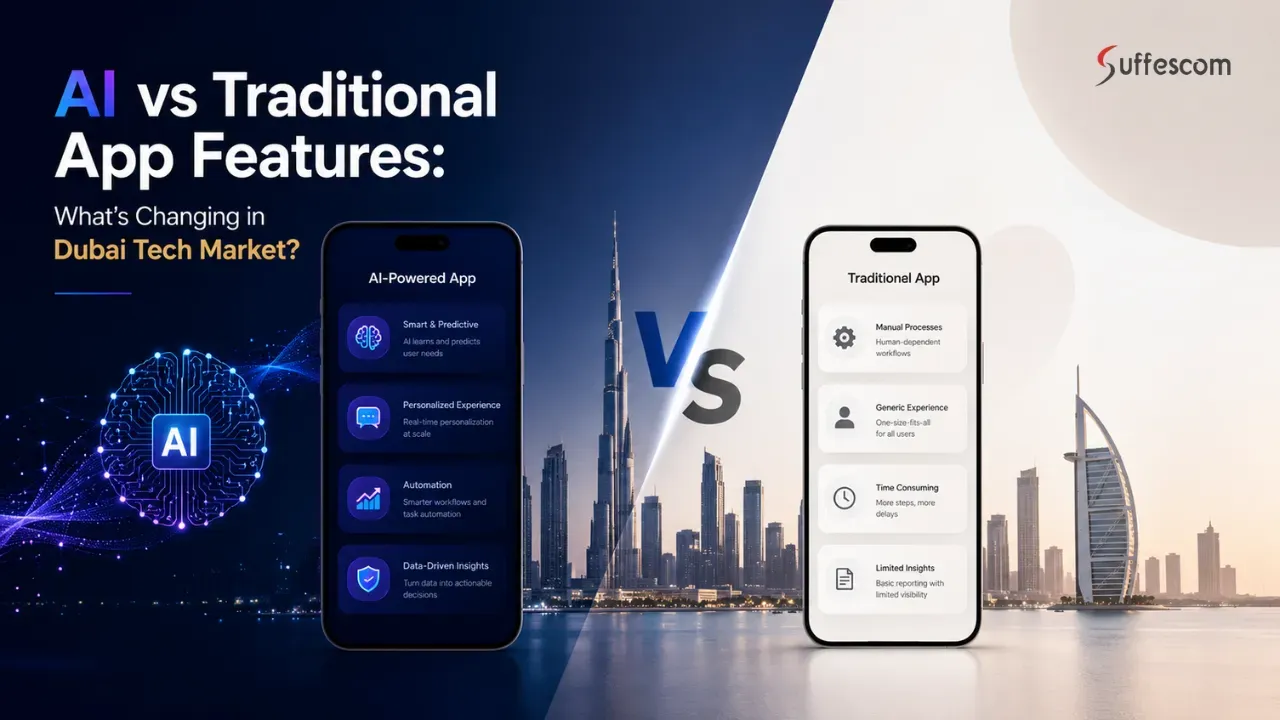
Gone are the days when app and software development were simple, built around predefined rules, static workflows, and identical user experiences. The advancement in Artificial Intelligence has changed this for good. Introducing features that enable you to learn from user behaviour. Then, use that information to automate decisions and continuously improve over time; that's something every entrepreneur wants in their app, especially in a tech-driven market like the UAE.
PwC Middle East projects that artificial intelligence could contribute US$320 billion to the Middle East economy by 2030, accounting for close to 14% of GDP, and is anticipated to benefit the UAE economy far more than any other country in the region. Consumer behaviour, too, is not far behind. A recent study by Deloitte Middle East showed that in the UAE and Saudi Arabia, 58% of consumers had already used generative AI apps, demonstrating an increasing hunger for more intelligent and personal digital products.
Meanwhile, AI adoption at Dubai International Financial Center rose from 33% in 2024 to 52% in 2025, based on the most recent survey conducted by Dubai Financial Services Authority, demonstrating rapid adoption of AI as central to businesses' operations.
For business leaders, the question now is no longer 'will the use of AI impact my industry? But can an app that relies on a common set of functions compete with intelligent, adaptive, or learning software experiences? In this blog post, we will evaluate the current benefits, compare the two strategies, analyse how much you may need to invest and the returns you may get from each, and show how your business in the UAE will ultimately achieve the greatest long-term benefits.
The UAE is one of the first countries that made artificial intelligence an integral part of its future economy. Some of the national initiatives related to the AI strategy include the UAE AI Strategy 2031.
The vision of Dubai to be one of the smartest cities in the world is generating requirements for apps that can make decisions automatically, provide personalised experiences, and perform on a large scale. Companies are finding themselves having to compete in a market in which intelligent digital experiences are becoming commonplace.
Government organisations in the UAE have already begun using AI technologies in their business processes and services to citizens. In 2026, the UAE made an announcement about plans to automate 50% of government services and sectors with the use of AI within two years.
Similarly, Abu Dhabi strives to become the first AI-based government in the world in 2027 with an AED 13 billion digitalisation project dedicated to the use of AI technologies.
The business setting in Dubai is highly competitive, such that there are few opportunities for a static experience of customers. Companies that continue using just the normal functionalities offered by applications are unlikely to compete effectively against firms that have adopted artificial intelligence.
The consumers of the UAE are increasingly demanding intelligent apps that can make them understand their preferences, give suggestions, assist them instantly, and help them in making decisions. With the rise in these demands, the traditional rule-based applications are increasingly giving way to learning applications.
The conventional applications run on predefined rules and processes that are built by the developers themselves. Everything that the user does and what the program responds to is already pre-programmed. The result will be the same irrespective of the person using the application.
Examples of traditional app components are:
All these components are efficient and economical for businesses.
The use of artificial intelligence makes functionality go beyond the set regulations through the use of data, machine learning models, and behavioural trends in decision-making.
In addition to just responding to user actions, AI-powered systems can analyse, predict, recommend, and automate tasks.
Popular examples of such features are:
The biggest difference between traditional and AI applications lies in how decisions are made.
Traditional systems follow fixed instructions: If a customer selects Product A, display Products B and C.
AI systems identify patterns automatically: Customers similar to this user are most likely to purchase Products D, E, and F.
This allows applications to become smarter as more users interact with them.
As opposed to legacy software solutions, artificial intelligence technologies have the capacity to keep improving their effectiveness and efficiency by virtue of new information.
The recommendation engines built on top of artificial intelligence technology, for instance, grow more efficient through understanding of consumer behaviour, their purchasing patterns, etc.
This adaptability is one of the main factors driving companies in Dubai towards investing in intelligent solutions.
| Feature Category | Traditional Apps | AI Apps |
| Logic | Fixed Rules | Learning Models |
| Automation | Manual | Intelligent |
| Personalization | Limited | Dynamic |
| Analytics | Historical | Predictive |
| Customer Support | Static | Conversational |
| Decision Making | Rule-Based | Data-Driven |
| Improvement Over Time | Requires Updates | Learns Continuously |
Companies should assess if they have the appropriate infrastructure, data, and processes in place before investing in any application that leverages AI.
The problem with many AI implementations is that companies try to use it without having the appropriate foundation in place.
AI solutions need a modern and scalable IT infrastructure to be deployed. Companies with legacy technologies, disjointed databases, and non-digitised processes may face additional costs and longer implementation times when implementing AI solutions.
Cloud-based architecture, API-based systems, and a unified database environment would be an appropriate choice in such situations.
The effectiveness of artificial intelligence depends on the quality of the data it trains on.
Firms that lack enough data or have data that is either inconsistent or isolated are likely to fail in making significant progress with their use of AI. Firms need to determine whether they have enough data before deploying any intelligent capabilities.
All of the present AI systems use cloud computing to train models, make inferences, and store data. Companies intending to incorporate AI must determine if their existing IT structure is capable of handling cloud computing needs without any performance constraints.
The deployment of artificial intelligence in organizations is not only about investing in technology.
Organisations need to make sure that their teams have sufficient expertise to control, govern, track performance, and implement the AI system according to organisational needs.
For a lot of organisations in Dubai, collaborating with experienced AI development teams can decrease implementation risks and speed up time-to-market.
Rather than jumping straight into big AI deployments, organisations are more likely to succeed by first finding high-priority applications for AI, such as automation of customer services, recommendation engines, and forecasting.
Through phasing, organisations can show fast ROI and create the infrastructure necessary for future AI initiatives.
The digital economy of Dubai has provided perfect conditions for the quick adoption of AI technology. The support from the government, high digital maturity, and one of the most connected populations in the world have made companies adopt intelligent technologies.
The UAE Government has made artificial intelligence a key part of future economic growth. Public spending on AI by the country is motivating businesses to make progress in implementing their digital transformation agenda through intelligent technology.
Businesses located in Dubai are now making considerable investments in cloud computing, automation, and data analysis. Given the digitisation trend that is now becoming popular with most firms, adding AI to the business processes would become very easy.
There have been tremendous developments in AI investments for startups in Dubai over the past few years. The venture capital firms are increasingly targeting companies that exhibit scalable AI functionalities and intelligent automation.
Amongst the major players that attract startups in the region is the UAE. Founders who operate in the fields of fintech, healthtech, proptech, logistics, and enterprise software all choose the UAE to set up operations since most of their ventures incorporate AI from the very beginning.
Organisations operating in sectors like banking, healthcare, retail, and logistics are taking their AI projects from the experimental phase to the production phase. The emphasis has changed from whether AI adds value to where AI can deliver the quickest ROI through automation and optimisation.
AI has not been restricted only to tech companies in Dubai. In fact, businesses belonging to almost all major sectors are now opting for AI-enabled technologies to replace the existing rule-based static functions.
The conventional property platforms used filters, manual search mechanisms, and general listing of properties. The new-age property platforms that make use of artificial intelligence leverage recommendations, predictive prices, and intelligent property matching systems. For example, if you want to develop a property listing app like Bayut, AI-powered features can provide a much-needed edge, making your app more competitive.
AI is being increasingly employed by financial organisations in order to detect fraud, assess risks, evaluate credit ratings, and automate customer services. These systems have the capability to evaluate several thousand transactions within seconds and identify any fraud.
AI is being used by healthcare organisations in patient triage, predictive diagnosis, appointment optimisation, and virtual health assistance. This technology will improve the patient experience as well as lighten the workload on the administration staff.
Retail firms are evolving from static product catalogues to intelligent recommendation systems and demand forecasting that improve their conversion rates and customer retention.
The application of artificial intelligence in the sector enables logistics companies to optimise their delivery routes, forecast demand changes, control their inventory, and improve their supply chain visibility via real-time analytics.
The use of artificial intelligence concierge services, personal recommendations, dynamic pricing, and multilingual virtual assistants by hotels and travel companies is helping improve guest experience.
EdTech platforms have increasingly been incorporating adaptive learning systems that customise the educational material according to individual student performance and speed of learning.
The public organisations in the UAE have adopted the use of artificial intelligence in citizen services, document management, service delivery, and workflow automation.
| Industry | Traditional Feature | AI Upgrade |
| Real Estate | Property Search | AI Property Matching |
| Retail | Promotions | Recommendation Engine |
| Banking | Risk Assessment | AI Fraud Detection |
| Healthcare | Appointment Booking | Predictive Care |
| Logistics | Route Planning | AI Route Optimisation |
| Hospitality | Static Pricing | Dynamic Pricing |
| Education | Standard Courses | Personalized Learning |
| Customer Support | Helpdesk Tickets | AI Virtual Assistants |
With the increasing use of artificial intelligence within the UAE, businesses have moved past testing to integrating real AI functionality in order to increase efficiency, cut costs, and better serve customers.
Although the best approach to artificial intelligence will depend on the sector, there are some aspects of AI that seem essential to all businesses in Dubai.
With AI-powered chatbots, the UAE is seeing an increased implementation of AI tools. While the older models required predefined answers, today's AI-based assistants are capable of understanding the intent behind a question, answering complicated questions, supporting multiple languages, and engaging in customer interactions throughout the day.
More and more companies are turning towards the use of predictive analytics for forecasting customer behaviour, generating sales leads, anticipating demand changes, and planning operations.
The recommendation engines examine consumer behaviour, preferences, and purchase history to offer customised recommendations for increased engagement, conversion, and consumer retention.
These engines have found much popularity in various sectors, including retail, ecommerce, media, and real estate, among others.
Traditional searches using keyword technology generate general answers. AI-driven search engines interpret context and intent and help users get the right products, services, documentation, or real estate.
Voice-activation apps are becoming increasingly popular across different industries, including customer service, healthcare, hospitality and in the realm of smart devices. The use of voice AI improves communication and increases accessibility in digital environments.
Computer vision technology makes it possible for software to analyse images and video independently. Computer vision is used by companies to authenticate identity, examine goods, maintain inventory, recognise faces, and secure the premises.
Businesses have employed artificial intelligence in automating routine tasks like document handling, invoice validation, customer onboarding, regulatory compliance checks, and internal reporting process management.
Modern companies produce vast amounts of data. AI-enabled knowledge management systems assist in faster information searches, document summarisation, answering queries internally, and boosting team efficiency.
| AI Feature | Primary Business Benefit |
| Personalized Experiences | Higher Engagement |
| Predictive Analytics | Better Decision-Making |
| AI Customer Support | Lower Support Costs |
| Recommendation Engines | Increased Conversions |
| Real-Time Analytics | Faster Response Times |
| AI Content Generation | Higher Productivity |
| Dynamic Pricing | Increased Revenue |
One of the key considerations that comes up during an exploration of AI for organisations is whether there is really sufficient value added by the extra investment made.
The answer will depend on the level of complexity involved in the implementation of the AI functions and their business benefits.
Typically, traditional software solutions are relatively cheaper due to their predetermined logic and workflows, as well as a predictable development process. The extra costs associated with AI include data engineering, model integration, cloud platform, testing, and optimisation.
AI solutions bring value through different channels than traditional software does.
The cost for mobile app development in the UAE usually ranges from AED 30k to AED 250k based on the required functionality and number of platform integrations.
Applications with basic functionality like login, payment gateways, booking management, and dashboard would fall at the lower end of the range, whereas applications for enterprises with customised integration and complex workflow would cost more.
Typical AI projects will have several more layers of development, such as machine learning integration, data pipelines, training models, inference, and AI governance needs.
Consequently, while typical AI projects will commence with a greater investment than traditional projects, they will yield better results in the long run due to automation and efficiency
| Complexity Level | What It Includes | Estimated Cost (AED) | Timeline |
| Basic AI App | AI chatbot, simple automation, basic personalisation, pre-trained AI integration | 25k – 80k AED | 3 – 6 weeks |
| Mid-Level AI App | Recommendation engines, predictive analytics, user behaviour tracking, hybrid AI + custom logic | 80k – 300k AED | 2 – 4 months |
| Advanced AI App | Custom AI models, generative AI, computer vision, voice AI, real-time AI processing, MLOps infrastructure | 300k – 1,200k+ AED | 4 – 9+ months |
Integration of AI features for those enterprises that already have applications in place can be more financially prudent than developing the whole platform anew.
While chatbots might cost somewhere between AED 15,000 and AED 50,000, complex recommendation systems, predictive analytics tools, and computer vision features could range from AED 80,000 up to AED 300,000+.
Those organisations that need specialised machine learning algorithms or specific data sets will experience higher costs, as the entire process of model training and validation will be needed.
The cost of developing a custom AI model in Dubai is generally around AED 200,000, but it may go up to more than AED 1 million.
AI chatbot development remains one of the fastest-growing AI investments in the UAE market.
Features related to Generative AI that include content generation, document summarisation, knowledge assistants, and AI co-pilots usually fall into the price range of AED 30k to AED 250k
Contrary to the legacy application models, artificial intelligence systems incur continuous costs of maintaining their infrastructure, which include the cost of inference, cloud compute, vector databases, storage, and APIs.
The cost associated with running such infrastructure varies from a few hundred dirhams monthly for small applications to tens of thousands of dirhams for enterprise-level applications.
The AI system requires continuous observation and optimisation. It is expected that businesses usually spend 15% to 25% of their yearly development budget on maintenance and model improvement.
An entry-level chatbot application that can be integrated into an existing program will need a relatively small budget, but developing a computer vision platform or generative AI system will likely take up a considerably bigger budget. There are many factors that determine the total price for an AI-based application.
The difficulty of implementation continues to be the most important cost driver. AI capabilities, which include chatbots for FAQs and recommendation widgets, are significantly quicker and cheaper to deploy than more complex systems that use computer vision or autonomous agents.
The addition of additional AI abilities requires greater investment in terms of development time, infrastructure, testing, and maintenance.
For instance, a solution that incorporates recommendation engines, prediction engines, voice AI, and conversational agents will need far more resources than a simpler solution focusing on one application only.
Artificial intelligence depends heavily on data quality and availability. Businesses that already possess large, well-structured datasets can often reduce implementation costs. Organisations that need to collect, clean, label, and organise data before development begins should expect additional investment.
A lot of firms expedite the process of development through the inclusion of pre-existing AI services and APIs in their systems. Although this makes for an easy process to start with, it is important to consider the additional expenses that would come up because of this process.
Systems that operate in areas like healthcare, finance, insurance, and government need further levels of security measures, regulatory guidelines, audit trails, and governance. Such needs lead to higher efforts for development and testing.
Various businesses will have different requirements when it comes to AI. Even though various industries will have some form of artificial intelligence implementation in their business processes, such as recommendation engines in the retail industry or fraud detectors in financial services, these systems will come with very different cost considerations.
Companies allocate funds for software development, but do not consider the recurring costs that come from using artificial intelligence technology.
While regular software can be considered finished once it is launched, AI programs keep changing and developing over time.
Training for custom AI models requires good-quality training data. In many cases, unstructured business data has to go through a process of being cleaned up, categorised, and labelled in order for it to be used by machine learning models. Sometimes data preprocessing becomes one of the most time-consuming stages in AI development.
Consumer behaviour, market dynamics, and business processes are always changing. Therefore, there is a need to constantly retrain AI algorithms in order to maintain their effectiveness and efficiency. Recommendation systems, anti-fraud solutions, and prediction models stand to benefit much from such constant data updates.
There will be constant expenditures associated with using cloud infrastructure that include compute power, storage, databases, inference, and API utilisation for any application using AI technology.
When there are thousands of users or large volumes of data involved, such operational expenditures may turn out to be quite substantial.
The processing of sensitive data by AI is common in many cases. Businesses working in industries including banking, healthcare, or government might need extra protection for the purpose of meeting regulatory requirements.
As the regulation of artificial intelligence continues to progress internationally and locally in the United Arab Emirates, more companies are requiring the creation of policies about explainability, transparency, model monitoring, and ethical use of AI.
While such frameworks are frequently neglected in project planning stages, they have become a necessity for business AI implementations.
| Hidden Cost | Why It Matters |
| Data Labeling | Improves model accuracy |
| Model Retraining | Prevents performance degradation |
| Cloud Usage | Supports inference and scalability |
| Security Monitoring | Protects sensitive business data |
| AI Governance | Supports compliance and accountability |
Even though most applications of AI need bigger investments initially, they produce profits that cannot be obtained by regular software.
The essence of AI lies in its ability to automate, personalise, predict, make decisions, and work effectively, not in the technology itself.
With the use of AI-based chatbots and virtual assistants, there is the possibility of handling thousands of customer requests at once, making the job of the human agents much easier. This will be very useful for firms with large numbers of customers.
The typical applications have a similar interface for all users. The use of AI allows companies to learn from the customer’s actions and provide personalised suggestions and interactions with them.
Personalised product recommendations, prediction models, and tailored consumer experiences assist companies in offering appropriate offerings at appropriate times to customers. These lead to higher conversion rates and enhanced customer lifetime value.
AI can perform tedious tasks like entering data, preparing documents, preparing reports, onboarding customers, and managing workflows. This saves effort, thereby helping companies become productive and allowing employees to work on more valuable tasks.
With the help of AI, companies can discover new opportunities, improve their pricing models, forecast customer needs, and reveal insights buried in big data. For most companies, these features provide new sources of income rather than just lowering costs.
Companies do not invest in AI because of their need for AI. They invest in AI because they need more customers, more money, lower costs, and better customer experience.
The right AI competencies will affect all four.
The recommendation systems use customer preferences, navigation trends, buying habits, and customer behaviour in order to recommend the most suitable product/service. This leads to higher cart value, conversion rate, and customer loyalty.
Examples of recommendation engines are:
Pricing engines driven by artificial intelligence technology continuously evaluate demand, supply, competitive pricing, consumer behaviour, and trends in the marketplace to set the best prices.
Dynamic pricing strategies are employed in a number of different sectors such as hospitality, aviation, retail, and mobility.
Acquiring customers comes at a cost. With AI, the company can determine when certain behaviour will predict whether the customer will churn soon.
These behaviours may include:
The company can then create a retention strategy before it is too late.
Traditional techniques of upselling depend extensively upon the use of rules and assumptions. AI is capable of identifying when, which item, and to which customer the opportunity of upselling should be offered.
All customers do not hold equal value. AI algorithms can forecast future customer value based on past data, thereby enabling companies to utilise their marketing budget more efficiently.
While there have been a number of developments within artificial intelligence over the years, there is not always a need for each characteristic to employ such technology.
There are many key aspects of the software program that are best designed using conventional systems due to their speed, consistency, and ease of maintenance.
User account creation, user login, password management, and access control systems are still heavily dependent on classical application logic.
Consistency, security, and reliability are needed, not prediction or personalisation.
Payment processing relies upon stringent business rules, regulation compliance, and transaction accuracy. While AI may play a role in fraud detection and risk evaluation, the payments infrastructure itself is largely rule-based.
Profile updates, settings, permissions, subscriptions, and other such features can usually be handled via traditional application architecture. The addition of AI would generally not provide any significant benefit to the process.
Authenticity rules, access control, encryption technology, and audit trails must exhibit deterministic properties and be compliant with regulations. These systems prefer reliability and accountability to autonomy.
Applications that run in an environment where connectivity is limited make use of local storage, synchronisation tools, and predefined processes, instead of cloud-based AI systems.
Industries including healthcare, banking, insurance, and governmental organisations often have stringent compliance requirements and need traceable decision-making processes.
Legacy software systems are essential in ensuring transparency and compliance in these sectors.
Expectations of customers have changed drastically within the last few years. Customers now do not evaluate your application against similar products; they assess it against every intelligent digital interface that they encounter every day in their lives, be it through personalisation of shopping, conversation interfaces, or intelligent search. It is here where AI-driven applications tend to hold an edge.
The traditional uses of applications usually provide the same experience to all of their users. On the other hand, applications based on artificial intelligence can customise the content, suggestions, offers, and the overall user experience according to the behaviour and interaction history of the user.
Conventionally, engagement programs have been built on scheduled alerts and campaign planning. AI solutions are able to examine the customer’s actions and make relevant interventions depending on the probability of their engagement or conversion.
AI chatbots and virtual assistants offer organisations the opportunity to go beyond using conventional formats and FAQ pages. Today’s customers want instant answers, natural dialogues, and availability around the clock through various channels in different languages.
Traditional customer service deals with any problems once they have been reported by the clients. However, AI will be able to detect any problems beforehand and assist the clients before they become frustrated and leave the platform.
Keyword searches require that users already know what they are searching for. Artificial intelligence searches understand intent, context, and language, aiding users in discovering products, content, or services they may be interested in.
| Metric | Traditional Apps | AI-Powered Apps |
| Personalization | Low | High |
| Customer Engagement | Moderate | High |
| Response Speed | Reactive | Real-Time |
| Customer Satisfaction | Medium | High |
| User Retention | Moderate | High |
| Search Experience | Keyword-Based | Intent-Based |
| Support Experience | Manual | Conversational |
With increased competition among firms within the UAE's digital economy, there is increasing reliance on AI solutions for the purposes of becoming more efficient, growing rapidly, and making sound decisions.
Where AI is applied properly, it has potential benefits far beyond mere automation.
AI is capable of automating repetitive and tedious tasks like customer support, document management, report creation, scheduling, and data entry. This way, the team can engage in other productive activities.
Reporting in the traditional sense informs businesses of what has occurred in the past. AI-driven analytics will assist organisations in comprehending what is currently occurring and predicting future events.
AI can help decrease the costs of operation by streamlining the processes through automation and eliminating manual operations.
In many cases, this becomes one of the most powerful drivers of ROI.
Customised recommendations, intelligent support systems, and predictive engagement help deliver improved and more personalised customer experiences. These solutions will result in greater satisfaction, loyalty, and retention rates for customers.
Traditional methods may necessitate an expansion in the labour force with the increase in demand. AI-based systems have the capability of dealing with a larger number of customers, transactions, and operations without requiring additional operational resource allocation.
With the use of artificial intelligence becoming prevalent in Dubai, businesses that effectively embrace artificial intelligence capabilities can distinguish themselves through superior service delivery, personalised experiences, and efficiency.
However, these attributes may not be easily replicable by the competition in highly competitive environments.
| Business Benefit | Impact |
| Increased Efficiency | Reduced manual work |
| Better Decision Making | Faster strategic decisions |
| Lower Operational Costs | Improved profitability |
| Enhanced Customer Experience | Higher customer satisfaction |
| Greater Scalability | Supports growth without proportional costs |
| Competitive Advantage | Stronger market positioning |
Though the potential of AI is substantial, its success cannot be achieved by merely incorporating intelligence into the application.
In many cases, companies have found out that their biggest problems are not technical but operational and strategic.
AI models depend greatly on data quality to deliver accurate results. Incomplete, outdated, duplicate, or inconsistent data will greatly impair the performance of any model and deliver unreliable results.
Firms working within sectors including finance, healthcare, and government have to make sure that their AI systems conform to the standards set by their local jurisdiction.
With the continuous growth of AI regulations worldwide, compliance is now more of a concern for developers than ever before.
Organisations may be using systems that were not intended to support the capabilities of AI. Combining new AI services with old infrastructure could lead to complications in projects.
The shortage of professionals, including artificial intelligence engineers, machine learning specialists, and data scientists, is still prevalent. This leads to challenges faced by firms while hiring and retaining the personnel necessary for their AI solutions.
Companies are becoming more worried about transparency, explainability, fairness, and responsibility when it comes to AI. It is important that organisations know the workings of the AI decision-making process, check for any biases and also make sure that AI complies with laws and ethics.
As companies deploy AI-enabled solutions, the importance of regulation has become equally critical. Companies doing business in the United Arab Emirates must guarantee that their use of AI takes care of data management, transparency, and emerging privacy and cybersecurity laws.
Firms that collect or process any personal information need to abide by the data protection laws at the federal level in the UAE. Apps dealing with customer information need to take privacy and security into account right from the beginning of development.
As the use of AI becomes more commonplace, companies are expected to deploy governance systems that describe how the AI models are developed and managed.
These areas include explainability, accountability, detecting bias, and oversight by humans.
AI uses have the potential to deal with business and customer-sensitive data, meaning that cybersecurity is a basic requirement during system development.
Encrypted communication, access control, auditing, identification management, and monitoring must be applied for the protection of AI systems from abuse and unauthorised access.
There is an increasing expectation that businesses should make sure that their use of AI technology is fair, transparent, and ethical.
Elements of responsible AI:
Companies that practice responsible AI would probably increase customer trust and minimise risk.
| Compliance Area | Why It Matters |
| Data Protection | Protects customer privacy |
| AI Governance | Ensures accountability |
| Cybersecurity | Secures sensitive information |
| Responsible AI | Reduces bias and risk |
| Auditability | Supports regulatory compliance |
AI during the initial phase was limited to predictions and automation.
With the development of generative AI, applications are able to create content, derive insights, automate processes, and interact with humans without requiring any human intervention.
This means that businesses in Dubai are adopting generative AI for a competitive edge, and not just as a single capability.
Generative AI can generate product descriptions, marketing material, reports, summaries, emails, and customer communication in seconds. It enables enterprises to scale their content production while minimising manual effort.
Development teams are becoming more reliant on AI-driven coding assistants for faster software development, automation of testing processes, code quality improvement, and faster product release. This enables organisations to bring their products to market faster and control development expenses.
Unlike traditional chatbots that rely on predefined scripts, generative AI agents can understand context, maintain conversations, and resolve more complex customer requests.
This creates more natural customer interactions while reducing support workloads.
UI concepts, marketing content, visuals for products, and custom user experiences are now increasingly being created using Generative AI.
It is now possible for teams to shift from concept to prototype much more quickly than before through these tools.
One of the fastest-growing areas of artificial intelligence is that of autonomous agents who have the ability to plan, reason, and perform actions without much human interference.
They can take care of workflows, conduct research, analyse information, and coordinate business processes.
Adoption of AI in Dubai is moving from chatbots and recommendation engines.
The next generation of applications will have increased autonomy, multimodality, and integration within businesses for decision automation and completely novel customer experiences.
Agentic AI pertains to intelligent systems that are capable of planning, reasoning, making decisions, and performing tasks with little human intervention.
As compared to conventional AI tools that react only to users’ commands, agentic AI acts independently to perform a given set of business processes.
Modern AI models can now handle multiple modalities like text, images, sound, video, and documents simultaneously.
This provides scope for more engaging customer interactions and opens up new opportunities in fields like healthcare, education, retail, and enterprises.
Instead of sending all the data to the cloud, edge artificial intelligence (AI) works to process information right on the device itself. This could be anything from a smartphone, camera, IoT sensors, or even a car.
Digital twin technology provides virtual representations of the physical objects that can be analysed for real-time monitoring and optimisation.
The manufacturing industry, logistics, construction, and even smart cities have been making use of digital twins to optimise their processes and foresee any problems that could arise.
Organisations are slowly adapting themselves to systems that can manage workflow management with minimal human intervention. Some examples are automated procurement processes, intelligent inventory management systems, customer service operations through artificial intelligence, and self-optimised supply chains.
The future of AI is sure to become more and more specialised. Rather than general AI solutions, businesses will use platforms that are specifically made for certain industries like health care, finance, real estate, logistics, and legal work.
There is more to selecting an AI development partner than the assessment of software development skills. An AI project comes with its own set of challenges in regard to data, infrastructure, regulations, and overall model management that need expertise in order to address. Selecting the correct partner could save time and risk.
The development of AI involves skills related to machine learning, cloud, backend technologies, APIs, and contemporary software architecture.
Companies should look for an experienced development partner that has knowledge of developing production AI-based solutions, not just research-oriented prototypes.
Not every company producing software is an AI company. Look into previous applications of AI to determine whether the company has any history in the implementation of technologies such as generative AI, recommendation systems, computer vision, predictive analytics, and intelligent automation.
Organisations that operate within the health, fintech, government, and corporate spheres must be assured that the development partner is aware of the privacy laws, cybersecurity standards, and AI governance policies in the UAE. This will save on expenses in the future, if not now.
AI models work well when combined with domain expertise. A company with experience in your industry processes, customer behaviour, regulations, and business issues is usually able to offer more value than a generic technology company.
A good portfolio is one that demonstrates much more than just good-looking interfaces. It is necessary for there to be indicators of tangible business achievements such as cost reductions, greater client loyalty, income growth, or faster delivery of services.
Questions to Ask Prior to Hiring
The questions to ask prior to hiring an AI development firm include:
The choice between conventional apps and AI-powered apps is not always an either/or situation.
As some companies continue to get all that they need from conventional applications, others will open up new channels for earning through AI.
Many times, the solution lies between the two extremes.
The traditional application is ideal where business processes are predictable, workflows are clearly defined, and customer experience does not need any level of personalisation.
Traditional development is often the right fit for:
These applications are generally faster to build, easier to maintain, and more cost-effective.
The importance of AI increases as businesses look to make decisions, personalisation, analyse large data sets, or increase efficiency through an automated process.
AI-driven applications can be really useful in:
The larger the dataset and customer base, the greater the potential return on AI investment.
Many organisations based in Dubai will benefit most from a strategy which is not completely traditional or completely AI-based.
Instead, companies are adopting a hybrid model of using traditional software applications along with the right set of AI abilities to solve certain business problems.
For instance:
Before using any AI technology, the management needs to consider whether:
Answering ‘yes’ to some of these questions will indicate that AI is an important investment opportunity.
AI is not the future trend anymore in Dubai. Companies from all spheres of business are using artificial intelligence to enhance the experience of their customers and earn new revenue.
The retail industry is relying on the help of recommendation engines, demand forecasting, and dynamic pricing to enhance personalisation and inventory management.
Artificial intelligence-based product recommendations and customer segmentation are aiding retailers in boosting their conversion rates and enhancing customer retention.
Real Estate Industry in Dubai Is Using Artificial Intelligence for recommendations, lead scoring, pricing predictions, and engagement.
AI-driven matching system helps potential home buyers find relevant properties quickly while helping the agencies in prioritising the most intentful leads.
Banks are using artificial intelligence to improve fraud detection capabilities, automate regulatory requirements, enhance risk management, and provide customised financial products.
With real-time transaction analysis, banks can detect unusual behaviour much faster than using rule-based systems.
AI is being used by healthcare professionals for appointment scheduling, triage, diagnosis, and the provision of telehealth services. These tools ensure better health care outcomes while decreasing the burden on administrators and waiting time.
AI can be used in logistics app development as well. The logistics industry is using AI in terms of route optimisation, demand forecasting, fleet management, and warehouse automation. Through the analysis of traffic situations, deliveries, and inventories in real-time, organisations will be able to lower their costs while increasing efficiency.
It's not a question of whether the technology is going to impact mobile application development anymore; it's a matter of where the maximum value can be added. While traditional functionalities of applications remain indispensable in cases like authentication, payments, compliance, and structured processes, AI is reshaping the way businesses create personalised customer experiences, automate business processes, and make decisions based on data and analytics.
For companies operating in Dubai and the UAE, the best option is the one that takes a balanced approach by combining the strengths of both traditional apps and AI-powered functionalities. Businesses that are concentrated on solving real problems with the help of AI are the ones that will be successful in the long run.
If they have a rule-based architecture, AI models make better decisions by extracting information and patterns from large quantities of data. AI apps are superior when it comes to delivering personalisation, Automation, and Predictions.
The development cost for creating AI software applications in Dubai ranges from AED 25k for basic integration to more than AED 1,200k for advanced AI systems incorporating custom machine learning algorithms and computer vision technology.
Certainly, the implementation of AI applications requires higher expenses for data engineering, model integration, cloud computing, and optimisation. Nevertheless, the return on investment of these solutions will be significantly higher in the long term.
Some of the industries which are currently experiencing high adoption rates of AI in the UAE are real estate, banking, healthcare, retail, logistics, hospitality, and government services.
Yes, a lot of companies make use of technology such as chatbots, recommendation engines, predictive analysis, and intelligent searches in their existing systems without completely replacing the entire system.
Small-scale AI projects may take between 3 and 6 weeks to complete, while complicated AI projects that require customisation of models and integration will require 4 to 9 months or more.
The use of AI technology is likely to provide more efficiency, enhanced customer retention, reduced customer service expenses, and higher conversions that will eventually result in many benefits in the future.
Some of the common requests for AI capabilities that come from Dubai include AI chatbots, recommendation engines, predictive analytics, voice AI, computer vision, and intelligent workflow automation.
Yes. Many start-ups use AI to automate operations, improve user experience, and grow without having to hire many employees.
AI systems must conform to UAE laws dealing with data protection, cybersecurity, and compliance laws of specific industries, depending on which industry is involved.
Improving the customer experience, AI enables businesses to improve customer service through personalised interaction and recommendations; chat support, proactive interactions, and reducing response times.
Some common risks include poor data quality, regulatory and compliance problems, integration and infrastructure complexity, and a lack of good AI governance.
Predictive analytics combines historical and current data to forecast future events such as trends in customer habits, future consumer demand, and foreseeable threats.
The applications built with AI Generative Technology can use its power to generate content, get insights, analyse information and chat with the end-users via conversational natural language interfaces.
It totally relies on your specific business objectives, available data, customers' expectations and the expectations regarding the ROI. Generally, the best performing application is a combination that comprises classic as well as artificial intelligence-supported components.
Future-proof with agentic AI, multimodal AI, autonomous systems, digital twins, and industry AI solutions.
Organisations may want to look for technical skills, AI experience, knowledge around security, industry knowledge, quality of the portfolio, and ongoing support.
Yeah, absolutely, especially the structured, regulated, compliant industries. But then you think of the AI value, in personalised journeys, or automating, predicting outcomes based on.

Senior Content Strategist
Jonathan Raabe is a content marketing professional, focusing on mobile apps, software engineering, artificial intelligence, SaaS, cloud computing, and digital transformation. Jonathan works with visionary brands to translate complicated concepts into content that can be easily understood by their audiences. As an expert in his field, Jonathan strives to create content that is thought-provoking and backed by facts, while at the same time building brand authority and trust.



Related Blogs
Hear directly from clients who partnered with Suffescom to turn their digital ideas into secure, scalable, and high-performing products.

“Suffescom delivered a HIPAA-compliant telemedicine app exceeding expectations, with strong data security and thoughtful development strategies from start to finish.”

“Suffescom helped us build a smart property management and virtual tour platform. Their expertise in AI helped us attract more qualified leads.”

“Suffescom delivered a modern hotel booking app perfectly aligned with customer expectations, which helped us boost sales by 40%.”

“We needed real-time fleet tracking and route optimization. Suffescom developed a platform that reduced our operational expenses in the first quarter.”

“We needed a smart itinerary planner with AI features for tourists. Suffescom delivered beyond our expectations and helped us increase bookings.”