Forex Trading App Development with Crypto Wallet: Features, Cost & Benefits
Key takeaways: The UAE is a serious market for fintech and digital-asset products. DIFC alone hosted 1,677 A [...]
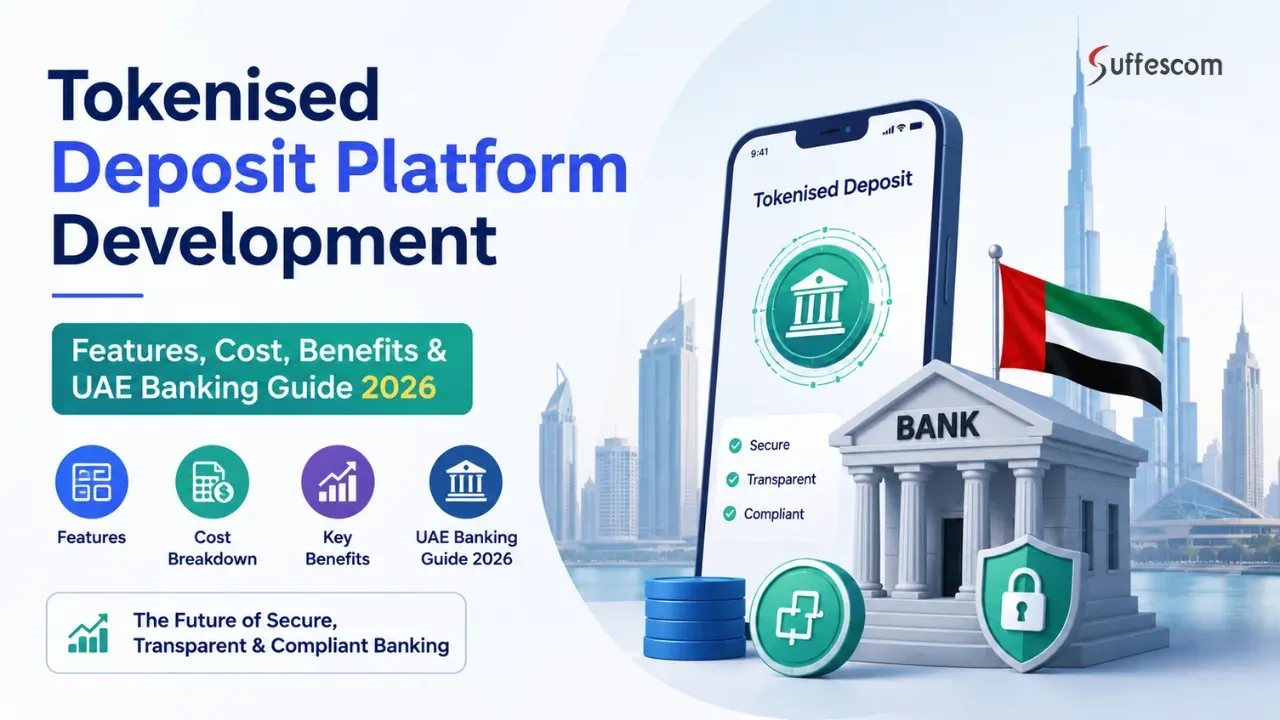
There are many changes that have occurred recently because of blockchain, digital assets, and programmable finance in the financial services industry. Tokenised deposits can be viewed as one of the most prominent innovations. Tokenised deposit refers to a digital version of a commercial bank deposit that is issued and administered via a blockchain network. In case there is a need to have faster settlements, more transparency, and reduced cost of operating expenses, tokenised deposit platforms might become an integral part of future banking architecture.
Tokenised deposit platform development has been gaining momentum in the UAE owing to the progressive regulation, digital transformation driven by the government, and interest of financial institutions in digital assets. There is a contribution of many regulatory authorities in creating conditions for innovations and compliance with rules and regulations, as well as financial stability. Such entities include ADGM, DIFC, VARA, and the Central Bank of the UAE.
In this comprehensive guide, we discuss all that entrepreneurs should know regarding tokenised deposit platform development in the UAE, starting from the technology itself, its main capabilities, pros for businesses, the cost of development, legal aspects, security issues, and future perspectives. This article is designed for banks, fintech companies, enterprises, and investors interested in the tokenised deposit platforms of the UAE.
The term “tokenised deposit” refers to the digital form of a commercial bank deposit created and documented using a blockchain or distributed ledger technology. Every token is an entitlement to the same value of fiat money held in a banking entity. For instance, if a client deposits AED 100,000 in a compliant bank, the bank may create 100,000 deposit tokens of the digital form, which are fully collateralised with the underlying deposit.
Tokenised deposits have a one-to-one ratio compared to the underlying fiat currency, such that each token represents a real-world bank deposit that is present in the accounts of the issuer. This characteristic distinguishes deposit tokens from cryptocurrencies and most stablecoins, thus offering more assurance and clarity to financial institutions and enterprise customers.
The main aim of deposit tokenisation is to optimise financial transactions through real-time money transfer, payment automation, automated settlements, and greater transactional transparency while retaining the stability of the existing banking system.
The tokenised deposit system serves as the system that allows for the creation, management, transfer, and redemption of tokens backed by deposits. The procedure usually starts with a client making a deposit into a registered bank account. Once the deposit is verified, the bank creates the same number of tokens based on blockchain technology. These tokens may then be transferred from one user to another via transactions made using the blockchain network.
Smart contracts are used to execute transactions under certain predefined conditions. Since blockchain networks work continuously, transactions take place much faster than transactions in banks that use batch processing and intermediaries.
If there is an intention to redeem tokens for fiat money, then the tokenised deposit platform will start the redemption process, where the respective tokens will be taken out of circulation, while the bank will release fiat money equal to their quantity from the client’s deposit. In this way, the system of issuance and redemption contributes to the reliability of the system itself.
The use of blockchain technology along with the banking infrastructure provides an environment for safe and efficient operations in the modern economy.
A well-functioning tokenised deposit platform has a number of elements that complement each other in order to provide security, comply with regulations, scale, and operate effectively.
Deposit Token Issuance Engine
An issuance engine is needed to create tokens for all deposits. The issuance engine makes sure that all tokens are fully backed by the respective amount of fiat money kept in the banks.
Blockchain Network
Blockchain technology is used as the basis for tracking all transactions, providing transparency, and facilitating secure peer-to-peer payments. There are various kinds of blockchain networks that can be selected based on the requirements.
Smart Contracts
Automation of transactions, compliance enforcement, payments, and settlements is accomplished by means of smart contracts, which facilitate the process and save time.
Digital Wallet Infrastructure
To send and receive tokenised funds, users need digital wallets that are protected and safe for their use. High-level wallets usually have multi-signatures and other additional security options.
Compliance and Identity Management Systems
Systems such as AML (Anti-Money Laundering), KYC (Know Your Customer), transaction monitoring, sanctions screening, and reporting on regulatory issues guarantee full compliance with financial regulations.
Banking Integration Layer
The integration layer helps connect blockchain infrastructure with traditional core banking systems, payment systems, treasury management systems, and accounting systems for operational consistency.
In total, these parts form a secure and scalable ecosystem that can support enterprise-level financial operations.
In the last few decades, various technological revolutions have taken place in the field of banking. The conventional paper-based banking system transformed into electronic banking, which further transformed into online banking, mobile banking, and a digital payments system. Tokenisation is the future phase of such transformation. Many startups are tapping into this focusing on robust mobile app development and delivering a fast and reliable solution.
In history, financial transactions have relied heavily on centralised systems, many middlemen, and intricate settlement processes. Such a process involves delays, costs, reconciliation problems, and inefficient use of liquidity. With globalisation taking an increasingly digital turn, the need for infrastructure that supports seamless financial transactions arises.
There is a growing evaluation of the potential use of tokens for deposit systems by financial institutions globally due to the benefits they offer.
Faster settlement infrastructure
Payment systems generally involve the involvement of more than one intermediary and operating hours constraints. With the use of tokens for deposit systems, near-real-time settlement is made possible.
Lower operational costs
The use of automated transaction processing, automated smart contracts, and efficient reconciliation processes will result in a reduction in operating costs for financial organisations.
Improved liquidity management
The cash flow information offered by tokenised deposits helps financial institutions better manage liquidity management and capital structure.
Stronger regulatory compliance
Built-in features such as pre-transaction compliance checks, onboarding checks to adhere to AML and KYC, and end-of-journey reporting for audits and regulatory compliance are possible within a tokenised deposit ecosystem, allowing firms to streamline the process and satisfy regulatory mandates.
New innovation opportunities
Banks will also leverage this infrastructure to innovate in programmable payment instruments, automated trade finance products, digital treasury products, and cross-border settlement platforms.
As the UAE moves towards becoming an established global fintech and digital asset destination, tokenised deposits will be one of the key components in the process of modernising its banking infrastructure.
| Feature | Traditional Deposits | Tokenised Deposits |
| Settlement | Delayed | Near Real-Time |
| Transparency | Limited | Blockchain-Based |
| Programmability | No | Yes |
| Cross-Border Transactions | Complex | Simplified |
| Auditability | Manual | Automated |
The United Arab Emirates has been making itself into an extremely vibrant hub for finance innovation, crypto assets, and blockchain technology. Given the support from the government and digital infrastructure, as well as the development of the fintech ecosystem, the United Arab Emirates has the perfect environment for tokenisation of the banking infrastructure.
The UAE’s Digital Economy Strategy is one of the key factors driving blockchain implementation and banking reform. The UAE Government is promoting the adoption of innovative technologies through its national transformation initiatives aimed at fostering economic development, enhancing efficiency, and promoting diversification.
In the last few decades, various technological revolutions have taken place in the field of banking. The conventional paper-based banking system transformed into electronic banking, which further transformed into online banking, mobile banking, and a digital payments system. Tokenisation is the future phase of such transformation.
In history, financial transactions have relied heavily on centralised systems, many middlemen, and intricate settlement processes. Such a process involves delays, costs, reconciliation problems, and inefficient use of liquidity. With globalisation taking an increasingly digital turn, the need for infrastructure that supports seamless financial transactions arises.
The UAE has been successful in making itself a top choice for fintech innovation, drawing startups, venture capitalists, banking institutions, and technology companies from all over the world.
There are various reasons behind the UAE’s appeal as a fintech hub:
Abu Dhabi Global Market (ADGM)
ADGM is recognised for its pioneering stance on digital assets regulation. This jurisdiction has a solid legal and regulatory environment which allows fintech innovations and blockchain usage within financial services.
Dubai International Financial Centre (DIFC)
The DIFC is a central financial hub in the region. We enable FinTech innovation with our programmes, licensing services and an innovation-friendly regulated framework that ensures responsible innovation.
Virtual Assets Regulatory Authority (VARA)
VARA regulates the virtual assets in Dubai, thus helping companies involved in the digital assets business get a clear picture. It is an integral part of fostering blockchain development without losing sight of market regulation.
UAE Central Bank
The UAE Central Bank is the body that regulates all matters concerning financial stability and regulatory functions for the entire nation. The regulations provided by this body are crucial in the functioning of tokenised deposits and digital payment services, in addition to future innovations in banking.
Together, these regulatory bodies make one of the most sophisticated regulatory systems for digital finance globally. Together, their efforts have been instrumental in facilitating the development of blockchain-based banking in the UAE.
Tokenised deposit schemes turn bank deposits into tokens on the blockchain technology that can be traded and used within the regulatory framework of the financial system. The actual money remains in the bank, while the tokenised version allows for a more efficient process.
The first step is where the customer or organisation sends fiat money into the bank that participates in the process. Before issuing tokens, the bank ensures that the deposit has been made and is credited to the depositor’s account.
At this point, there are compliance procedures like KYC, AML screening, and other identification processes to ensure that everything is okay to prevent issues on the platform. After successful validation of the deposit, the process of issuing tokens continues.
Following the verification, the platform will generate digital tokens, which will be equivalent to the deposited amount. The tokens will be issued on the blockchain network, and they will retain a 1:1 equivalence with the fiat currency deposited at the bank.
For instance, an amount of AED 500,000 deposited might generate 500,000 tokenised deposit units. The tokens will have full backing from the bank deposits made.
Smart contracts form an integral component of the tokenised deposit system. Such programs are self-executing based on predefined codes without the need for any intermediaries.
Within the platform, smart contracts can handle:
This increases efficiency since no manual labour is needed and also reduces errors. For instance, an automatic transaction can be carried out when the pre-set conditions are fulfilled.
Each transaction made using the system is registered in a blockchain ledger, which serves as a secure record of the ownership of the tokens, their transactions, and settlements.
Blockchain recordkeeping offers several benefits:
The type of blockchain network used by the platform can vary based on what is required by the institution; for example, the banks can opt for permissioned blockchain networks since they provide access control along with all the features of blockchain technology.
The issued tokens can be exchanged between authorised parties, businesses, banks, and payment processors. In contrast to existing banking systems, blockchain networks allow for continuous transaction processing.
Upon initiation of any exchange, the system verifies the transaction, performs compliance checks, and registers the transaction on the blockchain. Following that, smart contracts ensure the finalisation of the transaction.
This process supports:
The last phase is when there is a customer interest in converting the tokenised deposits back to fiat currency. A redemption request is made via the platform, and the ownership of the tokens is checked via the smart contract.
Then the bank makes the equivalent amount of fiat money available from the underlying deposit account and releases it to the customer. It guarantees that there will be parity between the amount of tokens in circulation and the bank’s deposits.
It is important to maintain this one-to-one backing.
| Steps | Process |
| Steps 1 | Customer deposits funds |
| Steps 2 | Bank verifies funds |
| Steps 3 | Tokens are issued |
| Steps 4 | Tokens circulate within the approved ecosystem |
| Steps 5 | Smart contracts execute transactions |
| Steps 6 | Redemption request initiated |
| Steps 7 | Fiat settlement completed |
A tokenised deposit platform not only requires the technology of blockchain but also needs several other special features that will allow the platform to perform well.
Tokenisation of the deposits is carried out through the token minting and burning engine. The moment a customer makes a deposit, the platform creates the same number of tokens on the blockchain network. When these tokens are exchanged for money, they are burnt out of circulation.
Tokenised deposits are automatically moved using smart contracts between authorised parties. These digital contracts perform transactions through certain pre-set rules without the need for any manual input from anyone. Smart contracts can automate payment confirmations, payment instructions, recurring payments, and business processes without incurring any delays or mistakes.
The traditional banking system usually makes use of batch processing and intermediation networks to slow down the settlement process. The tokenised deposit system is able to offer an immediate settlement facility through direct processing on the blockchain network.
Multi-currency functionality means that the platform will be able to create and handle tokenised fiat currency types, like AED, USD, EUR, and GBP. This function proves extremely useful when dealing with institutions working internationally since it makes transactions easier and helps conduct international business via one digital tool.
Secure wallet infrastructure is essential for storing and managing tokenised deposits.
Enterprise wallet management features typically include:
Compliance remains one of the most important requirements for tokenised banking infrastructure.
A robust KYC and AML module helps financial institutions:
By integrating compliance right into the platform itself, it becomes possible to automate a lot of processes that are related to regulation.
For a financial institution, it is essential to provide regular reports to regulators, auditors, and other entities. It is possible to use a regulatory report dashboard for the purpose of seeing transactions, token issuance, customer details, compliance and risks.
Tokenised deposit platforms must integrate seamlessly with existing banking infrastructure.
API integration capabilities allow connections with:
Corporate treasury management techniques assist companies in better managing their liquidity, cash, and payment processes using a tokenised deposit system. These techniques include functionalities like real-time liquidity monitoring, cash flow projections, automatic fund allocation, payment scheduling, and treasury management reporting, among others.
Sending an international wire is prohibitively slow and costly owing to all the intermediary systems and settlement accounts involved. Using tokenised deposits direct blockchain payment streams can streamline this between participating institutions.
The role-based access control allows various employees of the financial organization to access the features and information pertinent to their respective roles only. The platform increases its security and operational efficiency through the assignment of permissions to its administrators, compliance officers, treasurers, auditors, and operations staff.
The transaction monitoring system constantly analyzes the activities performed on the platform to look for anomalies, suspicious activities, and risky transactions. This feature enables the institution to prevent fraud, raise compliance alerts, and conduct effective oversight within a very tightly-controlled financial environment.
The custody service solutions offered by institutions allow for secure ways of holding or keeping tokenized assets on behalf of banks and corporations or other large players. This may involve multi-party computations, hardware security modules, multi-signature wallets, key management, and disaster recovery services among others.
The automated engine reconciles blockchain transactions against bank transactions, payments, and accounting records on a continuous basis for accuracy and efficiency. With much of the reconciliation work automated, the system enables institutions to cut down costs, report faster, and remain in control.
As the tokenized deposit platform technology evolves, there are new advanced technologies being implemented that enhance the level of automation, intelligence, and interoperability. This makes it easy for financial institutions to work effectively and be prepared for the future of digital finance.
Fraud detection that is assisted by AI allows tokenized deposit platforms to detect any unusual activity in real-time through the analysis of various elements. In contrast to conventional rule-based systems for detecting fraud, the machine learning algorithms can evolve and decrease the number of false positives.
Payments that are programmable are those that will be conducted automatically once certain conditions are met. In this way, banks and companies can utilize smart contracts to facilitate automatic payment processes such as invoice settlements, periodic payments, release of escrows and milestone payments, among others.
Automated treasury management enables finance departments to have improved visibility into their liquidity positions, cash positions, and payments requirements. Deposit systems that incorporate tokenization could use real-time data and smart contracts in facilitating funding transactions, predictions, and treasury accounting.
CBDC compatibility enables tokenised deposit services to communicate with central bank digital currency when it becomes widely adopted. Transactions will be possible between the two, depending on the regulators’ approval. For UAE businesses, the compatibility with CBDCs such as Digital Dirham could become a key competitive factor.
In real time, real time liquidity optimization will assist in monitoring the balance, flow of transactions, and cash positions in real time rather than through reporting of outdated information. Through advanced analytics, decisions related to allocation of funds may be recommended or even automated.
Embedded finance makes it possible to incorporate financial services directly into digital applications and business platforms. The tokenized deposit structure will enable use cases like digital wallet, merchant settlement, and Banking-as-a-Service, thus making life easier for the customers while generating more revenue streams for banks and platform providers.
Interoperability protocols in the world of DeFi enable the integration of tokenized deposit solutions with authorized DApps and liquidity channels without compromising the control of institutions. Interoperability, when done with caution, can lead to enhanced liquidity access and faster settlement processes, but it should always be compliant with regulations and risk management standards.
Management of the lifecycle of tokens guarantees the right control of all stages involved in the tokenization of the deposit, namely: the creation of tokens, their issuance, transfer, redemption, destruction, and audits. Automation of the lifecycle controls helps maintain the circulation of tokens in line with the bank deposits.
The importance of ESG and sustainable practices monitoring has grown for banks and corporate customers. Tokenized deposit systems may be used for reporting and for creating governance and transactions’ history that is consistent with sustainable practices. The process of verifying financial transactions by means of blockchain-based audit trails becomes simpler.
In the UAE, the advantages of tokenized deposits are not limited to fast transaction processing only. This technology could be useful for improving liquidity management, increasing compliance, customer experience, and creating new sources of income. In times of rising competition in the finance sector, these features are gaining their relevance.
One of the major benefits of the tokenized deposit platforms is their near real-time settlement feature. In the case of conventional banking systems, the transaction has to go through several intermediaries, which may also include banking time restrictions that result in delays in processing the funds. The tokenized deposit transactions are processed using the blockchain technology round-the-clock.
Banks incur significant expenses in regard to transaction processing, reconciliations, compliance, and back-office functions. Deposit platforms based on tokenisation assist banks in saving costs as they perform a lot of functions automatically with the help of smart contracts and blockchain-powered workflow management systems.
The importance of liquidity management cannot be ignored as far as financial security and operations of banks are concerned; however, traditional systems are usually based on delayed reports and separate sources of information. Tokenized deposit solutions offer an opportunity to have constant access to transactional data and balances of accounts that enables liquidity monitoring in real time.
Maintaining compliance with regulatory frameworks continues to be one of the most important concerns of banks operating in the UAE. Compliance controls can be integrated in transactions using tokenised deposits in an automated fashion. This will ensure that banks are able to meet regulatory obligations in a much easier manner, thus saving time.
Today’s customers require better and faster services in banking. This need is fulfilled by tokenized deposits because of faster payment, real-time updates, increased transparency, enhanced account visibility, and minimized service delays. Businesses and institutions get the advantage of quick settlement, whereas individual customers enjoy better digital banking experience.
Transparency is one of the key strengths of the financial system based on the blockchain. All the transactions in the tokenized deposit network are logged in an unalterable ledger. This allows the banks to enhance their governance, reporting, dispute resolution, and audit preparedness.
In the wake of the growing number of digital transactions, the financial sector is at higher risk of cyber threats and frauds. Security systems in tokenized deposit platforms incorporate sophisticated security measures that safeguard funds, accounts, and transaction information. Some of these include encryption, two-factor authentication, multiple signatures for authorizations, hardware security modules, monitoring systems, and smart contracts auditing.
Apart from operational efficiencies, tokenized deposits platforms would allow for developing additional products and services that could help banks earn money. Some of those possibilities may involve programmable payments services, digital treasuries, cross-border settlements platforms, Banking-as-a-Service solutions, custody solutions, tokenized assets, and embedded finance solutions.
Efficiency of operations is one of the key objectives of modern banks that implement digital transformations. Tokenized deposit solutions are among those tools that assist in achieving this objective through streamlining of manual processes, elimination of delays, and enhancing interoperability between systems. The end result is the increased agility and scalability of the banking framework.
| Benefit | Business Impact |
| Faster Settlement | Improved cash flow |
| Lower Costs | Reduced operational overhead |
| Automation | Higher efficiency |
| Transparency | Better governance |
| Compliance | Reduced regulatory risk |
Although bank efficiency and effective settlement infrastructure improve due to their operational modernization, businesses and corporations also enjoy considerable benefits due to the implementation of tokenized deposits. There is an increasing need for enterprises to maintain liquidity, speed up payments, minimize costs of payments, and increase visibility in financial management.
There are several problems with traditional payment infrastructures, such as the involvement of various intermediaries, time-consuming settlements, and non-integrated treasury operations. Tokenized deposits can be helpful in addressing these issues.
For firms with many transactions, cross-border operations, and complicated cash flows, treasury management is critical.
The tokenized deposits allow the treasury team to track the balance of accounts, the level of transactions, and the liquidity situation of the firm in real time.
Benefits of treasury optimization include:
The management of payments to suppliers is often cumbersome, particularly for companies that have an extensive network of suppliers.
Deposits made using tokenization rely on smart contracts which automate the process of executing payments when certain predefined conditions are met, such as approval of the invoices, progress on contractual agreements, or confirmation of delivery.
This automation helps businesses:
Cross-border payments may use third parties, currency exchanges, and other measures that increase cost and complexity.
The tokenisation of deposits allows for easier cross-border payments as they can be made directly through blockchain technology between participating financial institutions.
Key benefits include:
Having access to precise and timely financial data is vital for good business decision-making.
Tokenized deposits give visibility into the status of transactions, balances on accounts, payments and liquidity positions in real time. This allows an organization to track its cash flow instantaneously rather than having to wait for daily reports.
Improved visibility helps businesses:
The old fashioned system of payments normally includes fees associated with intermediaries, settlements, reconciliation, and international transactions.
By using blockchain technology and automation of processes, tokenized deposits will be able to cut a lot of such expenses. Efficient settlements and minimal intermediaries make the transaction process cheaper.
Potential cost savings may come from:
Apart from facilitating transactions, smart contracts may be programmed to perform a variety of business processes.
Through the use of programmable logic, organizations are able to initiate processes such as transactions and approvals among others in the event that certain conditions are satisfied.
Common enterprise use cases include:
At its core, tokenized deposits, stablecoins, and CBDC are all forms of value expressed in a digital form and transferable through an electronic network. The difference between the asset issuer and the nature of the financial product itself is significant.
Tokenised Deposits
The tokenized deposits refer to digital tokens that represent deposits in the commercial banks created by the regulated financial institutions. These tokens have a one-to-one correlation with the deposits in the bank account. This is because each token represents liability from the side of the institution that issues the tokens.
Stablecoins
These are crypto-assets that are privately created and have a stable value due to their backing in reserves that may include fiat money, government securities, or other financial instruments. Although there is an attempt to offer price stability in these coins, the quality and transparency of the reserves differ from one issuer to another.
Central Bank Digital Currencies (CBDCs)
Digital currency is digital representation of the currency issued by a nation’s central bank directly to its citizens. Unlike deposits with commercial banks or stable coins issued by private entities, CBDCs offer a direct claim against the central bank.
Whereas the three types of money have different structures of governance, regulation, and function within the financial environment despite the commonality in transaction processing.
Regulation is key when it comes to issuance, control, and utilization of digital finance instruments.
The regulation of tokenized deposits usually occurs within the scope of current banking regulations due to the fact that they are issued by duly authorized banks. Banks have to observe the norms of capital adequacy, client safety, money laundering prevention, risk management, and financial reporting. These regulatory mechanisms often give a better guarantee of trustworthiness to companies and institutions.
There are different regulations concerning stablecoins depending on a jurisdiction where such coins operate. The regulation of stablecoin providers may vary from reserve management to transparency and consumer protection.
CBDCs are usually within the jurisdiction of central banks and monetary authorities of nations. Being sovereign digital currencies, CBDCs are usually governed by a robust legal framework that emphasizes monetary stability and financial integrity.
Each digital asset model carries a unique set of security considerations and risk characteristics.
Deposits in tokenized form will be able to utilize existing control measures and governance structures that are present in the banking system. Since tokens continue being held by regulated financial entities, it is possible to use existing risk management procedures and operations controls implemented by banks.
The use of stable coins is likely to present further risk factors, which depend on the management of the reserves and on the level of transparency that issuers have concerning asset support.
According to the expectations, CBDCs should offer the most sovereign-guaranteed level of security as they are created by central banks themselves. However, the broad usage of such digital money could bring up a number of new issues concerning privacy, cybersecurity, and operational aspects.
Some of the critical distinctions between tokenized deposits, stable coins, and CBDCs include how they relate to the present banking system.
Tokenized deposits are created with the banking system in mind. They fit perfectly with core banking systems, treasuries, payments, and compliance. The result is that banks are able to modernize transactional capabilities without altering the fundamental business model.
While stable coins may help with certain applications within banking, they often require extra layers of integration, custody, compliance, and settlement services. Thus, the process of integration may prove to be more complicated due to various regulatory and operational considerations.
CBDCs are believed to integrate with national payment and banking systems extensively once implemented. Yet, most CBDC projects are still at their pilot or development stages, and the integration frameworks are not set in stone yet.
| Feature | Tokenised Deposits | Stablecoins | CBDCs |
| Issuer | Commercial Banks | Private Entities | Central Bank |
| Regulation | High | Medium | Very High |
| Fiat Backing | Bank Deposits | Reserve Assets | Sovereign Currency |
| Banking Integration | Native | Partial | Full |
| Smart Contracts | Yes | Yes | Emerging |
The usage of tokenized deposits is increasingly becoming popular outside the confines of banks. Firms seeking to improve their transaction processing and liquidity management through more transparent financial practices are increasingly seeing the relevance of tokenization within different industries in the UAE.
The combination of the safety of bank deposits with the efficiency of blockchain technology creates value for those industries requiring efficiency, reliability, and automation.
Some of the major entities that benefit most from tokenized deposit systems are commercial banks. This technology helps banks digitize payment processing and settle transactions faster while improving their efficiencies.
Moreover, liquidity management can be improved, and reconciliation efforts reduced, potentially lowering the cost structure of core banking processes. For commercial banks that operate in a competitive environment, tokenized deposits bring opportunities to deliver advanced digital services.
With its robust Islamic finance industry, the UAE is well suited for the use of tokenisation in financial transactions. Tokenised deposits would allow for improved transparency and efficient processing of financial processes.
Tokenized deposits could also help with Treasury, international transactions, and automated payments. With the continued advancement of Islamic finance towards digitalization, tokenized deposits might emerge as an integral component of the future banking system.
Tokenized deposits can increase the efficiency of operations through faster settlements. It is due to the fact that wealth management companies deal with valuable assets and need quick and efficient settlement processes.
In addition, tokenized deposits may eliminate some aspects of paperwork and facilitate reporting. Thus, the managers will be able to concentrate on their core functions.
Trade finance is characterized by numerous parties, documentation, and long settlement periods. Tokenized deposits will make all these processes simpler because they will ensure programmable payments and conditional settlements.
The release of funds will happen automatically once the shipping or documentation conditions are satisfied. This will improve the process speed and reduce paperwork.
Efficient processes of settlement become extremely important considering the inflow of huge investments from institutions and foreign countries in the real estate market of UAE.
Tokenized deposits may become helpful in streamlining transactions involving large sums of money and coordinating payments. Moreover, tokenized deposits may become extremely useful for the escrow process, distribution and reports.
FinTech startups are always on the lookout for means to develop their financial products quickly and flexibly. The tokenized deposit infrastructure provides them with the solid base on which to develop digital wallets, payments, and embedded finance.
In addition, it provides a base for building banking-as-a-service solutions, corporate payments, and treasury products. Using regulated banking infrastructure allows fintech companies to innovate safely.
Efficient methods for the transfer of cash, settlement, and management of funds are essential for institutional asset managers. Tokenized deposits can contribute towards making these processes better through increased efficiency in transaction processing and increased liquidity visibility.
This can lead to improved decision-making and increased effectiveness in the allocation of capital. Thus, better performance can be achieved by asset managers.
A secure and robust settlement system is required by digital assets exchanges for dealing with large volume transactions and institutions. Tokenized deposits act as a bridge between the world of conventional banks and digital assets through fiat settlement.
They have applications in the on-ramp/off-ramp service, treasury management, and platform-to-platform transfers. With increasing digital assets adoption, tokenized deposits will play an important role in securing and improving the financial system of exchanges.
The costs associated with implementing a tokenized deposit system in the UAE will be dependent on various aspects including complexity of the platform, blockchain infrastructure, compliance standards, integration capabilities, security, and scalability. An MVP can be developed at considerably lower costs than an enterprise-level banking platform that adheres to strict compliance standards.
The project begins with requirement gathering, market analysis, regulatory assessment, technical planning, and solution architecture design.
Estimated Cost: AED 36,700–AED 91,750
This covers blockchain network setup, token infrastructure, ledger management systems, transaction processing mechanisms, and backend development.
Estimated Cost: AED 110,100–AED 293,600
Smart contracts make automating your token creation, redeeming, sending and settling token transactions and workflows, compliance monitoring and all Treasury functions a simple reality.
Estimated Cost: AED 73,400–AED 220,200
Compliance modules comprise KYC verification, AML screening, sanctions screening, transaction monitoring, risk assessment, and regulatory compliance tools.
Estimated Cost: AED 73,400–AED 256,900
The security solutions will usually involve smart contract auditing, penetration testing, vulnerability assessment, code analysis, and infrastructure security audit.
Estimated Cost: AED 55,050–AED 183,500
Possible integrations will include integration with core banking platforms, payment gateway platforms, treasury management systems, ID verification platforms, accounting software, and financial services providers.
Estimated Cost: AED 91,750–AED 367,000
Cloud hosting, node, database maintenance, Monitoring Solutions, Back-up Solutions, disaster recovery system etc are covered under the Infrastructure costs
Estimated Cost: AED 36,700–AED 183,500+ annually
Cost Breakdown
| Component | Estimated Cost (AED) |
| Planning & Discovery | AED 36,700–AED 91,750 |
| UI/UX Design | AED 29,360–AED 73,400 |
| Blockchain Development | AED 110,100–AED 293,600 |
| Smart Contracts | AED 73,400–AED 220,200 |
| Banking APIs | AED 91,750–AED 367,000 |
| Compliance Modules | AED 73,400–AED 256,900 |
| Security Audits | AED 55,050–AED 183,500 |
The final investment largely depends on the scale of the platform, regulatory requirements, number of integrations, and target user base.
| Platform Type | Estimated Cost |
| MVP Development | AED 293,600–AED 550,500 |
| Mid-Scale Platform | AED 550,500–AED 1,284,500 |
| Enterprise Solution | AED 1,284,500–AED 3,670,000+ |
To launch a secure and scalable platform of tokenised deposits, it’s important to have the right technology stack – one which handles all sorts of transactions using blockchain, supports bank and financial institution regulations, runs contracts on smart contracts, and includes security in the enterprise standards.
The underlying blockchain technology powers the system in managing token issuance, settlement, asset transfers, and logging every transaction.
Popular blockchain options include:
Smart contracts govern token generation, transfers, buybacks and sales, regulatory processes and clearing and settlement functions.
Common smart contract technologies include:
Business logic, APIs, authentication, transactions, compliance processes, and integration are all managed by the backend layer.
Popular backend technologies include:
The frontend layer allows interaction between the users/administrators/compliance/treasury managers and the system.
Common frontend technologies include:
Databases are also implemented to retain customer data, compliance-relevant details, transaction attributes, audit records and business operations-associated information.
Common database solutions include:
Security is a critical component of tokenised banking infrastructure.
Common security technologies include:
The adoption of cloud infrastructure services combined with devops methodologies provide the platform’s robustness, scalability, and ease of operation.
Popular cloud and DevOps technologies include:
| Layer | Technologies |
| Blockchain | Ethereum, Hyperledger, Polygon, Canton |
| Backend | Node.js, Java, Go |
| Frontend | React, Angular |
| Database | PostgreSQL, MongoDB |
| Cloud | AWS, Azure, GCP |
| Security | MPC, HSM |
Compliance is an indispensable feature in the case of any tokenised deposit scheme in the UAE. Having a proper compliance strategy will help lower risks and ensure stability in the long run.
The UAE Central Bank provides the groundwork for bank supervision, management of the payments system, and financial stability. Tokenised deposit schemes should be regulated according to the laws that govern licensed financial institutions, especially in relation to funds handling.
The ADGM is the ideal regulatory structure for developing innovations involving digital assets and fintech. Platforms that will be using the ADGM will be required to meet regulations regarding custody, governance, risk management, and reporting. This makes the development process of blockchain financial products simpler for financial institutions.
Dubai International Financial Center provides an organised setting for the delivery of financial services and technology. Deposit platforms that will be tokenised within the DIFC have to meet their requirements in terms of licensing, governance, cyber security, and consumer protection.
VARA is the regulatory body for regulating virtual asset activities in Dubai. Depending upon the platform structure, VARA regulations can apply to custody, transaction monitoring, licensing, and cybersecurity controls. It is vital to conduct a legal review at the initial stage itself to find out if the platform falls under the purview of VARA regulations.
Both AML and KYC compliance are compulsory requirements for regulated financial platforms in UAE. The tokenized deposit platform should conduct customer identity verification, sanctions screening, PEPs screening, and transaction monitoring. These processes will be done effectively through automation.
Tokenized deposit systems collect highly confidential financial and personal data. Thus, data security becomes one of the major compliance requirements for such organizations. It is necessary to provide proper encryption, data access control, proper storage of data and its retention.
The functionality of issuing, transferring, settling, and redeeming of tokens is done via smart contracts. If there is any vulnerability in the coding, it will result in financial risks, compliance risks, and other disruptions. For this very reason, smart contracts need to be checked for security through auditing and code review before going live.
With the regulatory, compliance, security, and governance needs taken into consideration, financial institutions will be able to design tokenised deposit systems in line with the UAE's digital finance ecosystem.
The security of tokenized deposit platforms is vital as these platforms involve digital assets, financial transactions, customer information, and smart contracts. A robust security system enables financial organizations to minimize risks, promote compliance and create trust.
Multi-party authentication requires that there be an acceptance of the transfer by several parties who have been granted authority. It serves to mitigate any instances of fraud and minimizes the risks of any internal threats.
With the Multi-Party Computation (MPC) wallets, the private keys of the cryptocurrency accounts are not held in one central location but are distributed among various parties or devices.
End-to-end encryption will keep sensitive data secure whether in transit or stored. This needs to apply to customer information, transactional information, authentication, financial information, and even API communication.
The need for smart contract auditing arises from the fact that the smart contracts are responsible for handling the issuance, transfer, settlement, and redemption of tokens.
Continuous threat monitoring detects suspicious activity as it occurs-anomalous transactions, illicit access attempts, malware infections, system irregularities-enabling quick response and reduction of damages.
Disaster recovery planning guarantees the platform’s ability to quickly restore operations in the aftermath of cyberattacks, downtime or a hardware/system outage. Backup and restore plans, failover systems, restoration steps and business continuity operations are included in these plans.
Fraud prevention tools help in detecting any suspicious activity through AI-driven anomaly detection, scoring transactions, behavior analysis, anti-money laundering, and alerting features to prevent any fraudulent activity on the platform.
These best practices will enable tokenized deposits platforms to stay safe, secure, and appropriate for regulated finance environments like the UAE.
A tokenized deposit system development process needs a methodological approach considering various aspects such as business objectives, regulatory issues, security measures, and banking. The development roadmap makes the process of financial institutions' activity more effective and safer.
The first stage involves verification of market need, target audience identification, and the determination of use cases. These may range from retail banking to corporate treasury, international payments, or settlement services.
Key questions to answer include:
This guarantees that the work you put into the project is focused around real demand, not guesses.
Since tokenised deposits are conducted within a regulatory framework, it is important to evaluate the platform in accordance with regulations from the UAE Central Bank, ADGM, DIFC, VARA, and AML/KYC requirements.
This will help to establish which licenses, if any, will be required, what type of custodianship will be needed, reporting requirements, and data protection obligations.
After that, the technical architecture design is done considering scalability, security, and integration requirements. It involves designing components, user flow, wallets, and settlement processes.
Important considerations include:
A good architecture ensures the stability of the platform.
It is imperative to select an appropriate blockchain in regard to its performance, privacy, and governance. For banks, it is common to use permissioned blockchains like Hyperledger, Canton, or enterprise-level Ethereum blockchains.
It should depend on the transaction speed, privacy, interoperability, and regulation compliance. The blockchain should be suitable for the specific business model of the platform.
The issuance, transfer, redemption, and settlement rules of tokens are automated by smart contracts. Smart contracts may also include compliance terms such as whitelisting and transaction limitations.
Best practices include:
Because smart contracts govern financial transactions, they need to be programmed extremely carefully.
There is a need for integration with core banking systems, payment systems, treasury management systems, identity providers, and reconciliation systems. This integration ensures that token transfers align with deposit entries on the system.
Common integration points include:
Integration minimizes manual effort and increases efficiency.
KYC-verification, AML screening, sanctions monitoring, transaction monitoring, risk-scoring and regulatory reporting features. Automation increases efficiency. Automation increases the efficiency of achieving regulatory compliance.
There is a rigorous security testing process prior to launch and at intervals to ensure there are no weaknesses in defences. This commonly covers:
After the test phase, the platform is then released into the production environment. In this process, activities such as infrastructure implementation, compliance review, monitoring setup, and user onboarding are carried out. The controlled release helps mitigate any risks associated with the operation of the platform, as well as validating the performance and verifying integration functions of the system.
Post-launch, the platform will need constant maintenance to ensure it works well. It will involve activities such as upgrading the platform's security measures, fixing bugs, making compliance changes and upgrading the underlying technology. The purpose of the maintenance is to ensure that the platform performs optimally and is compliant with relevant regulations and is always improving.
Building and launching tokenised deposit platforms poses its own unique set of challenges. This is especially true for a market like UAE. Most mobile apps in UAE fail because they struggle to understand the following challenges before launching their fintech product. Understanding these challenges in advance can help firms manage their build process and mitigate their risks.
One of the biggest issues is the need to cope with the changes in regulation related to digital assets, blockchain technology and tokenisation of financial instruments. In particular, there are banking regulations, AML/KYC requirements, data protection requirements and others which need to be taken into account.
Solution: Work together with compliance and legal professionals from the very beginning of the project and cooperate with regulators.
Few Banks are Leveraging Blockchain Core – the legacy infrastructure of most banks not designed for blockchain. Data integration in blockchain is challenged due to legacy technologies, poor APIs, complex workflows and data synchronization issues. Blockchain & Bank ledger will not synchronize, and many records may fail in synchronization.
Solution: Use a middleware/API layer between existing banking infrastructure, connect to the blockchain incrementally using a phased approach to ensure a smooth operational transition.
Introduction of a new financial system may demand process adjustments and changes in behavior of users. The main obstacles may include poor understanding of tokenization, resistance to change, worries regarding digital currencies, and training of employees. Users might not find any value in using tokenized deposits unless there is any.
Solution: Educate users about benefits of tokenization and ensure that they see some value in it.
Considering that tokenized deposits involve financial assets and data, there is a need to ensure that security is taken care of. Issues like vulnerabilities in smart contracts, cyber attacks, wallet hacking, intrusion into the system, and fraud are some of the problems faced.
Solution: Multi-layered security should be employed, regular auditing performed, and secure wallets used.
When volume growth, it needs the service fast, reliable and able to adapt quickly. Challenges of scalability such as insufficient blockchain throughput, stressed infrastructure and database congestion, network load on bandwidth may occur. This could make user experiences poor and transactions slow to finalize.
Solution: Implement a scalable design, conduct early testing, and adopt blockchain and infrastructure solutions capable of handling more transactions.
Tokenized deposits can be an easy way to process international transactions, although there is yet another level of regulation that will have to be addressed due to the cross-border activities.
Solution: Establish solid governance practices, identify compliance requirements by region, and monitor legalities in international operations.
Tokenized deposits are currently in their infancy, but they will play a vital role in the future of digital banking in the UAE. With the UAE making major strides in its financial technology ecosystem, there are many emerging trends that will make the implementation of tokenized deposit platforms easier and more feasible.
The UAE’s experiment with Digital Dirham could open up new avenues for tokenized deposit systems in the future. With the emergence of various CBDC projects, banks and other financial organizations could establish systems that will be complementary to the Digital Dirham system to ensure quicker transactions and efficient settlements.
With increased regulation becoming more complicated, the use of artificial intelligence in compliance operations is expected to increase. Artificial intelligence can be used in automating the process of customer due diligence and other procedures such as anti-money laundering screening and transaction monitoring and thus increasing the efficiency and speed of responding to regulatory obligations.
Tokenisation of real-world assets like property, bonds, commodities, and private equities is slowly but surely catching on all around the world. Tokenisation of deposits can be a valuable mechanism for settling these markets due to quicker settlement processes, increased liquidity, automation, and transparency.
While decentralized finance is regarded with caution by regulated institutions, tokenized deposits can help facilitate the creation of a bridge between traditional finance and DeFi. This will be achieved through the issuance of bank-backed digital currencies to enable activities such as institutional lending and digital asset settlement.
BAAS is still changing the way that financial products are delivered, and tokenized deposits are able to help this transformation happen by enabling an infrastructure through which APIs can be used for banks’ services. It allows the delivery of embedded finance, digital wallets, corporate payments, merchant settlements, and treasuries.
Treasury functions within corporations are anticipated to get more automated by tokenization and programmable finance. Tokenized deposits may aid in real-time liquidity management, automatic cash allocations, instant settlement of transactions, and payment using smart contracts, which will assist businesses in improving cash flow transparency.
Cross-border payments continue to be one of the most compelling applications for tokenized deposits. Potential future blockchain-based payment networks could link up banks and financial institutions via near-real-time transfer systems which would be cheaper, less dependent on intermediaries, more transparent, and facilitate improved liquidity management.
These real-life use cases prove that the regulated financial institutions are already taking initiatives around using blockchain technology in the UAE, while ensuring compliance and financial stability.
For the banks and fintech businesses of the UAE, these initiatives give useful lessons on implementing a tokenized deposit system.
Another example of tokenized money that is widely known in the banking industry is JPM Coin. It has been introduced by JPMorgan and allows institutional clients to move value using the permissioned blockchain platform.
Key objectives include:
The project has shown what scope exists for large commercial banks to transform their payment infrastructure utilizing Blockchain and keep a tab of regulatory compliance aspects.
The project Guardian is an initiative that has been launched by the Monetary Authority of Singapore (MAS) in partnership with leading financial firms.
The project focuses on:
This shows the way tokenized deposits and tokenized assets can be used together for the creation of efficient financial markets and settlements systems.
A number of banks and financial institutions from Europe have already begun pilots to explore tokenized deposits in wholesale banking and international transactions.
Common objectives include:
This is assisting in assessing whether tokenized deposits can be effectively incorporated within the current banking system and satisfy regulatory requirements.
The UAE has proven itself to be one of the most dynamic regions in terms of development of blockchain technology and digital assets. With the help of various initiatives launched by regulators, banks, and fintech players, the country keeps exploring the digital finance infrastructure.
Areas of focus include:
With the assistance of regulatory authorities and innovative financial hubs, the UAE will definitely become one of the leaders of tokenised banking.
There are some key lessons for banks and fintech firms in the UAE on the basis of global tokenised deposit programs:
Such firms are more likely to succeed in their implementation and eventual adoption.
| Initiative | Region | Key Objective |
| JPM Coin | USA | Institutional settlements |
| Project Guardian | Singapore | Asset tokenisation |
| Regulated Deposit Networks | USA | Interbank settlements |
| Digital Asset Pilots | Europe | Cross-border payments |
Apart from efficiency gains and improved settlement speed, tokenised deposit systems open up several revenue generation channels for banks, fintech firms, and other financial market infrastructure providers by providing added-value services in payment, treasury, compliance, and digital banking to help sustain their business operations amidst the rising demand for blockchain-based financial services.
Transaction fee for token transfers, settlement and payment processing is one of the most popular monetization techniques that can bring substantial income even at the level of small fees due to high transaction volume.
There is a possibility for banks and financial technology firms to provide subscription services that will allow companies to use advanced features of the platforms including analytical, treasury, compliance functions, and reporting.
Enterprises can capitalize on sophisticated treasury solutions which assist companies in managing their liquidity and cash flow management. The premium treasury solutions have proved to be more appealing to corporate clients who have complicated financial transactions.
Tokenized deposits can earn money by speeding up international transactions and levying settlement charges on such transactions. Such costs are usually accepted by businesses for quick settlements and fewer hassles.
Tokenized deposit networks can be used by banks to provide BaaS solutions to fintech players, digital platforms, or enterprise customers. Fees are collected from accessing the platform, transaction-sharing models, or service subscription.
Secure solutions for the custody of digital assets and tokenized deposits provide yet another potential income stream. Banks can generate fees for custody, administration, and asset management from institutional investors, companies, and digital asset firms.
Many fintech firms and organizations need to use APIs to connect their applications with tokenized bank services. They can be charged per API usage, number of transactions, subscription plans, or even for accessing premium features.
The platform developed by the financial institution can be licensed as a white label product by the banks, financial technology firms, payment companies, and digital finance services organizations. This is because it is a business model that allows quick expansion to the market.
| Revenue Stream | Potential Users |
| Transaction Fees | Enterprises |
| SaaS Licensing | Banks |
| API Access | FinTechs |
| Custody Services | Institutions |
| Settlement Services | Corporations |
Collaboration with an experienced developer company will help financial institutions minimize risk, facilitate implementation, and achieve success in the long term.
An experienced development company is well-versed in the regulations that affect tokenized deposits, digital assets, AML/KYC compliance, and banking operations. It will help build a compliant fintech app in the UAE and avoid expensive regulation-related mistakes.
A safe token deposit system will require profound knowledge about the architecture of the blockchain, smart contracts, token handling, and other aspects of distributed ledger technology. The professionals can choose the appropriate blockchain infrastructure and use proven solutions from the very beginning.
Security needs to be incorporated at every level of the platform. A professional development agency is capable of implementing security solutions like a safe wallet architecture, encryption, access controls, smart contract audit, and threat monitoring.
The tokenised deposit platform requires integration with the core banking systems, payment gateway solutions, treasury management platforms, compliance software, and identity verification solutions. It is essential to have an experienced partner who will facilitate the process of such integration.
Creating your own platform may take much time and effort. Having a reliable development company that is experienced in developing platforms will help you save a lot of time and fasten up the process.
The regulations and security standards keep on changing. It is always good to have an experienced partner to provide support through software development, upgrades to the platform, security, maintenance, and compliance.
The UAE is fast becoming one of the world’s leaders when it comes to digital banking, innovation in the field of blockchain technology and tokenized financial systems. Tokenized deposits provide banks, fintech firms and enterprises with faster settlement of funds, better liquidity management, higher security and additional sources of income.
In this regard, companies that choose to develop secure and scalable tokenized deposits will have a huge advantage when it comes to digital finance in the future. Choosing the right technologies, complying with the necessary regulations and working with competent blockchain developers is key to success.
Do you need to implement a tokenized deposit platform in the UAE? Get in touch with our blockchain and software development company to discuss your needs and create a banking solution of the future.
The tokenised deposit solution is a blockchain technology which transforms the conventional deposits into token equivalents, which are equivalent to one deposit held at an authorised bank. It makes the transactions faster, promotes transparency and allows for programmable financial services.
Tokenized deposits are offered by licensed banks that also hold bank deposits while stablecoins are usually offered by private institutions. Tokenized deposits integrate better with the traditional banking system than stablecoins.
Yes, depending on the platform architecture and nature of the services offered, tokenised deposits may be governed by and need to comply with UAE banking, digital asset, payment and financial services regulations.
There are a range of regulatory authorities within the region such as, The UAE Central Bank, ADGM, DIFC and VARA. The regulatory authorities that apply to you will depend upon what business model you have, the location in which your business is operating, and what kind of services are provided.
Fast and efficient settlement cycles, better liquidity, operational efficiencies, automated compliance processes, and reduced costs to developing new financial products are the major areas through which banks may be gained through faster settlements.
Companies can experience real-time visibility, real-time payments automation, less transaction expenses, better management of treasury, quicker international payment processing.
Cost of development normally falls between AED 293,600–AED 550,500 for an MVP development, AED 550,500–AED 1,284,500 for a mid-scale platform, and AED 1,284,500–AED 3,670,000+ for an enterprise-level solution that uses tokenized deposits. The ultimate cost will depend on several factors including blockchain technologies, smart contracts, banking integration, etc.
The list includes popular choices like Ethereum, Hyperledger Fabric, Polygon, Canton, or other permissioned blockchain networks. The selection of your blockchain will then depend on their scalability, compliance or integration needs.
Yes. Tokenised deposits can ease cross-border payment by offering faster settlement, reducing the need for intermediaries and allowing for payment transparency.
These smart contracts do not necessarily have to be used for automatically issued tokens but more commonly tokenization. This tokenization would cover transfers, settlement of trades, and any associated compliance procedures along with any forms of redemption.
Tokenized deposit platforms can establish the most safe place when they are incorporated with strong enterprise security likeMPC wallets, cryptography, smart contract auditing, multi-factor authentication, ongoing monitoring, and much more.
The type of licensing or approval requirements depends on what the platform does and what it offers in terms of financial activities or financial technology services like banking services, digital assets payments, custodian services etc.
Creating a tokenized deposit system is estimated to take between 4 and 12 months due to different parameters like:Complexity. Compliance. Integration. Customizations.
Yes. Modern tokenized deposit systems are able to integrate with core banking systems, payment gateways, treasury systems, compliance systems, and customer onboarding systems using APIs.
Usually compliance matters are handled by means of automated methods – auto identity verification, sanctions screening, monitoring of payments and the customers risk scoring, CDD processes and regulation reportings.
Yes. Tokenized deposits and CBDCs could complement each other as they may perform different functions in the financial system and help create interoperable digital payment platforms.
Some of the major gainers will be commercial banks, Islamic banks, wealth managers, trade finance, real estate investments, fintech startups, institutional asset management, and digital asset exchanges.
The process generally consists of regulatory analysis, business planning, choosing the blockchain, development of smart contracts, banking integration, compliance, security testing, and platform launching under the guidance of a seasoned development partner.

Senior Content Strategist
Jonathan Raabe is a content marketing professional, focusing on mobile apps, software engineering, artificial intelligence, SaaS, cloud computing, and digital transformation. Jonathan works with visionary brands to translate complicated concepts into content that can be easily understood by their audiences. As an expert in his field, Jonathan strives to create content that is thought-provoking and backed by facts, while at the same time building brand authority and trust.



Related Blogs
Hear directly from clients who partnered with Suffescom to turn their digital ideas into secure, scalable, and high-performing products.

“Suffescom delivered a HIPAA-compliant telemedicine app exceeding expectations, with strong data security and thoughtful development strategies from start to finish.”

“Suffescom helped us build a smart property management and virtual tour platform. Their expertise in AI helped us attract more qualified leads.”

“Suffescom delivered a modern hotel booking app perfectly aligned with customer expectations, which helped us boost sales by 40%.”

“We needed real-time fleet tracking and route optimization. Suffescom developed a platform that reduced our operational expenses in the first quarter.”

“We needed a smart itinerary planner with AI features for tourists. Suffescom delivered beyond our expectations and helped us increase bookings.”